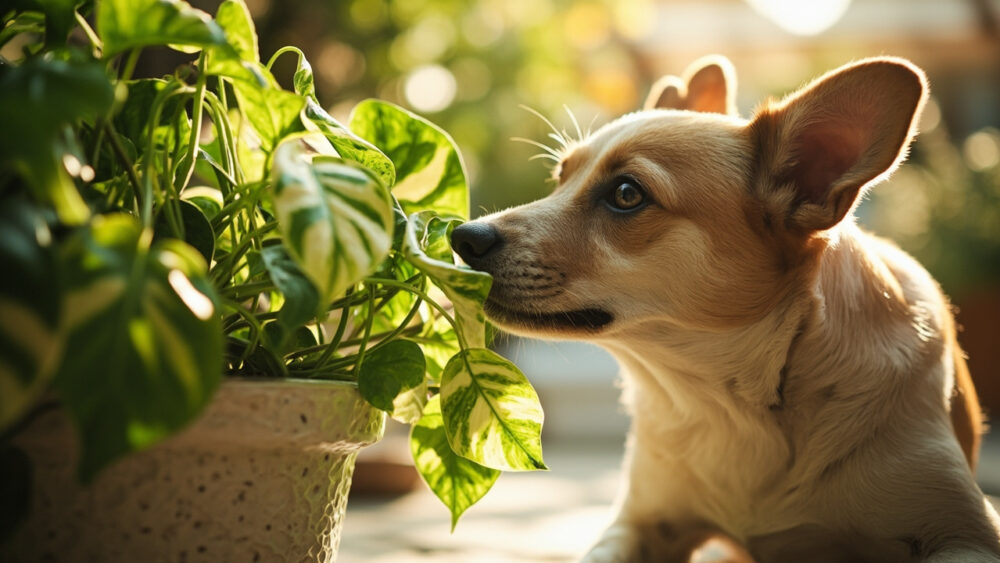
Yes, pothos is toxic to dogs. It contains insoluble calcium oxalate crystals that irritate the mouth, tongue, and throat the moment a dog bites into it, and it can cause drooling, pawing at the face, and vomiting. It is rarely life-threatening on its own, but the answer to “is pothos toxic to dogs” changes quite a bit depending on how much your dog actually ate and where those crystals ended up.
There is a real difference between a curious nibble on one leaf and a puppy who shredded half the vine off your shelf. There is also a difference between the common pothos in your living room and a few look-alike vines people confuse it with, which matters if you are not 100% sure what plant is actually in the pot.
Stick around for the part on exactly what to do in the next ten minutes if you catch your dog chewing on it, plus a handful of dog-safe vines that scratch the same itch. There is a save-able quick-reference card at the very bottom you’ll want to screenshot.
So Is Pothos Actually Poisonous, or Just Unpleasant?
Pothos (Epipremnum aureum) sits in the “toxic but generally not deadly” category alongside most other aroids: philodendron, pothos, peace lily, dieffenbachia. The plant’s cells are packed with sharp, needle-like calcium oxalate crystals. When a dog bites down, those crystals get released and physically jab into the soft tissue of the mouth and throat.
That is a chemical irritant reaction, not a systemic poison working through the bloodstream. It’s genuinely painful and unpleasant for the dog, and it can escalate if a lot of plant material is swallowed, but most cases resolve with the mouth irritation and some gastrointestinal upset rather than organ failure.
The honest range: a lick or a single small bite usually means drooling and discomfort for an hour or two. A dog who eats several leaves is at real risk of swelling bad enough to affect breathing or swallowing, and that is an emergency, not a wait-and-see situation.
What actually determines whether this is a non-event or a vet visit comes down to the amount eaten, which is the next thing to nail down.
Which Parts Are Dangerous, and How Much Is “A Lot”
Every part of the pothos plant, leaves, stems, and the vine itself, contains the same calcium oxalate crystals. There is no “safe part” to let a dog chew on. The sap can also cause mild skin irritation on contact, so a dog who rubs against a broken stem can react even without eating anything.
Size matters more than most owners think. A 70-pound Labrador who mouths one leaf and drops it is a very different situation than a 10-pound terrier who eats three leaves off a trailing vine. Smaller dogs and puppies hit a concerning dose with far less plant material.
Fresh, juicy new growth tends to carry more irritating sap than an older, tougher leaf, so the newest leaf on the vine is often the one that causes the worst reaction.
Knowing how much was eaten only helps if you also know what to look for afterward.
The Signs Everyone Misses (or Misreads as “Just Being Weird”)
The classic signs are drooling, pawing at the mouth, and reduced appetite from mouth pain. Vomiting is common. Owners often assume a dog who suddenly stops eating and paws at their face is dealing with something stuck in their teeth, not a plant reaction, which delays the connection to what actually happened.
Watch for these general signs after any suspected pothos exposure:
- Intense drooling or foaming, more than normal
- Pawing or rubbing at the mouth and face
- Visible redness or swelling of the lips, tongue, or gums
- Vomiting or loss of interest in food
- Difficulty swallowing, or unusual noisy breathing
That last sign, trouble swallowing or breathing, is the one that means you stop reading and go straight to the phone.
My Dog Ate Pothos. What Do I Actually Do Right Now
Call your veterinarian or an animal poison control line immediately, even if your dog seems fine. Mouth irritation can take a little time to fully show up, and a vet needs to know it happened either way.
Do not try to make your dog vomit, rinse their mouth with anything, or give any food, water, or home remedy before you’ve talked to a professional. Oxalate irritation responds differently than other plant toxins, and well-meaning home treatment can sometimes make swallowing and breathing issues worse, not better.
Before you call, grab a leaf or a photo of the plant if you can do it safely. Note roughly how much was eaten and when. That information helps the vet judge urgency far faster than “my dog ate some kind of vine plant.”
If your dog is drooling heavily, struggling to swallow, or breathing oddly, treat it as an emergency and get to a vet or emergency animal hospital rather than waiting on a phone tree.
Once the immediate scare is handled, the longer-term fix is deciding whether pothos and your dog can actually coexist in the same house.
Dog-Safe Vines That Give You the Same Trailing Look
If you love the cascading, low-maintenance vibe of pothos but have a dog who treats every hanging leaf as a chew toy, you don’t have to give up trailing houseplants altogether. A few genuinely non-toxic options give you a similar look without the risk.
Spider plant (Chlorophytum comosum) is the closest match in terms of ease and trailing habit, and it’s considered non-toxic to dogs. Some dogs even seem to enjoy nibbling it with no ill effect, though grazing on any houseplant can still cause mild stomach upset.
Other solid swaps include Boston fern, which likes more humidity, and the prayer plant (Maranta), which trails less but stays low and non-toxic.
None of these need to go anywhere special. Just relocate the pothos itself to a shelf, high hook, or room your dog can’t reach, since that solves the problem without giving up the plant entirely.
Pothos: Quick Reference
- Toxic to dogs: yes, due to insoluble calcium oxalate crystals in every part of the plant.
- Severity: usually mild to moderate mouth and GI irritation, rarely life-threatening, but large amounts or small dogs raise real risk.
- Riskiest parts: all parts contain crystals, though fresh new leaves and stems tend to be the most irritating.
- Signs to watch: drooling, pawing at the mouth, lip or tongue swelling, vomiting, trouble swallowing or breathing.
- What to do: call your veterinarian or a poison control line right away, bring a leaf or photo, never induce vomiting or treat at home.
- Safer swaps: spider plant, Boston fern, and prayer plant all give a similar trailing look without the toxicity risk.
Keep pothos up high or out of the house if your dog is a chewer, and keep your vet’s number somewhere you can find it fast.
A little prevention here saves you a stressful night and an emergency vet bill.