Lucky bamboo cares for itself with three things done right: bright, indirect light, clean water changed every one to two weeks, and roots kept covered but not drowning. Get those three right and the plant will sit happy on a desk or counter for years. Most of learning how to care for lucky bamboo is really just learning to stop doing the things that feel helpful but aren’t.
Here’s what trips people up. The stalks yellow and everyone assumes not enough water, so they add more, and that’s the mistake that kills more stalks than neglect ever does. There’s also a sign most people misread as the plant dying when it’s actually the plant asking for something totally different. And if you’re wondering whether this is even real bamboo, that question matters more than you’d think for how you treat it.
Stick around to the bottom for the Lucky Bamboo at a Glance card, the kind of thing worth saving to your phone before you forget half of it by tomorrow.
Light, Placement, and Temperature
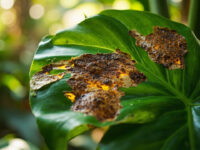
Lucky bamboo wants bright, indirect light, the kind you get a few feet back from an east or north window, or near a south or west window with a sheer curtain between the plant and the glass. Direct sun scorches the leaves into brown, papery patches within days. Too little light won’t kill it fast, but growth stalls and the stalks stretch thin and pale reaching for something brighter.
Keep it away from cold drafts, heating vents, and air conditioner blasts. This plant is comfortable in the same 65 to 90°F range you are, and sudden temperature swings stress it faster than a slightly dim room ever will.
Rotate the container a quarter turn every week or two if you want straight, even growth instead of a plant leaning hard toward the window.
Get the light right and the water question gets a lot more forgiving, which is where most people actually go wrong.
Watering: How Much, How Often, and the Mistake That Yellows Everything
If you assumed yellow leaves mean the plant is thirsty, that guess is exactly backwards, and it’s the single most common way people kill this plant. Yellowing stalks and leaves almost always mean overwatering, stagnant water, or a chemical buildup from tap water, not drought.
Lucky bamboo grown in water needs the roots covered by 1 to 2 inches of water, no more, with the stalk and leaves staying dry above the waterline. Change that water every 7 to 14 days, or the moment it looks cloudy or smells off, whichever comes first.
Use distilled water, rainwater, or tap water left open on the counter for 24 hours so the chlorine and fluorine dissipate. Straight tap water is the quiet cause of a lot of brown leaf tips people can’t explain.
If it’s potted in soil instead, water when the top inch feels dry to a finger poke, and never let the pot sit in a saucer of standing water.
Once the water routine is dialed in, the next question is almost always about soil, gravel, and whether this thing even needs feeding.
Soil, Pebbles, and Feeding
Lucky bamboo will grow happily in plain water with a few decorative pebbles to hold the stalk upright, and that’s genuinely all it needs to survive. It’ll also grow in a well-draining potting mix, which tends to produce sturdier, faster growth over the long run.
Feeding is the one place less is truly more. A diluted liquid houseplant fertilizer, mixed at roughly a quarter strength, once every 4 to 6 weeks during spring and summer is plenty. Overfeeding shows up as brown, crispy leaf tips and edges, which people often mistake for underwatering and then make worse by adding more fertilizer on top of it.
Skip feeding entirely in fall and winter when growth naturally slows.
Feeding sorted, the next thing that actually keeps this plant looking good year after year is a short list of routine chores most people skip entirely.
Routine Care: Pruning, Repotting, and Keeping It Clean
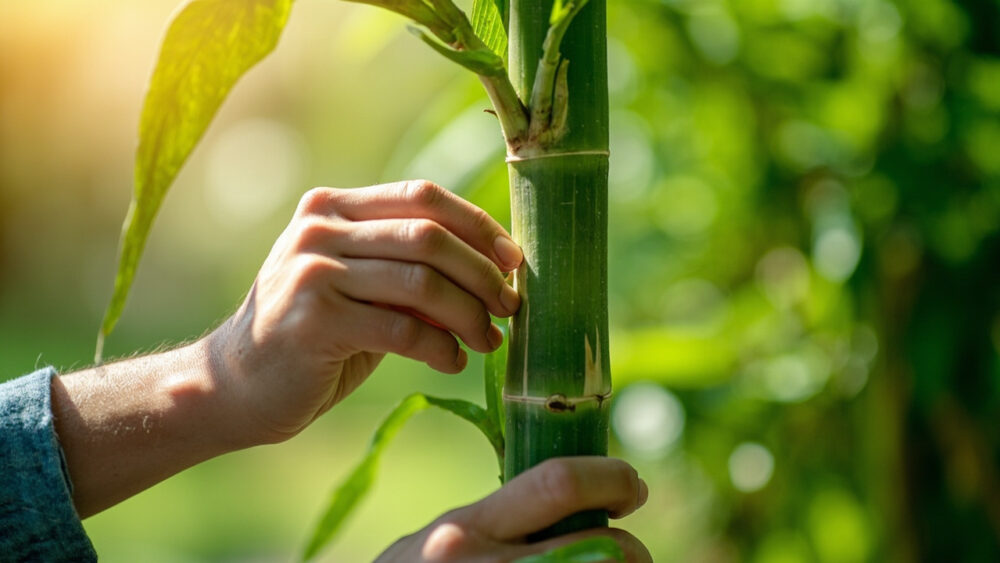
Trim yellowed or damaged leaves right at the base with clean scissors as soon as you see them, both for looks and to stop any rot from spreading. If a stalk gets too tall or leggy, cut it back above a node and a new shoot will typically branch out from that cut point within a few weeks.
Wipe the leaves down with a damp cloth every couple of weeks. Dust blocks light the plant is already working hard to catch, and it’s an easy chore to forget.
If it’s growing in water, repotting isn’t really repotting, it’s just sizing up the vase as roots fill the container, typically every year or two. In soil, repot every 2 to 3 years, or sooner if roots are circling tightly at the bottom of the pot.
Handle the leaves carefully during any of this, because lucky bamboo is mildly toxic to cats and dogs if chewed or swallowed, and a pet that’s ingested any should see a veterinarian rather than wait it out at home.
Even with all of this done right, a few problems still show up often enough that you should know them on sight.
The Problems That Actually Show Up, and What They Mean
Most lucky bamboo trouble narrows down to a short list once you know what to check.
- Yellow stalks or leaves: overwatering, stale water, or tap water chemicals, fixed by fresher water and a rinse of the roots.
- Brown, crispy leaf edges: too much direct sun, too much fertilizer, or chlorinated water, cut back whichever is happening.
- Soft, mushy, blackened stalk base: rot, usually from water sitting too high on the stalk for too long, and badly affected stalks often can’t be saved.
- Thin, pale, stretched growth: not enough light, move it closer to a bright window.
- Sticky residue or tiny webs: spider mites or aphids, treat with insecticidal soap or neem oil following the product label exactly.
Catch these early and nearly all of them are fixable, which is more forgiving than most houseplants get credit for.
Once the problems are ruled out, it’s worth knowing what genuinely thriving actually looks like, because it’s subtler than people expect.
How to Tell It’s Actually Thriving
A thriving lucky bamboo pushes new, glossy green leaf growth from the top nodes every few weeks during spring and summer. The stalks stay firm and a solid green or yellow-green, never soft, never dull.
Here’s the sign people misread most: a plant sitting still with no new growth for weeks isn’t necessarily dying, it’s often just resting through a lower-light winter stretch, and that’s normal, not a symptom.
True lucky bamboo isn’t actually bamboo at all, it’s a Dracaena species, which is exactly why it tolerates water culture and low light so much better than real bamboo ever could. That’s worth knowing because it explains why the usual bamboo advice you’d find elsewhere doesn’t apply here.
Everything above is the working knowledge, and the card below is the version worth keeping on hand.
Lucky Bamboo at a Glance
- Light: bright, indirect light, no direct sun, tolerates lower light with slower growth.
- Water: change every 7 to 14 days, cover roots by 1 to 2 inches, use distilled, filtered, or dechlorinated water.
- Temperature: 65 to 90°F, no cold drafts or vents.
- Feeding: quarter-strength liquid fertilizer every 4 to 6 weeks in spring and summer only.
- Repotting or resizing: every 1 to 2 years in water, every 2 to 3 years in soil.
- Warning sign: yellow stalks mean too much or too stale water, not too little.
- Pet safety: mildly toxic to cats and dogs if chewed, contact a veterinarian for any suspected ingestion.
Fresh water, filtered light, and a hands-off approach to fertilizer will carry this plant for years. When in doubt, do less, not more.