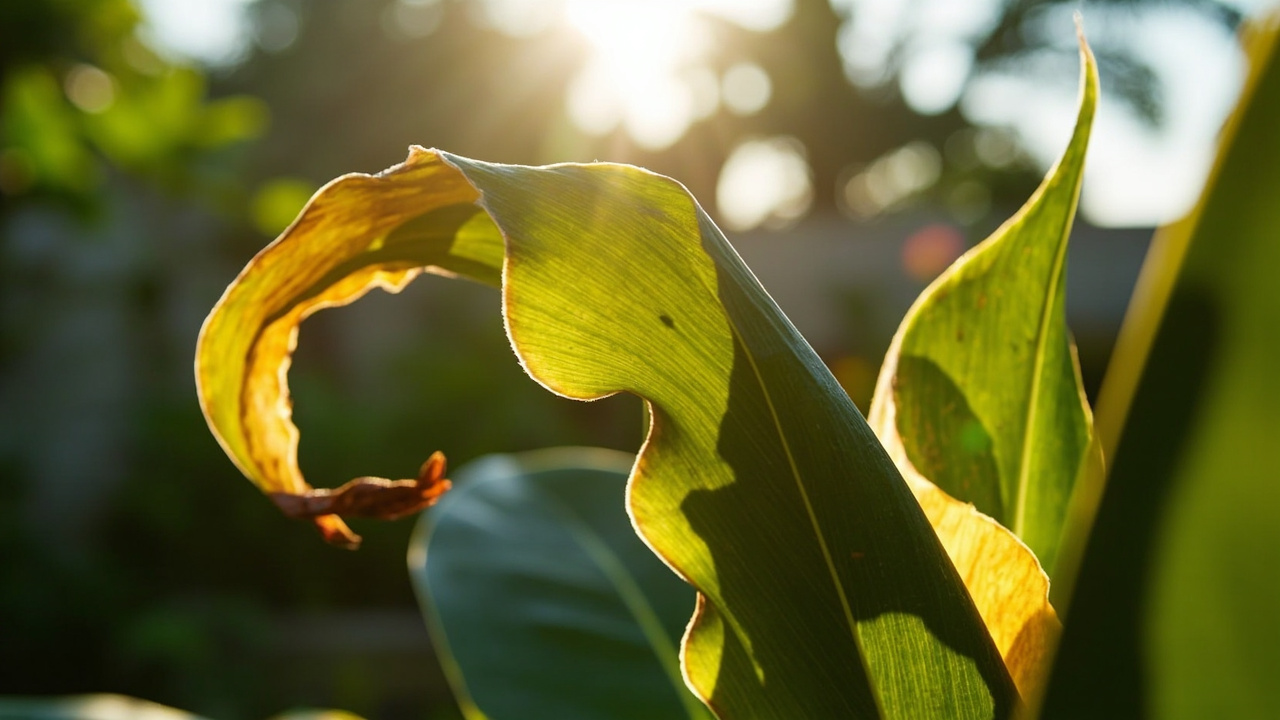
Nine times out of ten, bird of paradise leaves curling means the plant is thirsty, either because you have genuinely underwatered it or because the roots can’t take up water even though the soil looks wet. The fix in that case is simple: check the soil, adjust your watering, and the new growth will come in flat within a few weeks. But that’s not the only cause, and it’s not even always the right one.
Most people blame low humidity the second they see curling, and sometimes that’s part of it, but dry air alone rarely curls a healthy bird of paradise this dramatically. The real giveaway is usually somewhere else on the plant entirely, in whether the curling shows up on old leaves or new ones, and whether it’s every leaf or just a few.
Recovery is often possible, but not always, and it depends heavily on which cause you’re actually dealing with. Stick with me through the causes below and you’ll know exactly which one is yours, and there’s a two-minute diagnosis checklist waiting at the bottom you can run right now, standing in front of the plant.
Causes of Curling, Most to Least Likely
1. Underwatering or Roots Drying Out
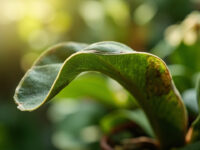
Confirm it: push a finger 2 inches into the soil. If it’s bone dry and the pot feels light when you lift it, this is your answer. Leaves often curl inward lengthwise, like a taco, and the whole plant may look slightly deflated.
Fix it by watering thoroughly until water runs from the drainage holes, then let the top 2 inches dry before the next drink. Bird of paradise wants a soak-and-dry cycle, not a constant trickle.
Get the watering rhythm right and the next cause on this list becomes a lot less likely too.
2. Overwatering and Root Rot
If you assumed dry soil is the only reason for curling, this is the guess that trips people up, because overwatered plants curl too, and they often curl harder. Confirm it by checking if the soil has stayed wet for more than a week, or if you smell something sour and swampy near the base. Slide the plant out of the pot if you can; black, mushy roots confirm rot.
Fix it by cutting back watering immediately and trimming away any black or slimy roots with clean scissors. Repot into fresh, fast-draining soil if rot is present, and only water again once the top few inches are dry.
This one is reversible if you catch it early, but there’s a point of no return, and I’ll be honest about where that line sits below.
3. Low Humidity
Confirm it: this is most likely if you run forced-air heat or AC, keep the plant near a heat vent, and the curling is on newer leaves that never fully unfurled flat in the first place. Edges may look slightly crisp along with the curl.
Fix it by grouping plants together, running a humidifier nearby, or setting the pot on a tray of pebbles and water. Misting helps briefly but doesn’t move the needle much on its own.
Humidity problems rarely act alone, so check the next cause before you assume dry air is your whole story.
4. Too Much Direct Sun or Heat Stress
Confirm it by looking at which side of the plant is curling. If it’s the side facing a hot south or west window, and you see pale or bleached patches alongside the curl, the sun is cooking the leaf faster than it can move water to it.
Fix it by moving the plant back from the glass a couple of feet or filtering the light with a sheer curtain. Bird of paradise wants bright light, but scorching midday sun through unfiltered glass is too much for most indoor setups.
If the curling isn’t tied to one sunny side of the plant, look at what’s in the soil instead.
5. Salt and Mineral Buildup From Fertilizer or Tap Water
Confirm it by checking for a white or crusty film on the soil surface or around the drainage holes. This shows up gradually over months of regular fertilizing or hard tap water, and it usually hits older leaves first with curling plus brown, crispy tips.
Fix it by flushing the pot with plain water, running several times the pot’s volume through the soil and out the drainage holes, until runoff looks clear. Cut fertilizer back to a light feed every four to six weeks during the growing season, and consider filtered or rain water if your tap is very hard.
Buildup is a slow burn, but a sudden cold draft can curl leaves just as fast as months of neglect.
6. Cold Drafts or Temperature Swings
Confirm it by thinking about where the plant sits relative to doors, drafty windows, or air conditioning vents. Bird of paradise sulks below about 50°F, and a leaf that curls suddenly after a cold night near a drafty window points straight here.
Fix it by relocating the plant away from the draft and keeping it in a room that stays reliably above 60°F. There’s no fixing the already-curled leaf, but new growth should come in normal once the temperature stabilizes.
If you’ve ruled out water, light, salts, and temperature, it’s worth a quick look for pests before you call it a mystery.
7. Pests (Spider Mites or Thrips)
Confirm it by checking the undersides of curling leaves with a flashlight or magnifier for tiny moving specks, fine webbing, or a stippled, dusty look to the leaf surface. Thrips leave silvery streaks; spider mites leave that webbing and speckling.
Fix it by isolating the plant, rinsing leaves under the tap or shower, and treating with insecticidal soap or horticultural oil, following the product label exactly on timing and repeat applications. Wipe leaves down weekly during treatment and recheck for a few weeks after, since these pests rebound fast in warm, dry indoor air.
Once you’ve matched a cause to what you’re seeing, the next step is making sure you didn’t mix up two look-alikes.
How to Tell the Causes Apart
Location on the plant matters most. Old, lower leaves curling with brown crispy edges usually means underwatering, salt buildup, or advanced root rot. New leaves that never open flat point to humidity, heat stress, or cold shock instead.
Pattern matters too. One-sided curling tracks with a heat or sun source on that side of the room. Curling on every leaf, old and new alike, points toward a root problem, either too dry or too wet at the roots.
Texture is the tiebreaker: crisp and dry means underwatering or salts, mushy and yellowing at the base means rot, stippled or webbed means pests.
Once you know which one you’ve got, the real question is whether the plant bounces back.
Will It Recover?
A curled leaf itself almost never uncurls. What you’re really asking is whether the next leaves come in normal, and that depends on the cause.
Underwatering, humidity, heat stress, and cold drafts all have good odds. Fix the condition and new growth typically comes in flat within one to three leaf cycles, which can mean four to eight weeks depending on the season and light.
Salt buildup recovers well too, once flushed, though leaves already scorched at the tips stay that way.
Root rot is the honest exception. Mild rot caught early, with firm white roots still outnumbering the mushy ones, usually pulls through after a repot. Severe rot, where most of the root mass is black and collapsing, often means the plant cannot be saved, and your energy is better spent taking a healthy-looking stem or division to start fresh rather than nursing a plant past the point of no return.
Pest damage is reversible on future growth, but a heavily infested older leaf will always look rough and is fine to trim off once you’ve confirmed the pests are dead.
Knowing the outlook is only half the job, the other half is not ending up back here in two months.
How to Keep It From Happening Again
Water on a schedule tied to the soil, not the calendar. Check the top 2 inches before every watering and you’ll sidestep both underwatering and rot, which together cause most of these curls.
Keep the plant in bright, indirect light or morning sun, with afternoon sun filtered through a curtain if the window faces south or west.
Hold humidity above roughly 40 percent if you can, especially in winter when heating systems dry out indoor air fast.
Flush the pot with plain water every couple of months if you fertilize regularly, and skip fertilizer entirely in winter when the plant isn’t actively growing.
Do that consistently and the checklist below becomes something you rarely need.
Diagnosis Checklist
- Push a finger 2 inches into the soil: if bone dry, suspect underwatering first.
- If the soil has been wet for a week or more, or smells sour, suspect root rot and check the roots.
- Look at where the curling is: old leaves point to water or salt issues, new leaves point to humidity, heat, or cold.
- Check for a white crust on the soil surface: if present, flush the pot and cut back on fertilizer.
- Note if only one side of the plant is affected: if so, check that side for a heat vent or hot, unfiltered sun.
- Think back to recent cold drafts or a chilly night near a window: if likely, relocate the plant and wait for new growth.
- Flip a curling leaf over with a flashlight: webbing, specks, or silvery streaks confirm pests, treat accordingly.
- If roots are mostly black and mushy, treat this as the exception, prioritize saving a healthy cutting over the whole plant.
Most curling bird of paradise leaves trace back to something fixable within your control, usually water. Run the checklist once, make the one change it points to, and give the plant a few weeks before you judge the results.