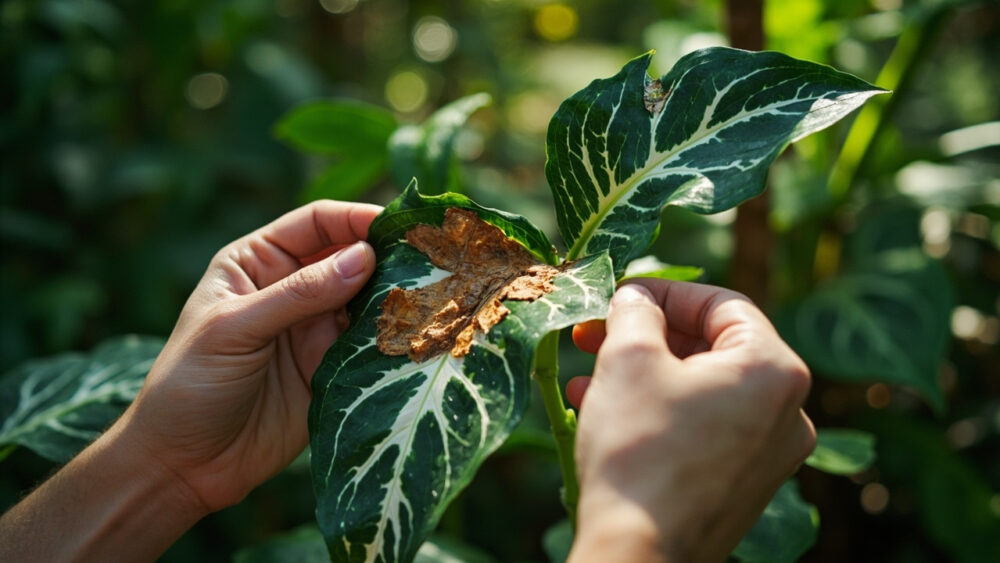
Most alocasia polly brown tips come from low humidity combined with dry, salty soil, not from underwatering. The fix is usually a humidity boost and a good flush of the pot, not more water on a schedule. But that’s only the top cause on the list, and giving a thirsty-looking plant more water when it actually has root rot is exactly how people finish off an alocasia that could have been saved.
Everyone blames the air first, and sometimes the air really is the problem. But the detail that actually tells you which cause you’re dealing with is where the browning starts on the leaf and whether the edge is crispy or mushy, and most people never check that before reaching for the watering can.
Stick with this page. Every cause below gets a confirm test and a fix, there’s an honest recovery outlook further down, and a two-minute diagnosis checklist waits at the very bottom so you can run it right at the plant.
Most Likely Causes, Ranked
1. Low Humidity
Alocasia polly is a rainforest plant that wants humidity in the 60 percent range or higher. Most homes sit at 30 to 40 percent, especially with heat or AC running.
Confirm it: the brown tips are dry, papery, and crisp to the touch, and they show up mostly on the newest leaves first, since those are the least established and lose water fastest at the margins.
Fix it: run a humidifier nearby, group it with other plants, or set it on a pebble tray with water below the pot’s base. Misting alone does almost nothing; the effect fades in minutes.
That crispy-edge tell matters more than you’d think, and it’s about to rule causes in or out fast.
2. Mineral Buildup From Tap Water and Fertilizer Salts
Alocasias are genuinely sensitive to the fluoride, chlorine, and dissolved salts in most tap water, plus leftover fertilizer salts in the soil. These accumulate at the leaf margins, where water movement ends, and show up as brown, sometimes yellow-ringed tips.
Confirm it: check the soil surface for a white or gray crust, and check the pot’s drainage holes for the same crust. If you fertilize on a regular schedule and haven’t flushed the pot in months, this is a strong suspect.
Fix it: flush the pot with plain water equal to two or three times the pot’s volume, letting it run all the way through and out the drainage holes. Switch to distilled, filtered, or rainwater going forward, and cut fertilizer to half strength, monthly at most during the growing season, none in winter.
If the soil crust isn’t there, the next cause is more likely your real one.
3. Underwatering or Letting It Dry Out Too Far
Alocasia polly likes soil that’s evenly moist, never bone dry and never soggy. Letting it dry past the halfway point of the pot repeatedly stresses the roots, and the plant sheds water from the leaf tips first to protect itself.
Confirm it: stick a finger 2 inches into the soil. If it’s dry at that depth and has been for days, and the leaves look slightly limp or curled along with the brown tips, underwatering is a good match.
Fix it: water thoroughly when the top 1 to 2 inches of soil feel dry, until water runs from the drainage holes, then let the pot drain completely. Don’t let it sit dry for extended stretches, but don’t switch straight to overwatering either.
That last warning matters, because the overwatering version of this problem looks deceptively similar at first glance.
4. Overwatering and Early Root Rot
This is the one people miss because brown tips read as “thirsty” and they respond with more water, which is the opposite of what a rotting root system needs. Soggy, oxygen-starved roots can’t move water and nutrients up to the leaf margins, so the tips brown even though the soil is wet.
Confirm it: feel the soil. If it’s been consistently damp for more than a week, check the pot’s weight and drainage, and look for tips that are mushy or soft rather than crisp, along with any yellowing lower leaves.
Fix it: let the soil dry back significantly before the next watering. If drainage is poor or the pot has no hole, repot into a container with drainage and fresh, chunky, well-draining aroid mix. If roots look brown and mushy when you check them, trim the rot with clean shears and let cut edges callus before repotting.
The texture of the tip, crisp versus mushy, is the single fastest way to split these two causes apart.
5. Cold Drafts or Temperature Swings
Alocasia polly wants temperatures between about 65 and 85°F and hates cold air hitting its leaves. A drafty window, an AC vent, or a chilly night near glass can brown tips and edges fast.
Confirm it: think about placement. Is the plant near an exterior door, a single-pane window, or a vent? Did the damage appear suddenly after a cold night or a draft, rather than developing slowly?
Fix it: move it at least a few feet from cold glass and away from vents. Keep it out of drafts year-round, since this plant doesn’t build up tolerance to cold air over time.
Sudden, one-time damage versus slow, ongoing browning is another clue worth holding onto for the next section.
6. Direct Sun Scorch
Alocasia polly wants bright, indirect light. Direct afternoon sun through unfiltered glass can scorch leaf margins and tips, especially in summer.
Confirm it: check if the browning is concentrated on the side of the plant facing the window, and look for a slightly bleached or crispy patch rather than a clean tip-only pattern.
Fix it: move it a few feet back from south or west-facing windows, or add a sheer curtain to diffuse the light.
Now that you’ve got all six causes, here’s how to line up the actual symptoms on your plant and pick the right one.
How to Tell the Causes Apart
Location on the plant is the fastest sorter. New leaves browning first points to humidity or salt buildup; older, lower leaves yellowing and browning together points to overwatering or root stress.
Texture comes next. Crisp, dry, papery tips mean humidity, salts, or underwatering. Soft, mushy, dark tips mean too much water sitting at the roots.
Timing matters too. Sudden damage after one cold night or a sunny afternoon points to drafts or scorch. Slow, gradual creep over weeks points to humidity, salts, or a watering habit that’s been off for a while.
Once you know which bucket you’re in, the next question is whether the damage itself can undo itself.
Will It Recover?
The honest answer first: brown tips themselves never turn green again. Once a section of leaf tissue is dead, it stays dead, and the best you can do is trim the crispy tip off with clean scissors for appearance and let the plant put its energy into new growth instead.
Humidity, salt buildup, and underwatering cases recover well. Fix the cause and new leaves come in clean within a few weeks to a couple of months, since alocasia polly grows fairly steadily in the warm season.
Overwatering with early root rot has a fair prognosis if you catch it while most roots are still white or tan and firm. Cut losses on any leaf that’s more than half brown, and expect a temporary pause in growth after repotting while the plant recovers underground.
Cold and sun damage rarely spreads once the plant is moved to better conditions, so recovery is mostly cosmetic and just takes one new growth cycle.
If the rot has traveled into the corm or main stem and it’s soft or discolored at the base, that’s the one scenario where cutting your losses is the realistic call.
Prevention is genuinely simpler than the diagnosis, so let’s close with what actually keeps this from coming back.
How to Keep It From Happening Again
Consistency beats intensity with this plant. Water when the top 1 to 2 inches of soil are dry, use filtered or distilled water, and flush the pot every couple of months to clear salt buildup before it starts.
Keep humidity around 50 to 60 percent if you can, using a humidifier rather than misting for anything that lasts.
Give it bright, indirect light, keep it a few feet from cold glass and heat or AC vents, and fertilize lightly only during active growth in spring and summer, skipping it entirely in winter.
Those habits handle nearly every cause on this list at once, which is why they’re worth locking in before you move on to the checklist below.
Diagnosis Checklist
- Touch the brown tip: if it’s crisp and papery, suspect humidity, salt buildup, or underwatering, and if it’s soft or mushy, suspect overwatering or root rot.
- Check the soil surface and drainage holes for a white or gray crust: if present, flush the pot two to three times with plain filtered water.
- Press a finger 2 inches into the soil: if dry and the plant looks limp, water thoroughly. If damp and it’s been damp over a week, hold off on watering.
- Look at which leaves are affected: new leaves point to humidity or salts, older lower leaves point to overwatering.
- Check the plant’s spot: within a few feet of a cold window, exterior door, or vent means drafts, direct sun on the affected side means scorch.
- If you suspect rot, slide the plant from its pot and check the roots: white or tan and firm means recoverable, brown and mushy means trim and repot into fresh, well-draining mix.
- Once you’ve matched a cause, apply its fix, trim the dead tip tissue for appearance, and recheck new growth in three to four weeks.
Brown tips look alarming but they’re rarely fatal once you match the right cause to the right fix.
Trim what’s already damaged, adjust the one habit that’s off, and the next leaf your alocasia pushes out should come in clean.