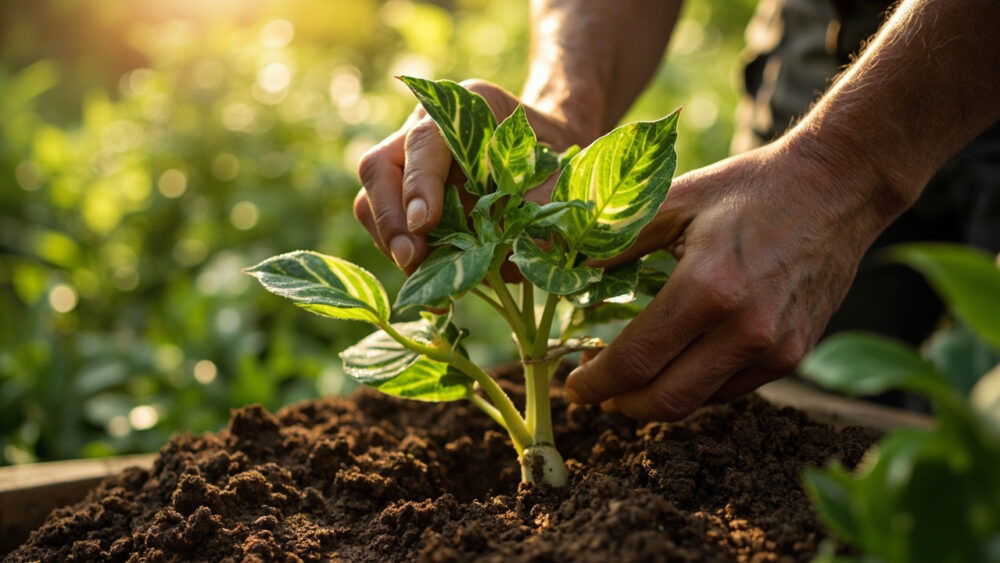
The fastest, most reliable way to propagate arrowhead plant (Syngonium podophyllum) is a stem cutting with at least one node, rooted in water or damp soil, kept warm and bright until roots hit an inch or two long. Most cuttings show root nubs within 10 to 14 days and are ready to pot up by week four or five. That part is genuinely easy, arrowhead is one of the more forgiving vines you can root.
What trips people up is not the rooting, it is what happens right before and right after. There is one cutting mistake that quietly kills the whole attempt before it even starts, and it has nothing to do with water versus soil. There is also a sign at week two that most people misread as failure when it is actually exactly on schedule.
I will walk through the whole thing start to finish, including the honest reason some cuttings just sit there doing nothing for a month. Save-able specifics, including timing and pot-up size, are in the Arrowhead Plant at a Glance card at the very bottom, so keep scrolling once you have read the method.
Why Stem Cuttings Beat Every Other Method
Arrowhead plant roots from stem nodes, the little bumps or joints along the vine where leaves attach. Division works too if your plant already has multiple crowns growing from the soil, but most people only have one vining stem to work with, and that stem is loaded with usable nodes.
Leaf cuttings without a node are the trap. A single leaf with no stem segment and no node attached will often survive for weeks looking fine, then rot, because there is no growth point to produce roots from.
The node is the whole game. Every cutting you take needs at least one, ideally two.
Get the node right and the rest is just patience.
Step by Step: Taking the Cutting and Rooting It
Choosing and Making the Cut
Pick a healthy vine with at least two or three nodes on it. Using clean, sharp scissors or pruning snips, cut just below a node, leaving a stem section 4 to 6 inches long with two to three leaves attached.
Strip the lowest leaf if it will sit in water or soil, since submerged foliage rots and fouls the water fast.
Choosing a Rooting Medium
Water is the easiest way to watch progress, and it is what most people default to. Damp potting mix or a perlite blend roots just as reliably and skips the awkward transition shock some water-rooted cuttings show when they hit soil for the first time.
Either works. If you want to shortcut the guessing later, root in soil from the start.
Setting Up the Conditions
Place the cutting in bright, indirect light, never direct sun, which scorches a leaf that has no roots yet to support recovery. Keep the water fresh, changed every 3 to 4 days, or keep soil consistently moist but never soggy.
Room temperature around 68 to 78°F is the sweet spot. Below 65°F, rooting slows dramatically or stalls.
Get the cutting settled and warm, then the clock starts.
Week by Week: What You Should Actually See
Week one looks like nothing. The cutting may even droop slightly as it adjusts, this is normal, not failure.
By week two, small white or pale nubs appear at the node, sometimes just one, sometimes a cluster. This is the sign most people misread, they see tiny bumps and assume it is rot or some kind of growth at the cut end, not roots.
It is roots. That is exactly on schedule.
By week three to four, those nubs lengthen into visible white roots an inch or more long, sometimes branching. New leaf growth at the tip often starts around this same window, a good confirming sign the cutting has fully committed to growing rather than just surviving.
If you see nothing at all by week five or six, something upstream went wrong, and that gets covered next.
When and How to Pot Up
Wait until roots are at least 1 to 2 inches long before potting into soil, whether the cutting rooted in water or was already in a soil-based medium and just needs upgrading. Potting too early, when roots are still just pale nubs, means a fragile root system with almost no ability to pull moisture, and the plant sulks or drops leaves for weeks.
Use a small pot, 3 to 4 inches, with a well-draining potting mix, and water it in well right after planting. Water-rooted cuttings need a gradual transition: keep the soil noticeably moist for the first 10 to 14 days so the roots, which formed underwater, do not dry out and die back before they adapt to pulling moisture from soil instead.
Multiple cuttings can go into one pot for a fuller look, spaced about 2 inches apart.
Potting up is not the finish line, the first month in soil is its own test.
Why Most Attempts Actually Fail
If you assumed rot is the main killer, that is a fair guess, but it is not the top cause. The real number one failure is a cutting taken without a node, which was covered above, and the number two cause is almost as common: low light.
A cutting sitting in a dim corner “for its own protection” while it roots has almost no energy to build new tissue. Roots need some light to fuel that growth, not full sun, but real bright indirect light, near an east or west window, not three feet back in a shadowed room.
The third failure mode is impatience: pulling the cutting to check roots every couple of days, which disturbs the fragile new growth right as it is trying to anchor. Check weekly, not daily.
Rot is real too, but it is almost always downstream of one of these, dirty water, a stripped leaf left to rot in the water, or a soil medium kept so wet it never dries between waterings.
Fix the node, the light, and the patience, and rot mostly takes care of itself.
Arrowhead Plant at a Glance
- Best method: stem cutting with at least one node, rooted in water or damp soil.
- Cutting size: 4 to 6 inches long, two to three leaves, one leaf stripped if it will sit in water.
- Ideal conditions: bright indirect light, 68 to 78°F, water changed every 3 to 4 days if water rooting.
- Root timeline: visible nubs by week two, inch-long roots by week three to four.
- Pot-up point: once roots are 1 to 2 inches long, into a 3 to 4 inch pot with well-draining mix.
- Top failure causes: no node on the cutting, insufficient light, disturbing roots too often.
- Pet note: arrowhead plant is toxic to cats and dogs if chewed or ingested, causing mouth irritation and drooling; call a veterinarian if you suspect ingestion.
Get the node right and the light bright, and arrowhead does the rest on its own timeline.
Everything else is just waiting and not poking at it.