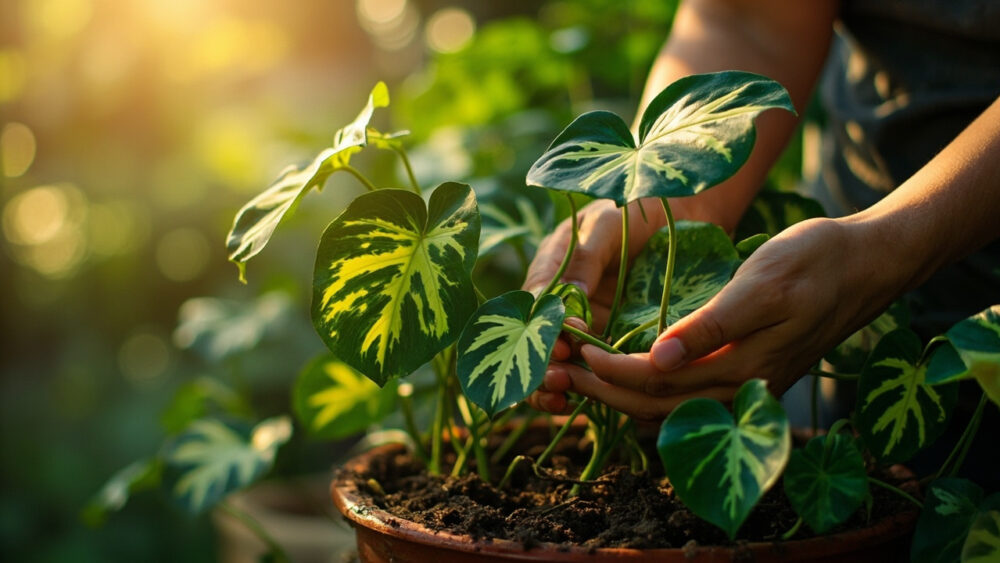
Philodendron Brasil care comes down to four things: bright indirect light, water only when the top inch or two of soil dries out, a chunky well-draining mix, and warmth above 60°F. Get those right and this plant grows fast, trailing several feet in a season with minimal fuss. Get the light or watering wrong and it either loses its yellow-green stripe or rots from the base, and those are the two mistakes that end most people’s Brasil before it ever fills out.
There’s also a sign almost everyone misreads: reverting to solid green. It looks like a disease or a nutrient problem, and it’s neither.
Stick around for that fix, the honest truth about how often to water a plant this forgiving, and the full Philodendron Brasil at a Glance card at the bottom of this page, saved in one place so you’re not hunting through the article again next week.
Light, Placement, and Temperature
Philodendron Brasil wants bright, indirect light, the kind you get a few feet back from an east or west window, or right in front of a sheer-curtained south window. Direct afternoon sun will scorch the leaves; deep shade will grow you a plain green vine with pale, stretched-out stems reaching for the nearest light source.
Temperature-wise, keep it between 65°F and 85°F. It’ll survive down to about 55°F but stops growing and sulks below that, and it has zero frost tolerance if it ever spends time outside.
Rotate the pot a quarter turn every week or two so it doesn’t grow lopsided toward the window.
The light you give it decides the color you get, and that connection matters more than most people realize.
Watering: How Much, How Often, and How to Tell
Water when the top inch or two of soil feels dry to a finger poked in, roughly every 7 to 10 days indoors, faster in summer heat and slower in winter. This isn’t a plant that wants a rigid schedule. It wants you to check.
If you assumed droopy leaves always mean thirst, that guess is what drowns most Brasils. Overwatered leaves droop too, but they’ll also look dull, feel soft, and the soil stays wet for days after you water. Underwatered leaves droop, then perk right back up within an hour of a good drink.
Always water until it runs out the drainage hole, then dump the saucer. Standing water at the roots for more than an hour or two is the fastest route to rot.
Get the water right and the soil underneath it matters just as much as the schedule.
Soil, Pot, and Feeding
Use a light, chunky, well-draining mix, a standard indoor potting mix cut with perlite or orchid bark works well. Straight potting soil alone holds too much water and suffocates the roots.
Always plant in a pot with a drainage hole. No exceptions, no matter how much you like a particular pot without one.
Feed with a balanced liquid houseplant fertilizer diluted to about half strength, once a month during spring and summer, and skip it entirely in fall and winter when growth slows. Over-fertilizing shows up as crispy brown leaf tips before it shows up as anything else.
Good soil and light feeding keep the roots happy, but the plant still needs regular upkeep to look its best.
Pruning, Repotting, and Cleaning: The Routine Tasks
Pinch or snip leggy vines just below a node any time growth looks sparse or stretched. This is also how you propagate: a 4 to 6 inch cutting with a node or two will root in water within 3 to 4 weeks, set on a bright windowsill.
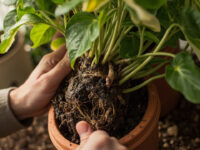
Repot every 1 to 2 years, or sooner if roots are circling the drainage hole or the plant dries out within a day or two of watering. Go up one pot size, not more, oversized pots hold excess moisture and invite rot.
Wipe the leaves with a damp cloth every few weeks. Dust blocks light and this plant depends on catching every bit it can get.
Even with good care, a few problems show up often enough that you should know them by sight.
The Problems Most Likely to Strike
Root rot is the big one, caused by soggy soil and slow-draining pots. Mushy dark stems near the base mean you need to unpot, cut away the affected roots with a clean blade, and repot in fresh dry mix.
Yellowing lower leaves are often just normal aging as the plant sheds old growth, but if several yellow at once alongside wet soil, that’s overwatering, not a nutrient issue.
Spider mites and mealybugs occasionally show up, especially on a plant kept too dry and too warm. Fine webbing or white cottony clusters at leaf joints are the tells. Treat with insecticidal soap or neem oil, following the product label exactly, and isolate the plant from your other houseplants while you treat it.
- Brown, crispy edges: low humidity or fertilizer buildup, flush the soil and mist occasionally.
- Curling leaves: usually underwatering or too much direct sun.
- No new growth for months: not enough light, move it closer to the window.
Now for that reverting-to-green mystery, and how to know when the plant is actually thriving.
Why It Reverts to Green, and What Real Thriving Looks Like
When new leaves emerge solid green instead of the signature yellow-green marbling, it’s almost always a light problem, not a disease and not a genetic glitch. Variegation costs the plant energy, and in low light it reverts to all-green leaves because plain green photosynthesizes more efficiently.
The fix is simple: move it somewhere brighter. New growth afterward should come back marbled, though leaves already reverted will stay green permanently.
A genuinely thriving Brasil pushes a new leaf every 1 to 2 weeks in the growing season, with vines that can trail several feet in a single year. Leaves stay firm, glossy, and clearly striped, not pale, not curling, not dropping.
If yours is doing that, you’ve already got the routine down, and the card below is just there for the day you second-guess yourself.
Philodendron Brasil at a Glance
- Light: bright, indirect light, a few feet from an east or west window or behind a sheer curtain in south light.
- Watering: when the top 1 to 2 inches of soil are dry, roughly every 7 to 10 days, always with drainage.
- Temperature: 65°F to 85°F, never below 55°F, no outdoor exposure once nights turn cool.
- Soil: a light, chunky, well-draining potting mix cut with perlite or bark.
- Feeding: balanced liquid fertilizer at half strength, monthly in spring and summer, none in fall and winter.
- Repotting: every 1 to 2 years, one pot size up, when roots circle the drainage hole.
- Pruning and propagation: cut leggy vines below a node, root 4 to 6 inch cuttings in water in 3 to 4 weeks.
Most Brasil failures trace back to one habit: watering on a calendar instead of checking the soil. Fix that one thing and everything else on this page becomes easy.