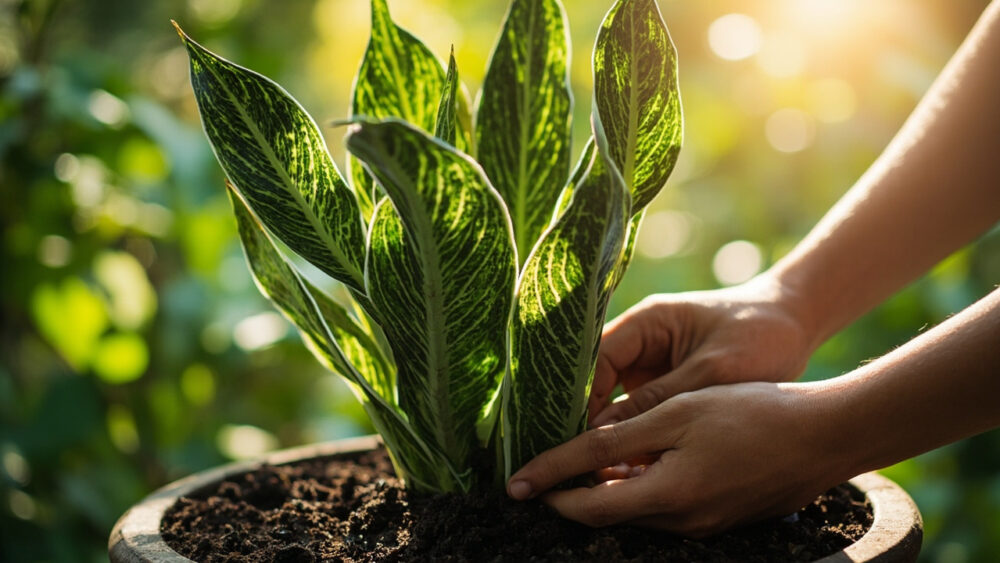
How to care for snake plant comes down to three things: bright indirect light (though it tolerates far less), water only when the soil is completely dry, and a pot with real drainage. Get those right and the plant more or less takes care of itself for years. Get them wrong, usually by overwatering, and you can lose a snake plant that would otherwise have outlived your houseplant collection twice over.
Most people who kill a snake plant do it out of kindness, not neglect. That’s the mistake that ends more snake plants than any pest or disease ever will, and it’s coming up in the watering section below.
There’s also a sign of stress that looks nothing like stress, a follow-up question about light that almost nobody asks until it’s too late, and the actual honest timeline for when this plant starts looking impressive instead of just alive. All of that is ahead, and the full Snake Plant at a Glance card is waiting at the bottom, save it to your phone once you get there.
Light, Placement, and Temperature
Snake plants want bright, indirect light, something like a spot a few feet back from an east or west window. That’s where you get the fastest growth and the most upright, saturated leaf color. But this plant’s real trick is tolerance: it will survive, slowly, in a dim corner or an office with no windows at all.
Direct hot afternoon sun is the one light situation to avoid. It can scorch the leaves into pale, bleached patches that never green back up.
Keep it away from cold drafts and unheated porches. Snake plants are comfortable in normal indoor temperatures, roughly 60 to 85°F, and they do not tolerate frost or temperatures below about 50°F for long.
Low light won’t kill it, but it will quietly decide what happens the next time you water.
Watering: The Mistake That Ends Most Snake Plants
If you assumed a struggling snake plant needs more water, that guess is what kills most of them. Snake plants are succulent-adjacent, storing water in thick rhizomes and fleshy leaves, and they would rather go two extra weeks dry than sit one day too long in wet soil.
Water only when the soil is completely dry at least 2 inches down, not just dry on the surface. Push a finger in or use a moisture meter if you don’t trust your finger yet.
In most homes that means watering every 2 to 6 weeks, faster in bright light and summer heat, much slower in winter or low light. When you do water, soak it thoroughly until water runs from the drainage hole, then let it dry out again completely.
Mushy, yellowing, or collapsing leaves near the base almost always mean overwatering and early rot, not thirst.
That rot usually starts below the soil line, which is exactly why the pot and soil matter as much as the watering can.
Soil, Pot, and Feeding
Snake plants need a fast-draining mix, something like a cactus or succulent blend, or regular potting soil cut with perlite or coarse sand. Straight, dense potting soil holds too much water around those rhizomes.
Drainage holes are non-negotiable. A gorgeous pot with no hole underneath is how good watering habits still end in rot.
Feeding is minimal. A diluted, balanced houseplant fertilizer once a month during spring and summer is plenty; skip it entirely in fall and winter when growth slows way down.
This is a plant that thrives on being slightly underfed, not overfed, so err light.
Pruning, Repotting, and Cleaning: The Routine Tasks
Snake plants need very little maintenance, but the little they need has a real schedule. Trim any leaf that’s gone fully brown, mushy, or split at the base, cutting it off right at the soil line with clean shears.
Repotting only needs to happen every 2 to 5 years, and only when roots are visibly circling or pushing the plant out of the pot. Go up just one pot size, maybe 2 inches larger in diameter; a pot that’s too roomy holds excess moisture and invites rot.
Wipe the broad leaves down with a damp cloth every month or two. It’s not just cosmetic: dust blocks light and slows the plant’s ability to photosynthesize.
Most of that routine is about prevention, which matters because the next problems are easier to avoid than to fix.
The Problems Most Likely to Strike
Root rot from overwatering is by far the most common failure, showing up as soft, dark, collapsing leaf bases and a sour smell from the soil. Pull the plant, trim away any black or mushy roots with clean shears, and repot into dry, fast-draining mix.
Curling or wrinkled leaves usually mean underwatering, but check the soil first: sometimes it’s the opposite, and rot has already damaged the roots so badly the plant can’t take up water at all.
Pests are rare but not impossible. Watch for mealybugs (small white cottony clusters) or spider mites (fine webbing, stippled leaves), and treat with insecticidal soap or neem oil, following the product label exactly.
Snake plants are considered toxic to cats and dogs if chewed or eaten, and can cause mouth or stomach irritation. If you suspect a pet has eaten part of one, call your veterinarian rather than waiting to see what happens.
Once the plant is past these hiccups, the real question becomes what thriving actually looks like, since it’s easy to mistake merely surviving for doing well.
How to Tell It’s Genuinely Thriving
A thriving snake plant pushes new leaves from the center of the rosette every few months during the growing season, each one tightly rolled and standing straighter than the leaves around it. That new-growth spear is the most honest sign you’ll get.
Deep, saturated green color (or crisp, defined variegation on striped varieties) is another good sign. Pale or washed-out leaves usually mean too much direct sun or not enough light at all, depending on which way the color shifts.
Give it a year or two in decent light before expecting a dramatic, multiplying clump. This plant’s growth is genuinely slow, and that slowness is normal, not a symptom of anything wrong.
If your plant is upright, deep green, and occasionally sending up a new spear, you’re already doing this right, and the card below is just there to keep you that way.
Snake Plant at a Glance
- Light: bright indirect light is ideal, but it tolerates low light and should never sit in direct hot afternoon sun.
- Watering: water only when soil is dry at least 2 inches down, roughly every 2 to 6 weeks depending on light and season.
- Soil: fast-draining cactus or succulent mix, in a pot with real drainage holes.
- Temperature: keep between 60 and 85°F, away from cold drafts and below 50°F.
- Feeding: diluted balanced fertilizer once a month in spring and summer, none in fall and winter.
- Repotting: every 2 to 5 years, only when roots are crowded, sizing up just one pot size.
- Toxicity: toxic to cats and dogs if ingested, contact a veterinarian for any suspected ingestion.
If you remember nothing else, remember this: water less than you think you should, and give it a pot that lets excess water leave.
Everything else about this plant is forgiving.