A Thai Constellation Monstera wants bright, indirect light (think a few feet back from an east or west window, never direct midday sun on the leaves), water only when the top 2 to 3 inches of soil have dried out, temperatures between 65 and 85°F, and humidity above 50 percent if you want it to actually push new growth instead of just survive. That’s thai constellation monstera care in one breath. The plant is slower and pickier than a regular Monstera deliciosa, and most of the frustration people have with it traces back to one of a handful of specific mistakes.
Here’s what’s coming: the exact reason so many Thai Constellations sit motionless for months even when the owner swears they’re doing everything right, the watering habit that looks responsible but is actually slow-drowning the roots, and the one leaf symptom people panic over that usually means nothing at all. There’s also a straight answer to the question you’re probably about to ask next, which is whether your plant’s smaller, less-white new leaf means you got a fake.
Stick with me through each section and I’ll also give you the save-able Thai Constellation Monstera at a Glance card at the very bottom, the kind of thing you screenshot and check before you water or move the pot again.
Light, Placement, and Temperature
This is where most stalled plants trace their problem back to. Thai Constellation has less chlorophyll than a solid green Monstera because of its white and cream variegation, so it needs more light to fuel the same growth, not less. Put it a few feet from an unobstructed east or south window, or a couple feet from a west window with a sheer curtain. Direct afternoon sun through glass can scorch the white patches, which have almost no protection from heat.
Too little light is the more common failure. A plant kept in a dim corner “because it’s a rare one” will simply idle, sometimes for a year, producing no new leaves at all.
Keep it between 65 and 85°F and away from cold drafts, heating vents, and single-pane windows in winter. Below 55°F for any stretch will stall growth and can blacken leaf edges.
Get the light right and the next question, how much water it actually needs, gets a lot easier to answer correctly.
Watering: How Much, How Often, and How to Tell
If you assumed a schedule, like watering every Sunday, that habit is exactly what kills more of these plants than neglect ever does. Thai Constellation wants to dry out between waterings, and the right interval depends entirely on your light, pot size, and season, not the calendar.
Check the soil, not the date. Push a finger 2 to 3 inches down. If it’s dry there, water thoroughly until it runs from the drainage holes. If it’s still damp, wait.
In bright light and warm rooms this might mean every 7 to 10 days. In lower light or winter, it can stretch to every 2 to 3 weeks. A pot that stays soggy for more than a few days is the direct path to root rot, which shows up as yellowing lower leaves, a mushy stem base, or a sour smell from the soil.
Yellow leaves get blamed on underwatering constantly, and that guess is usually backwards.
Once watering is dialed in, the soil it’s sitting in matters just as much.
Soil, Pots, and Feeding
Thai Constellation needs a chunky, fast-draining mix, not standard potting soil straight from the bag. A blend of potting soil, orchid bark, and perlite in roughly equal parts gives roots the air pockets they need while still holding some moisture. Straight dense soil is a common reason for the root rot described above, even with careful watering.
Always use a pot with drainage holes. Decorative pots without holes are fine as an outer cover, not the actual growing pot.
Feed lightly during active growth, roughly spring through early fall, with a balanced liquid houseplant fertilizer diluted to about half strength every 4 to 6 weeks. Skip feeding in winter when growth naturally slows.
Get the roots living in the right mix, and the plant’s regular upkeep becomes far less fussy.
Pruning, Repotting, and Cleaning: The Routine Tasks
Prune only to remove damaged, fully yellowed, or brown leaves, cutting at the base of the petiole. This plant doesn’t need shaping the way a bushy houseplant does.
Repot every 2 to 3 years, or sooner if roots are circling tightly at the drainage holes or the plant dries out within a day or two of watering. Move up only one pot size, about 2 inches in diameter, since an oversized pot holds excess moisture the roots can’t use fast enough.
As it grows, it wants to climb. Give it a moss pole or trellis once the stem is a foot or so long, since the plant produces larger, more deeply split leaves when it’s allowed to grow upward rather than sprawl.
Wipe the leaves every few weeks with a damp cloth to clear dust, which blocks light the plant is already working hard to use.
Even with a perfect routine, though, a few problems show up often enough that you should know them by sight.
The Problems Most Likely to Strike
Here’s the honest answer to the follow-up question you’re probably already forming: no, a smaller or greener-than-expected new leaf usually doesn’t mean your plant is fake. Variegation on Thai Constellation shifts leaf to leaf depending on light and the plant’s energy reserves. A run of greener leaves after a move or a repot is normal, not a red flag.
- Brown, crispy edges: usually low humidity or a draft, not underwatering. Move away from vents and consider a humidifier if your home sits below 40 percent humidity.
- Yellow lower leaves plus mushy stem: root rot from overwatering or dense soil. Unpot, trim black or mushy roots, and repot fresh in a chunkier mix.
- No new growth for months in decent light: often a nutrient or root-bound issue. Check the roots before assuming it’s dormant.
- Small brown or yellow speckling with fine webbing: spider mites, especially in dry winter air. Rinse the plant and treat with insecticidal soap or a horticultural oil, following the product label exactly.
- Sticky residue or small bumps on stems: scale or mealybugs. Isolate the plant and treat the same way, checking weekly until they’re gone.
Note that Monstera species, including Thai Constellation, are toxic to cats, dogs, and people if chewed or eaten, causing oral irritation, drooling, and swelling from calcium oxalate crystals. If a pet or child ingests any part of the plant, call a veterinarian or poison control rather than waiting to see what happens.
Once you can rule these out at a glance, it’s a lot easier to recognize when things are actually going right.
How to Tell It’s Genuinely Thriving
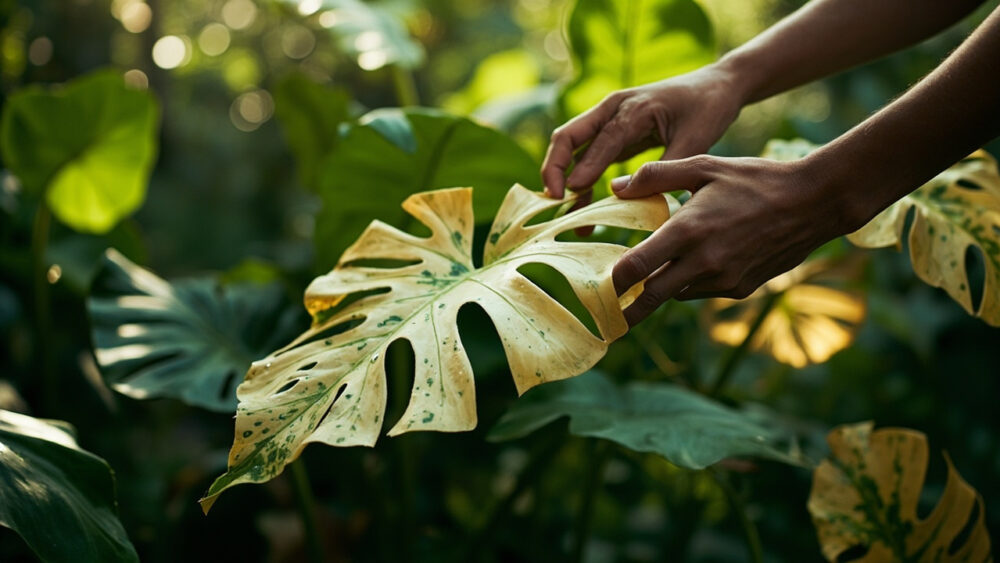
A thriving Thai Constellation pushes a new leaf every 4 to 8 weeks during the growing season, with each new leaf noticeably larger than the last and showing deeper splits as the plant matures. The white and cream patterning should look crisp, not mushy or translucent.
Aerial roots emerging along the stem are a good sign, not a problem. They’re the plant reaching for something to climb.
Firm, upright stems and leaves that hold their shape without drooping between waterings mean the roots and light levels are matched correctly.
That’s the plant telling you to keep doing exactly what you’re doing.
Now here’s everything worth saving in one place.
Thai Constellation Monstera at a Glance
- Light: bright, indirect light a few feet from an east or west window, no direct midday sun on the leaves.
- Watering: water thoroughly when the top 2 to 3 inches of soil are dry, roughly every 7 to 21 days depending on light and season.
- Temperature: keep between 65 and 85°F, away from drafts, vents, and cold windows.
- Soil: a chunky, fast-draining mix of potting soil, bark, and perlite in a pot with drainage holes.
- Feeding: half-strength balanced liquid fertilizer every 4 to 6 weeks during spring through early fall, none in winter.
- Repotting: every 2 to 3 years, moving up only one pot size, with a moss pole added once the stem reaches about a foot long.
- Toxicity: toxic to pets and people if eaten, causing mouth irritation and drooling; call a vet for any suspected ingestion.
If you only remember one thing, remember to check the soil with your finger before you water, not the day on the calendar.
Everything else about this plant is forgiving as long as that one habit is right.