Spider plant light requirements come down to one simple target: bright, indirect light for six to eight hours a day. Give it that and it grows fast, throws off babies on long runners, and stays thick and full. Skip it, and you get a spider plant that survives for years but never actually thrives, which is the trap almost everyone falls into.
Here is the loop worth opening right away. Most people assume a spider plant sitting in a dim corner is “fine” because it is not dying. It is not fine, it is just slowly starving, and that distinction matters more than you think.
There is also a mistake that quietly ruins more spider plants than neglect does, a light-related sign almost everyone reads backwards, and a straight answer about whether your specific window is good enough. All of it is below, and the savable Spider Plant at a Glance card is waiting at the bottom once you have the full picture.
How Much Light a Spider Plant Actually Needs
Spider plants want bright, indirect light, the kind you get a few feet back from an east or west window, or right up against a north window in a bright room. Six to eight hours of that is the sweet spot for fast growth and lots of plantlets.
They will also tolerate medium light and even fairly low light without dying. That tolerance is exactly why so many end up underlit for years, quietly getting by instead of actually growing.
Direct hot sun for hours at a stretch is the other failure mode, and it is just as real. Filtered or indirect is the goal, not blasted, and not buried.
Knowing the target is easy, spotting it in your actual living room is the harder part.
What the Right Light Actually Looks Like in a Real Room
Stand where the plant sits and look at your hand’s shadow on the floor at midday. A soft, fuzzy-edged shadow means bright indirect light, which is what you want. A sharp, dark shadow means direct sun. No visible shadow at all means the spot is too dim.
East windows are close to foolproof, gentle morning sun with soft light the rest of the day, and a spider plant can usually sit right on the sill.
West windows run hotter in the afternoon, so back the plant two to four feet from the glass, more if the window faces open sky with nothing to filter it.
South windows are the brightest and need the most buffer, five feet back or behind a sheer curtain, especially in summer when the sun angle is high and strong.
North windows give the softest light of all, fine for spider plant only if the room is genuinely bright and the window is unobstructed, otherwise it drifts into the “surviving, not thriving” zone.
Distance and direction matter, but the plant itself will tell you when you have it wrong.
The Sign of Too Little Light Everyone Reads Backwards
If you assumed pale, washed-out leaves mean too much sun, that guess is exactly backwards for spider plant. Bleached, whitish, or faded striping is usually a sign of too much direct light, not too little.
Too little light shows up differently and more quietly. Growth slows to a crawl, leaves stay narrow and dark green with none of the crisp variegation the plant is known for, and the plant stops producing babies on runners almost entirely.
That lack of plantlets is the sign everyone misreads. People assume the plant is just “not ready” or too young, when really it is telling you it does not have enough light to spare energy on reproduction.
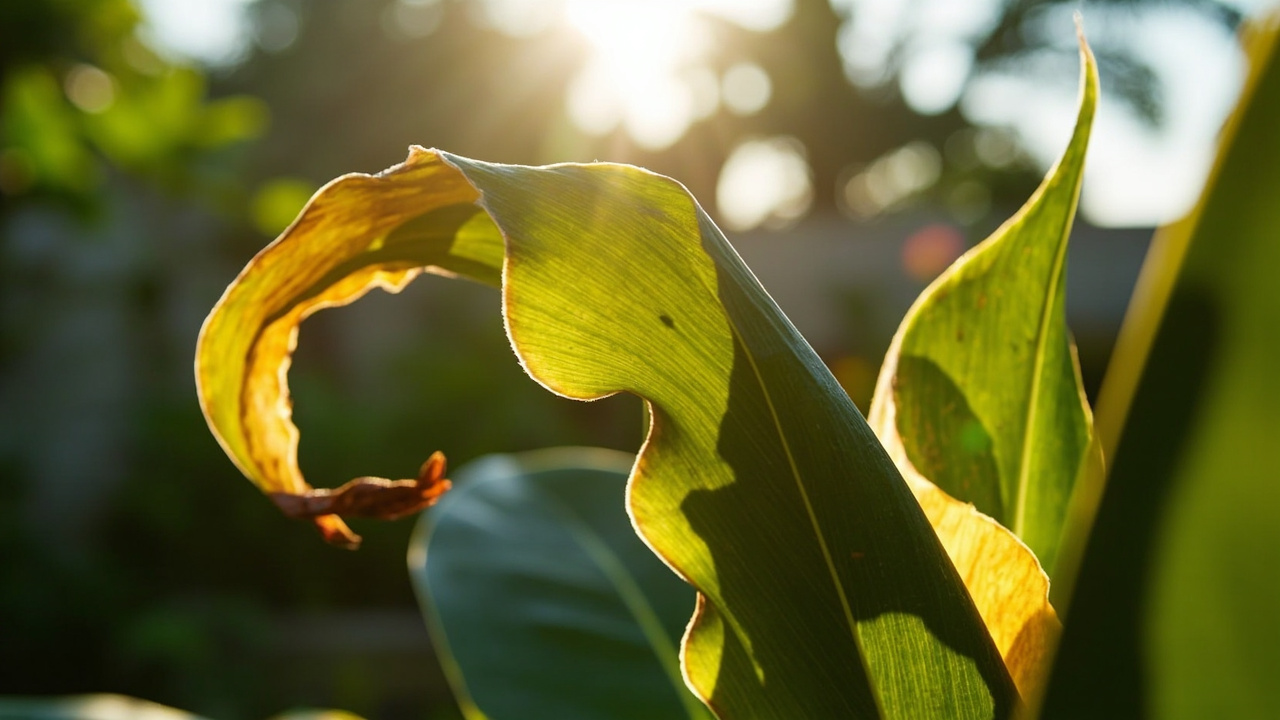
Too much direct light looks different again: crispy brown tips and edges, leaves that feel dry and papery, and fading color specifically on the side facing the window.
- Pale, pastel, or bleached leaf color: usually too much direct sun, not too little light.
- Dark green, narrow leaves and slow growth: too little light.
- No plantlets forming on runners for months: almost always a light problem, not a maturity problem.
- Brown, crispy tips concentrated on the sun-facing side: direct sun scorch.
Once you can read these signs, the next question is whether the light your plant gets even stays the same all year.
Why Your Spider Plant’s Light Changes With the Seasons
It does, even indoors, and this is the honest answer to the follow-up question most people are about to ask. A spot that was perfect in July can be genuinely underlit by December.
The sun sits lower in winter, days are shorter, and the same east window that gave six hours of bright light in summer might give three or four in winter. Growth naturally slows this time of year, and that is normal, not a problem to fix with more water.
Deciduous trees outside a window are a sneaky factor too. A window shaded by leaves in summer can turn into your brightest spot once those leaves drop in fall.
Watch the plant’s behavior change with the seasons more than the calendar itself.
Fixes That Do Not Require a Greenhouse
You do not need a sunroom to get this right, you need a few small adjustments most people never bother making. Start by actually moving the plant a few feet rather than assuming its current spot is fixed in place.
Rotate the pot a quarter turn every week or two so growth does not lean permanently toward the window, which happens fast with spider plant’s quick growth habit.
If natural light is genuinely limited, a basic full-spectrum grow light run for eight to ten hours a day, positioned twelve to eighteen inches above the foliage, will close the gap completely. This is a plant that responds well to supplemental light without any special setup.
In deep winter, consider moving the plant temporarily to your brightest window, even if that means relocating it off a dresser or shelf for a few months.
Wipe dust off the leaves occasionally too, since a dusty leaf surface blocks more light than people expect.
Get the placement right and most of the other “problems” people blame on watering or soil quietly disappear.
Spider Plant at a Glance
- Ideal light: bright, indirect light for six to eight hours a day, near an east or north window or a few feet back from a west or south one.
- Tolerable light: medium to low light without dying, but expect slower growth and few or no plantlets.
- Avoid: hours of direct hot sun, especially through south or west glass in summer, which scorches and bleaches leaves.
- Sign of too little light: dark, narrow leaves, slow growth, and no baby plantlets forming on runners.
- Sign of too much light: pale or bleached patches and crispy brown leaf tips on the sun-facing side.
- Seasonal note: light drops significantly in winter, so growth naturally slows and a brighter spot or grow light can help.
- Easy fix: a full-spectrum grow light, twelve to eighteen inches above the leaves for eight to ten hours daily, fully replaces weak window light.
If you remember one thing, remember this: a spider plant that is not producing babies is asking for more light, not more water.
Move it closer to a bright window, watch what the leaves do next, and adjust from there.