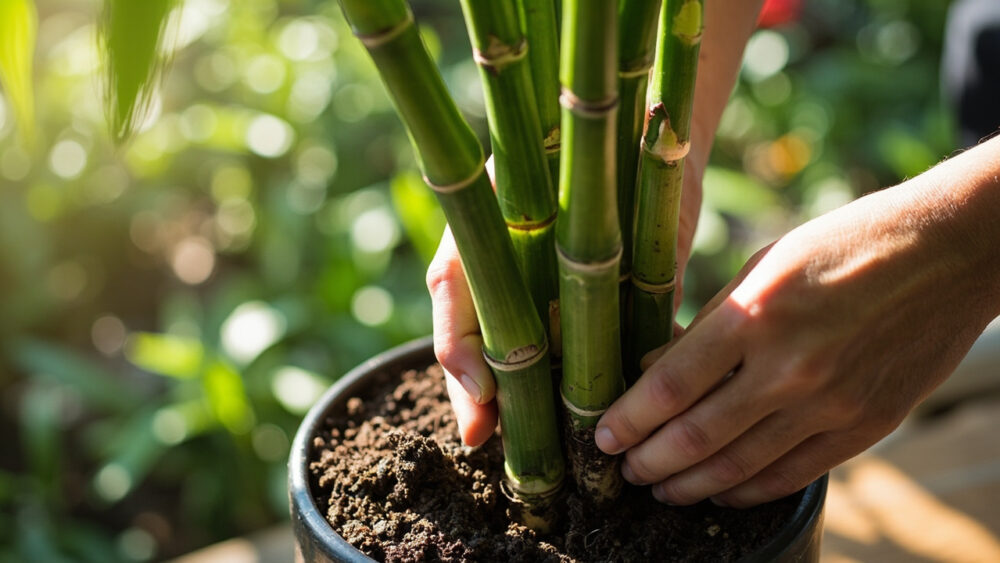
Repot lucky bamboo when the roots have filled the container and start circling the glass or pot, or when the water turns cloudy fast even after you just changed it. Lift the stalks out, rinse the roots clean, trim any brown or mushy ones, and set the plant back in fresh water or slightly larger container with new pebbles or soil. Do this every 12 to 18 months for water-grown plants, or whenever roots look cramped, whichever comes first.
That is the short version. But there are three things that trip up almost everyone who tries this: the mistake that quietly kills the stalk weeks after a “successful” repot, the root sign most people misread as healthy growth, and the honest answer to whether lucky bamboo actually wants soil or water long term.
I will walk through all of it, including the wrong turns that cost people an entire plant. Stick around to the end for a save-able Lucky Bamboo at a Glance card with the numbers you will actually want on hand next time you’re standing over the sink with a confused stalk in your hand.
When Lucky Bamboo Actually Needs Repotting
Most lucky bamboo lives in water with pebbles, not soil, and in that setup “repotting” really means refreshing the water and container. The real trigger isn’t a calendar date, it’s what the roots are doing. Healthy roots are thick, white to pale yellow, and firm. When they’ve multiplied enough to jam against the glass, coil in a tight mass, or push the plant up out of the pebbles, it’s time.
If you assumed you should repot on a fixed schedule regardless of what the plant looks like, that habit isn’t wrong, it’s just not the whole story. A vigorous stalk in bright light can fill a vase in eight months. A slow one in a dim corner might go two years untouched.
Check the roots, not the calendar.
The Root Sign Everyone Misreads
Here’s the mistake that ruins more repots than anything else: people see brown, slimy roots and assume it’s normal shedding, so they leave them on. It isn’t normal. Slimy brown or black roots are rot, usually from stagnant water or a container with no fresh oxygen exchange, and they need to be cut off with clean scissors back to firm white tissue.
Healthy roots that look a little translucent or have fine white hair-like threads are fine, leave those. The distinction matters because leaving rot on the plant during a repot just reinfects the fresh water you’re about to give it.
Cut rot out before it decides the rest of the stalk’s fate.
Light, Placement, and Temperature
Lucky bamboo wants bright, indirect light, the kind you’d get a few feet back from an east or north-facing window. Direct sun scorches the leaves yellow or brown at the tips within days. Too little light and the stalk stretches pale and thin, reaching for whatever brightness it can find.
Room temperature between 65 and 90°F suits it fine. It hates cold drafts and hot air vents equally, so keep it off the windowsill in winter and away from heating registers.
Placement matters more than most people expect for a plant this tolerant. A spot that’s merely “fine” light-wise but gets blasted by a door draft every time someone walks by will still stall growth.
Get the light and temperature steady, and watering becomes the next thing to get right.
Watering: How Much, How Often, and How to Tell
If grown in water, keep the roots submerged in 1 to 2 inches of water at all times, and change that water completely every 7 to 10 days. Tap water is usually fine after sitting out 24 hours to let chlorine dissipate, or use distilled or filtered water if your tap is heavily treated.
Cloudy water, a slight smell, or algae film means change it now, not on schedule.
If grown in soil, water when the top inch of mix feels dry to the touch, generally every 7 to 14 days, and never let the pot sit in standing water in a saucer.
The honest answer to “should mine be in water or soil” is that both work, but water is easier to monitor and is how most sold arrangements are set up. Soil-grown plants tend to grow slightly faster and need less frequent fussing once established, but they’re less forgiving if you overwater.
Get the water right and the roots you just cleaned up will stay that way.
Soil, Potting Mix, and Feeding
If you’re moving a water-grown stalk into soil, use a loose, well-draining mix, something like a standard potting mix cut with perlite, not garden soil and not anything that holds heavy moisture. A pot with drainage holes is non-negotiable here.
Feeding needs are light. In water, a drop or two of a weak liquid houseplant fertilizer once a month during spring and summer is plenty. In soil, feed at quarter strength every 4 to 6 weeks during the growing season and skip it entirely in fall and winter.
Overfeeding is far more common than underfeeding and shows up as browned, crispy leaf tips, the same symptom people usually blame on tap water.
That leaf-tip browning confusion is exactly why the next section on pruning and cleaning matters.
Pruning, Cleaning, and the Repot Itself
Trim yellow or brown leaves at the base with clean scissors as they appear, and wipe healthy leaves occasionally with a damp cloth to keep dust off and let them photosynthesize properly. If a stalk grows too tall or leggy, you can cut it back and the cut end will often sprout new side shoots.
For the actual repot: lift the plant out, rinse the roots under lukewarm water to remove old algae and debris, trim any rot, and rinse the pebbles or replace the soil. Set the stalk back at the same depth it was growing before, roots covered, base of the stalk just above the water or soil line.
Do this every 12 to 18 months for water culture, or whenever you spot the crowding and rot signs covered above, whichever comes first.
Get the routine down and most of what people call “problems” never show up.
Problems Most Likely to Strike
Yellowing leaves usually mean too much direct sun, chlorinated water, or overfeeding, in that order of likelihood. Move it back from the window, switch to filtered water, and ease off fertilizer.
Black or mushy stalk sections mean rot has moved past the roots into the cane itself, and that part of the stalk usually cannot be saved. Cut above the damage if any healthy stalk remains; if the rot has reached the top, the plant is done.
Note on safety: lucky bamboo is considered toxic to cats and dogs if chewed or ingested. Watch for vomiting, drooling, or lethargy, and call your veterinarian if you suspect your pet has eaten any part of it.
Catch these early and most lucky bamboo problems are recoverable, which brings us to what thriving actually looks like.
Signs Your Lucky Bamboo Is Actually Thriving
A thriving stalk pushes new pale green leaves regularly, holds deep green color on older leaves, and shows firm white to yellow roots you can see through the water or feel when you tip the pot. The stalk itself stays solid and green, never soft.
New growth is the real tell. A plant that’s merely surviving sits static for months; one that’s thriving visibly changes every few weeks during spring and summer.
If yours checks those boxes, you’re doing this right, and the card below is what to save for next time something looks off.
Lucky Bamboo at a Glance
- When to repot: when roots crowd the container or coil tightly, typically every 12 to 18 months in water culture.
- Water level: 1 to 2 inches covering the roots, changed completely every 7 to 10 days.
- Light needs: bright, indirect light a few feet from an east or north window, no direct sun.
- Temperature range: 65 to 90°F, away from drafts and heat vents.
- Soil option: loose, well-draining potting mix with perlite, in a pot with drainage holes.
- Feeding: weak liquid fertilizer monthly in spring and summer, none in fall and winter.
- Warning sign: slimy brown or black roots mean rot, trim back to firm white tissue immediately.
Check the roots before you check the calendar, that single habit prevents most lucky bamboo losses.
Everything else in this guide is just how to act on what you find there.