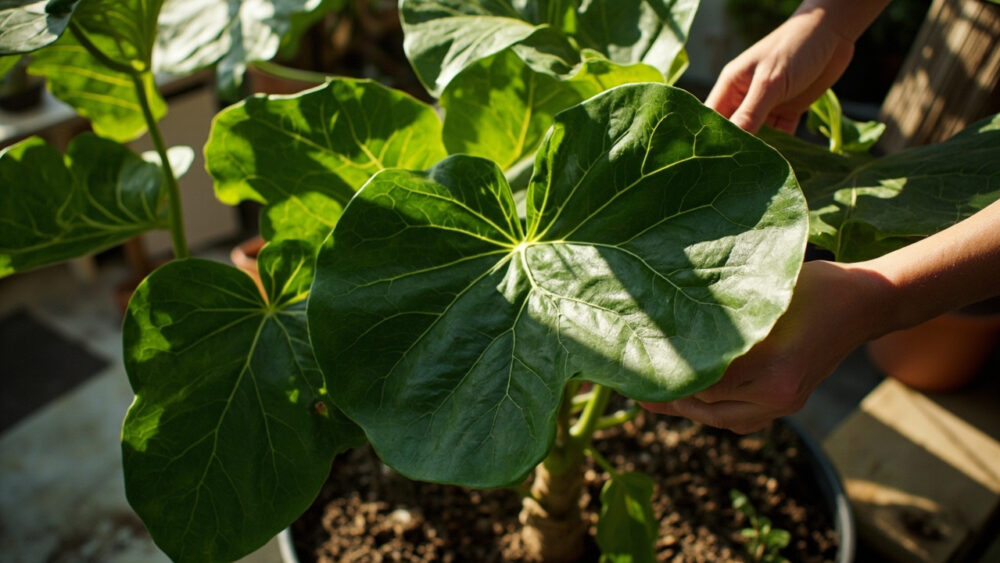
Fiddle leaf figs need bright, indirect light for most of the day, ideally within a few feet of an unobstructed east, west, or south-facing window. That means several hours of strong light bouncing around the leaves, not direct sun blasting them for hours on end, and not the dim glow of a spot across the room either. Get the fiddle leaf fig light requirements wrong in either direction and the plant will tell you, just not in a way most people read correctly.
Here is the first thing that trips people up: the most common fix people reach for when a fiddle leaf fig looks unhappy is watering, when the actual problem is almost always light. There is also a sign on the leaves themselves that most owners misread as a disease when it is really a sunburn. And if you are about to ask whether that dim corner with a “bright enough for me to read in” feel will work, the honest answer is no, and I will explain exactly why that guess fails.
Stick around for the placement fixes that do not involve buying a greenhouse, and the save-and-screenshot Fiddle Leaf Fig at a Glance card waiting at the bottom.
How Much Light a Fiddle Leaf Fig Actually Needs
In its native range, this plant grows as an understory tree catching filtered, high-intensity light under a forest canopy, not full open sun. Indoors, that translates to bright, indirect light for six or more hours a day, with a couple hours of gentle direct morning or late-afternoon sun being a bonus, not a requirement.
Low light will keep a fiddle leaf fig alive for a while, but it will not thrive, and “alive but not thriving” is how most of these plants slowly decline over a year without an obvious single cause.
The light has to be strong enough to cast a soft-edged shadow when you hold your hand a foot off the leaf.
That shadow test is the easiest gut check you have, and it matters more than which compass direction the window faces.
What the Right Light Actually Looks Like in a Real Room
An east-facing window is close to ideal. You get a few hours of gentle direct morning sun and bright indirect light the rest of the day, and the plant can sit within 2 to 4 feet of the glass without scorching.
A south-facing window (north-facing if you’re in the Southern Hemisphere) delivers the most total light of the day, but that also means the most risk of leaf scorch in the hours around midday. Keep the plant 3 to 6 feet back, or filter the glass with a sheer curtain.
A west-facing window works well too, with strong but slightly gentler afternoon light than a south exposure.
A north-facing window (south-facing in the Southern Hemisphere) is the one that disappoints people. It’s bright to your eyes but weak in actual intensity, and a fiddle leaf fig parked there will slowly thin out and lean toward any other light source in the room.
Distance from the glass matters as much as direction, and that is exactly where the next guess goes wrong.
The Guess That Ruins Most Fiddle Leaf Figs
Most people assume that if a room feels bright to walk into, it is bright enough for the plant. It is not, and this single misjudgment is behind more failed fiddle leaf figs than overwatering, pests, and root rot combined.
Light intensity drops off fast with distance from a window, roughly by half for every few feet you move back. A spot that looks plenty bright 8 or 10 feet from the nearest window is often functionally low light from the plant’s perspective, even with the lights on.
That gorgeous open living room corner, the one with “great natural light” from the realtor listing, is usually too far from any actual window to qualify.
If your fig is more than 5 or 6 feet from the nearest bright window, it is not getting enough light, no matter how airy the room feels.
Now here’s how to actually read what the plant is telling you about the light it’s getting.
Signs of Too Little Light
A fiddle leaf fig starved for light doesn’t just sit there quietly. It shows you.
- Small new leaves: each new leaf noticeably smaller than the one before it.
- Long gaps between leaves: the stem stretching out (called legginess) as the plant reaches for more light.
- Leaning hard toward a window: a lopsided, one-sided canopy.
- Dropping lower leaves: one or two at a time, especially older leaves near the base.
- Very slow or no new growth for months at a stretch during the growing season.
If you assumed leaf drop always means a watering problem, that guess is exactly what sends most people down the wrong repair path.
Watering issues cause leaf drop too, but light-starved drop is slow and steady, one leaf every few weeks, while a watering crisis usually drops several leaves at once with visible spotting or a mushy feel first.
Fix the light before you touch the watering can, and reassess after a month.
Signs of Too Much Light
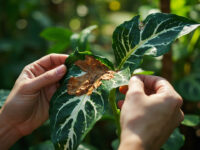
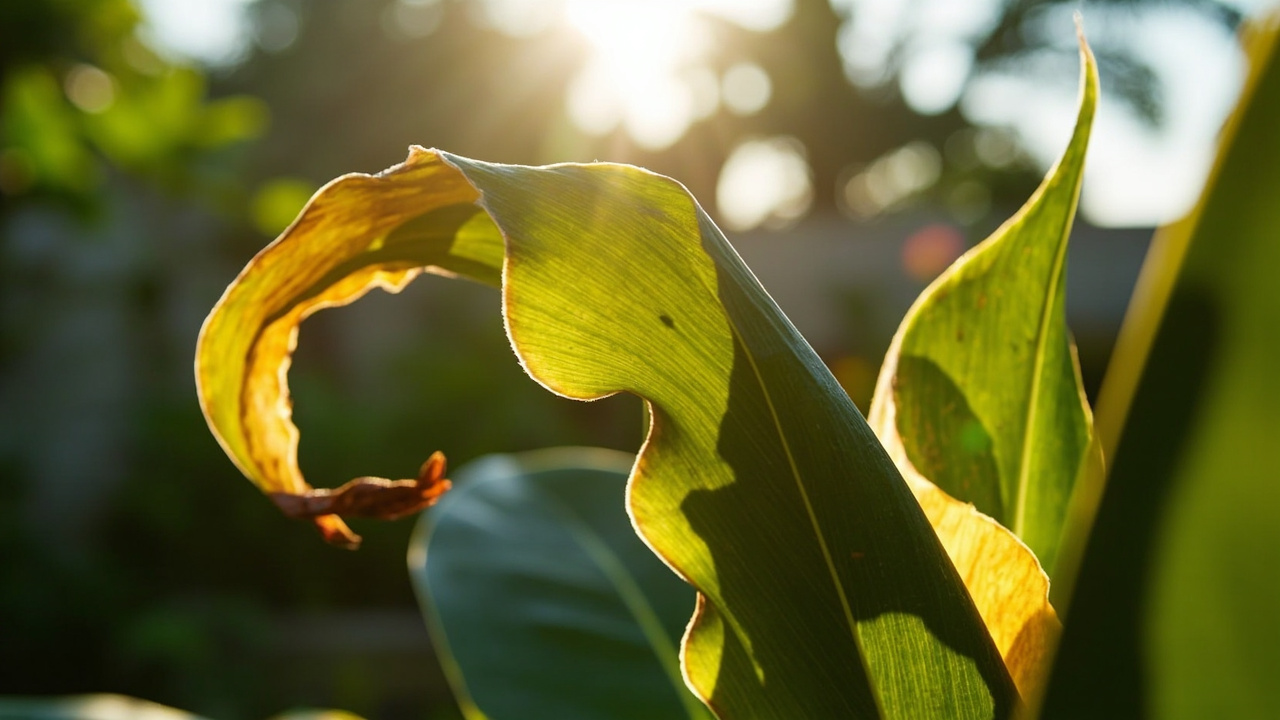
This is the sign most people misread as disease. Brown, crispy patches with a papery texture, usually concentrated on the side of the leaf facing the window, are sunburn, not a fungal problem.
True fungal leaf spot tends to be circular, sometimes with a yellow halo, and shows up regardless of which side faces the sun. Sunburn is directional and dry-edged, and it shows up within days of a light change, like a plant moved suddenly from a dim corner into a south window in full midday sun.
Other too-much-light signs include leaves that feel unusually stiff and bleached looking, pale rather than deep green, and soil that dries out unusually fast because the light and heat are pulling moisture hard.
The fix is rarely “no direct sun ever,” it’s usually “not this much, this suddenly.”
Seasonal light swings are where even attentive owners get caught off guard, and that’s next.
How Light Needs Shift With the Seasons
The sun’s angle drops through fall and winter, and a spot that was gentle indirect light in July can become direct, leaf-scorching light in January as the sun swings lower and pours straight through the glass. The reverse happens in spring.
Rotate the pot a quarter turn every couple of weeks year-round so the whole canopy gets even exposure instead of one side stretching toward the glass.
Expect slower growth, or a near halt, from late fall through winter even with good light, simply because day length is shorter. That is normal and not a sign of a sick plant.
Come spring, as days lengthen, you’ll often see a visible growth spurt, sometimes several new leaves in a single month.
If your only bright spot is a window that changes character with the seasons, here’s how to work around it without redecorating.
Placement Fixes That Don’t Require a Greenhouse
You do not need a solarium to get this right. A few practical moves solve most light problems.
- Use a sheer curtain on a strong south or west window to soften harsh midday sun without losing brightness.
- Add a grow light on a timer for 10 to 12 hours a day if your best window is still borderline; a simple LED grow bulb clipped near the canopy makes a real difference through winter.
- Move it closer, not just to a “brighter room.” Within 3 feet of a good window beats the center of a sunny-feeling space every time.
- Clean the leaves every few weeks with a damp cloth; dust cuts the light a leaf can actually absorb more than people expect.
- Avoid drafty spots right against glass in winter, where cold radiating off the pane can stress the plant even if the light is perfect.
Get the light right and consistent, and most of the other fiddle leaf fig drama, the dropped leaves, the brown spots, the sulking, quiets down on its own.
That consistency is really the whole game, and it’s exactly what the card below is built to help you keep track of.
Fiddle Leaf Fig at a Glance
- Light needed: bright, indirect light for 6+ hours daily, with a little gentle direct morning or late sun as a bonus, not a must.
- Best window: east-facing is easiest, south or west also work if filtered or a few feet back, north-facing is usually too weak.
- Distance from window: within 3 to 6 feet for most exposures, closer for north-facing light.
- Too little light looks like: small new leaves, long bare stem stretches, leaning toward the window, slow steady leaf drop.
- Too much light looks like: dry, papery brown patches on the sun-facing side of leaves, appearing within days of a sudden light change.
- Seasonal care: rotate the pot a quarter turn every couple of weeks, expect slower growth in winter, watch for windows getting harsher as the sun angle drops.
- No good window fix: add an LED grow light for 10 to 12 hours a day and keep leaves dusted so they can use the light they get.
Get the light dialed in and consistent before you touch anything else, watering, fertilizer, humidity, all of it works better once the light is right.
Everything else about this plant is a footnote to that one fact.