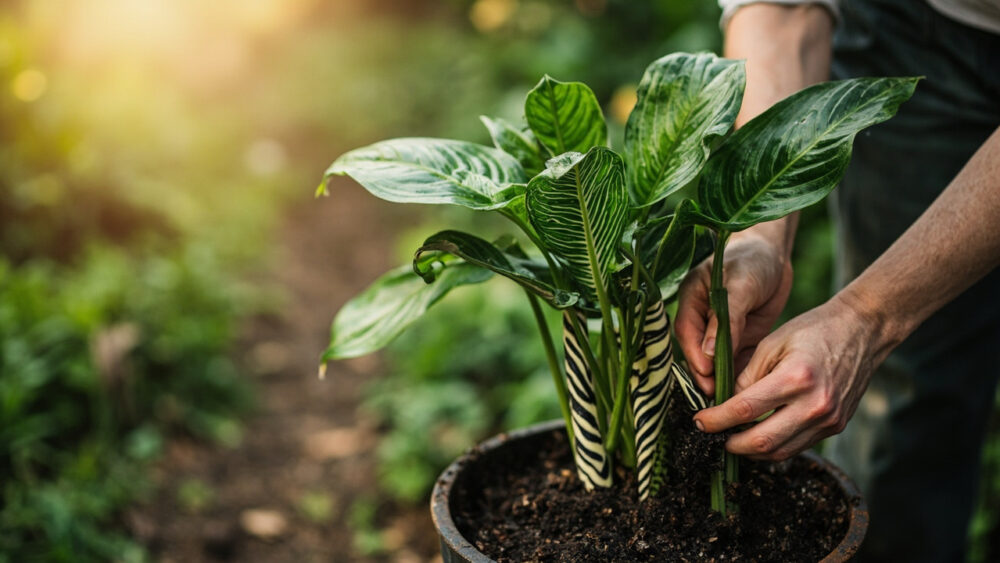
Alocasia zebrina wants bright, indirect light, evenly moist but never soggy soil, temperatures above 60°F, and humidity somewhere north of 50 percent. Give it those four things and the striped, arrow-shaped leaves and that gorgeous zebra-patterned stalk will keep coming. Skip any one of them and this plant tells you fast, usually through the leaves, sometimes overnight.
Here is what most people get wrong first: they assume a droopy, yellowing alocasia zebrina needs more water. That guess kills more of these plants than actual drought ever does. We will untangle that below, along with the dormancy scare that convinces half of new owners their plant just died when it did not, and the one light mistake that quietly stalls growth for months without ever looking like a crisis.
Stick with me through the sections below and you will know exactly what your plant is trying to tell you at any given moment. At the bottom is a save-able Alocasia Zebrina at a Glance card with the exact numbers, so you can screenshot it and stop guessing for good.
Light, Placement, and Temperature
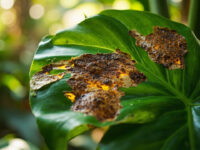
Alocasia zebrina wants bright, indirect light, several feet from an unobstructed east or south window, or right up against a sheer curtain if the window faces south or west. Direct midday sun scorches the thin leaves into brown, papery patches within a day. Too little light, on the other hand, does not kill it outright, it just quietly starves the plant of new growth for months while everything looks technically fine.
That is the light mistake almost nobody notices: a healthy-looking plant that has not pushed a new leaf in ten weeks is usually light-starved, not resting.
Temperature matters more than people expect. Keep it between 65°F and 80°F, and never let it sit below 55°F, even briefly. A cold windowsill in winter or a blast from an AC vent will stall growth or trigger leaf drop.
Humidity above 50 percent keeps the leaves crisp and glossy instead of curling at the edges.
Get the light and warmth right, and watering becomes far more forgiving than you think.
Watering: How Much, How Often, and the Droop That Fools Everyone
Water when the top 1 to 2 inches of soil have dried out, then soak thoroughly until water runs from the drainage holes. In bright, warm conditions that is roughly every 7 to 10 days, slower in winter, sometimes stretching to every 2 to 3 weeks.
Now the loop from the intro: a drooping, yellowing alocasia zebrina almost always means overwatering, not underwatering. The roots sit in wet soil, start to rot, and lose the ability to move water at all, so the leaves droop exactly like a thirsty plant even though the pot is soaked. Pouring in more water at that point finishes the job.
Check the truth with your finger, not your eyes. If the soil an inch down still feels damp and cool, leave it alone regardless of how sad the leaves look.
Underwatering shows up differently, as crispy brown edges and leaves that thin and curl inward rather than go limp and yellow.
Get watering right and the potting mix underneath it matters just as much.
Soil, Pots, and Feeding
Use a chunky, fast-draining mix, something like a standard houseplant potting soil cut with perlite, orchid bark, or coarse sand at roughly a 2 to 1 ratio. Straight potting soil holds too much water around the tuberous roots and invites rot. Always use a pot with drainage holes, no exceptions with this plant.
Feed lightly during active growth, spring through early fall, with a balanced liquid houseplant fertilizer diluted to about half strength, every 4 to 6 weeks. Skip feeding entirely in fall and winter when growth naturally slows or stops.
Alocasia zebrina is a moderately heavy feeder when it is actively pushing leaves, but a fed plant sitting in cold or dim conditions just accumulates salts it cannot use.
The right soil and light feeding schedule set up everything else you will do to this plant over the year.
Routine Tasks: Pruning, Repotting, and the “Dead” Winter Scare
Prune only when a leaf yellows completely or damages beyond repair, cutting the petiole close to the base with clean scissors. Don’t remove healthy green leaves to “tidy up,” each one is feeding the tuber below.
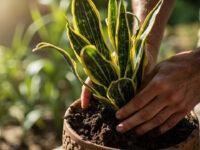
Repot every 12 to 18 months, or sooner if roots circle the pot’s bottom, sizing up just one pot size at a time in spring as growth resumes.
Now the second loop: alocasia zebrina commonly goes dormant in fall and winter, especially with less light and cooler temperatures. The whole plant can die back to the soil, leaves yellowing and collapsing one by one until nothing is left above the surface.
That looks exactly like a dead plant, and it is the single biggest reason people give up on this species and toss the pot.
It usually is not dead. Keep the soil barely moist, stop feeding, and leave the tuber in its pot in a warmish spot; new growth typically returns in spring once light and warmth increase.
Wipe dust off remaining leaves with a damp cloth every few weeks, both to keep pores clear and to catch pests early.
Speaking of pests, here is what actually goes wrong on this plant and how to fix each one.
Problems You Will Likely Run Into
- Yellow, mushy leaves and a sour smell from the soil: root rot from overwatering or poor drainage. Unpot, trim any black or mushy roots with clean scissors, repot into fresh dry mix, and cut back watering.
- Brown, crispy leaf edges: low humidity or underwatering. Increase watering frequency slightly and add a humidity tray or humidifier nearby.
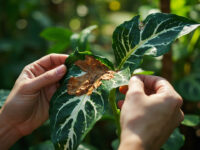
- Sunburned patches, tan or bleached and papery: direct sun exposure. Move the plant back from the window or add a sheer curtain.
- Tiny webbing on leaf undersides: spider mites, common in dry indoor air. Rinse the foliage and increase humidity; for persistent infestations, follow an insecticidal soap label exactly.
- Sticky residue or small bumps on stems: scale or mealybugs. Wipe off with a damp cloth or cotton swab dipped in rubbing alcohol, repeating weekly until they’re gone.
Alocasia zebrina is toxic to cats, dogs, and people if chewed or swallowed, due to calcium oxalate crystals that cause mouth and throat irritation, drooling, and swelling. If you suspect a pet or child has eaten any part of this plant, contact a veterinarian or physician right away rather than waiting to see what happens.
Once you’ve ruled out the common problems, here’s what the plant looks like when it’s actually happy.
Signs Your Alocasia Zebrina Is Genuinely Thriving
A thriving plant pushes a new leaf every 3 to 6 weeks during spring and summer, each one slightly larger than the last. The zebra-striped stalks stay firm and upright rather than flopping under the leaf’s weight.
Leaves hold a deep green color with crisp, unbroken edges, and the arrow shape stays taut rather than curling.
New growth emerging tightly rolled from the center, sometimes tinted reddish or bronze before unfurling green, is one of the clearest signs the plant is actively growing rather than just surviving.
If winter dormancy hits and the plant dies back, a thriving tuber will reward your patience with fresh shoots once spring light returns.
That is the whole picture, now here is the short version worth saving.
Alocasia Zebrina at a Glance
- Light: bright, indirect light year-round, no direct midday sun.
- Water: when the top 1 to 2 inches of soil dry out, roughly every 7 to 10 days in active growth, less in winter.
- Temperature: 65°F to 80°F, never below 55°F.
- Humidity: 50 percent or higher for crisp, unblemished leaves.
- Soil: chunky, fast-draining mix, potting soil cut with perlite or bark, always with drainage holes.
- Feeding: half-strength balanced fertilizer every 4 to 6 weeks, spring through early fall only.
- Repotting: every 12 to 18 months in spring, one pot size up.
If your alocasia zebrina droops, check the soil with your finger before you reach for the watering can. And if it disappears entirely some winter, don’t toss the pot, just wait for spring.