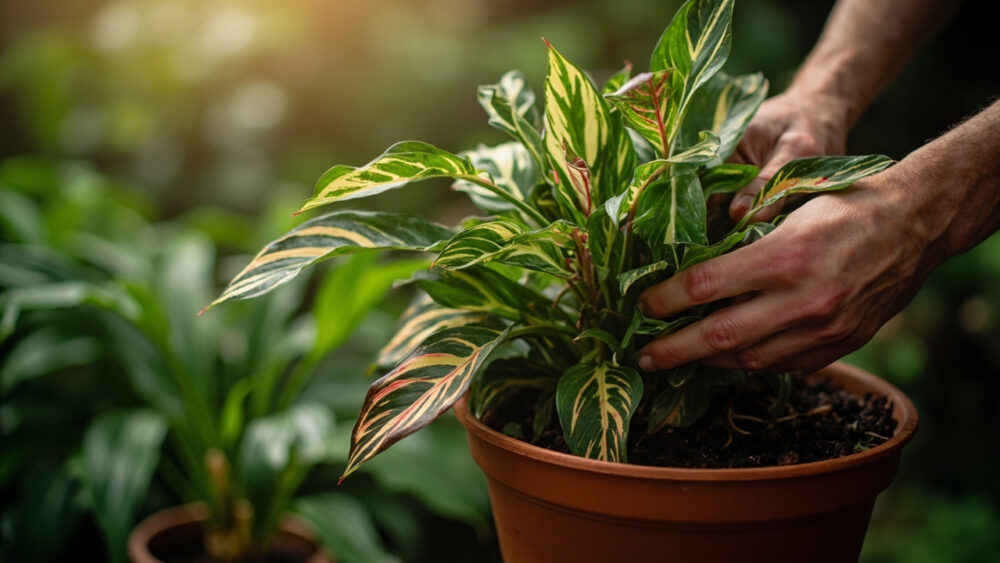
Prayer plant care comes down to four things it will not compromise on: bright indirect light with no direct sun, soil kept lightly moist but never soggy, humidity above what most living rooms offer naturally, and warmth that never dips below about 60°F. Get those right and the leaves fold up like praying hands every evening, right on cue. Skip even one and the plant tells you fast, usually with curled, crispy edges or leaves that stop moving altogether.
Most people who lose a prayer plant make the same mistake, and it is not underwatering. It is one specific watering habit that looks responsible but slowly rots the roots, and we will get to exactly what it is.
There is also a sign of a stressed prayer plant that gets misread constantly, mistaken for the plant being happy when it is actually asking for help. And once you have the basics down, there is a real question waiting right behind it: why some prayer plants sulk for months after you do everything right. Stick around for the save-able Prayer Plant at a Glance card at the bottom, it has the numbers you will want pinned to your phone before you touch this plant again.
Light, Placement, and Temperature
Prayer plants want bright, indirect light, the kind you get a few feet back from an east or north window, or filtered behind a sheer curtain in a south or west one. Direct sun bleaches and scorches the leaf patterning that makes this plant worth growing in the first place. Too little light and the leaves lose their contrast and stop folding at night the way they should.
Room temperature between 65°F and 80°F suits it fine. Below 60°F the plant sulks, and anything near freezing air off a drafty window will kill leaves fast.
Keep it away from HVAC vents, both heat and AC, since sudden dry blasts of air brown the edges within days.
Get the light and warmth steady, and watering becomes a lot more forgiving.
Watering: The Mistake That Costs Most People Their Plant
Here is the one that gets everyone. It is not forgetting to water, it is watering on a fixed schedule instead of checking the soil, so the plant sits wet for days at a time and the roots quietly rot from below while the leaves still look fine on top.
Check the top inch of soil with a finger before you water, every time, no calendar. Water when that inch is dry, which in most homes lands somewhere between every 5 and 9 days, faster in summer heat, slower in winter.
Water thoroughly until it runs from the drainage holes, then empty the saucer. Never let the pot sit in standing water.
If the leaves curl inward and go a little crispy at the tips, that is usually under-watering or low humidity, not a disease. If lower leaves yellow and go mushy at the base, that is the overwatering rot setting in, and it is far harder to reverse.
Get watering right and you have solved the problem that ends most prayer plants before their first birthday, but soil and food still matter.
Soil, Pots, and Feeding
Use a light, well-draining potting mix, a standard indoor potting soil with some perlite or orchid bark mixed in works well. Straight garden soil or anything that compacts and stays wet is a slow death sentence for the roots.
Always use a pot with drainage holes. Prayer plants have shallow, fibrous roots that do not tolerate wet feet for long.
Feed with a balanced liquid houseplant fertilizer diluted to about half strength, once every 4 to 6 weeks during spring and summer. Skip feeding entirely in fall and winter when growth slows way down.
Good soil and light feeding keep the roots healthy, but the plant still needs regular upkeep to look its best.
Pruning, Repotting, and Cleaning: The Routine Stuff
Snip off yellowed or fully browned leaves at the base of the stem any time you see them, using clean scissors. This is cosmetic, not urgent, but it keeps energy going to new growth instead of dead tissue.
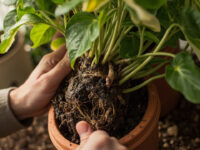
Repot every 1 to 2 years, ideally in spring, once you see roots circling the bottom of the pot or the plant drying out unusually fast between waterings. Go up just one pot size, 1 to 2 inches wider, since a too-large pot holds excess moisture the roots cannot use fast enough.
Wipe the leaves down with a damp cloth every few weeks. Dust blocks light and gives pests a place to hide.
Keep up with this and pests rarely get a foothold, but it helps to know what to look for anyway.
The Sign Everyone Misreads, and the Real Problems to Watch For
Here is the sign people get backward. When a prayer plant’s leaves stay folded up during the day instead of just at night, most people assume it is simply “praying” and doing its thing. Actually, daytime folding usually signals the plant is too dry, too cold, or sitting in light that is too intense, and it is curling to protect itself, not performing on schedule.
The most common pest is spider mites, especially in dry winter air, showing up as fine webbing and stippled, dull leaves. Increase humidity and wipe down leaves regularly, and treat with an insecticidal soap or horticultural oil per the product label if an infestation takes hold.
Root rot from overwatering shows as mushy brown stems at the soil line. Once the stem itself has gone soft, that plant section usually cannot be saved, though healthy top growth can sometimes be cut and rooted fresh in water.
Prayer plant is generally considered non-toxic to cats, dogs, and people, which is good news for households with curious pets, though any pet that eats a large amount of any houseplant can get an upset stomach. If you suspect a pet has ingested a significant amount of any plant and is showing symptoms, call your veterinarian.
Rule out the environment first, because most “sick” prayer plants are just cold, dry, or thirsty, not diseased.
Why Some Prayer Plants Sulk for Months, and How to Tell Yours Is Actually Thriving
This is the honest answer to the question most people ask right after they think they have fixed everything. A prayer plant that gets adequate light and correct watering but still looks flat and lifeless for months is almost always missing humidity, the piece people skip because it is the least convenient to fix.
Most homes sit at 30 to 40 percent humidity. Prayer plants want 50 percent or higher to really push new growth.
A pebble tray, a nearby humidifier, or grouping it with other plants all raise the humidity around the leaves enough to matter. Bathrooms with a window often work surprisingly well.
- New leaves unfurl every few weeks during spring and summer.
- Leaves fold upward each evening and reopen by morning, reliably, like clockwork.
- Foliage color and pattern stay crisp and high-contrast, not faded or washed out.
- No browning tips, no yellowing lower leaves, no drooping between waterings.
Hit all four and you are not just keeping this plant alive, you have actually got it thriving, which is rarer than most people think.
Prayer Plant at a Glance
- Light: bright, indirect light, a few feet from an east or north window or filtered light in a south or west one, no direct sun.
- Watering: check the top inch of soil with a finger, water thoroughly when it is dry, roughly every 5 to 9 days depending on season.
- Temperature and humidity: keep it between 65°F and 80°F, never below 60°F, and aim for 50 percent humidity or higher.
- Soil and pot: light, well-draining potting mix with perlite or bark, always in a pot with drainage holes.
- Feeding: balanced liquid fertilizer at half strength every 4 to 6 weeks in spring and summer, none in fall and winter.
- Repotting: every 1 to 2 years in spring, moving up just 1 to 2 inches in pot size.
- Toxicity: generally considered non-toxic to pets and people, but call your veterinarian if a pet eats a large amount and shows symptoms.
If you remember one thing, check the soil with a finger before every watering instead of a schedule. Everything else about this plant forgives you a lot more than wet roots ever will.