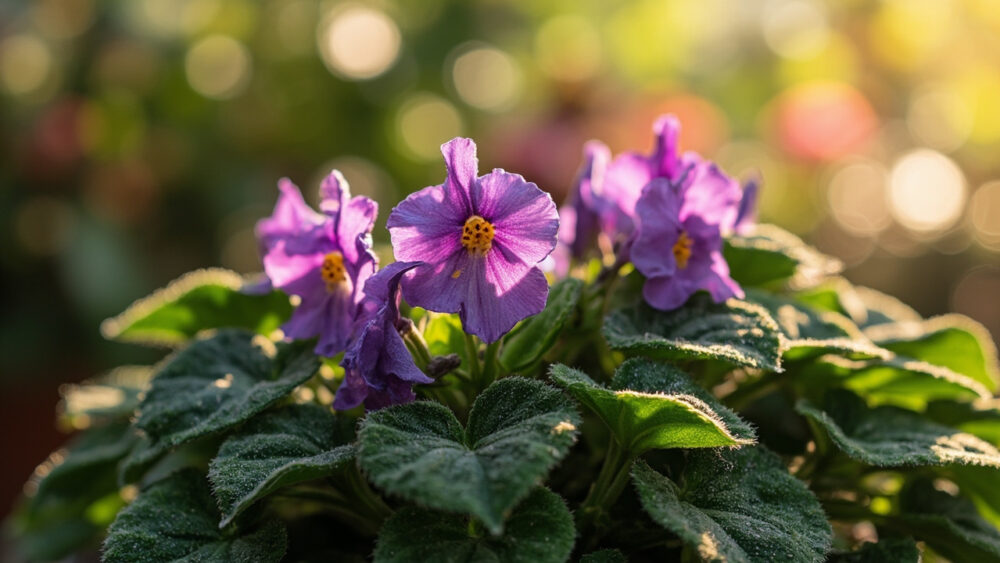
Water your african violet every 7 to 10 days, but that number means nothing without the check that goes with it: stick a finger into the soil, and if the top inch is dry, water; if it is still damp, wait two or three more days. That single habit, checking instead of following a calendar, is what separates people who keep the same african violet alive for a decade from people who buy a new one every spring.
Here is the mistake that kills more of these plants than anything else, and it is not what most people expect. Everyone assumes underwatering is the danger with a plant this fussy-looking, so they water on a strict schedule to be safe. That habit is exactly what rots the crown and the roots, and it happens quietly enough that by the time you see the damage, the plant is already past saving.
Below I will walk through the real schedule and what changes it, how to check rather than guess, the right way to actually get water into the pot, and how to tell overwatering from underwatering when both show up looking almost identical. Save-able summary card is at the bottom, with the exact facts worth keeping on your phone.
The Honest Watering Schedule, and What Changes It
Most african violets in a typical indoor room, in a 4 to 6 inch pot with drainage, need water roughly every 7 to 10 days. That is a starting point, not a rule.
Light, pot size, and humidity move that number a lot. A plant on a bright windowsill in dry winter air might want water every 5 to 6 days. The same plant in a dim corner, or in a plastic pot that holds moisture longer than terracotta, might go 10 to 12 days between drinks.
Root-bound plants in small pots dry out faster than plants sitting in oversized pots, which is one more reason bigger is not automatically better when you repot. African violets actually prefer being slightly snug in their container.
The schedule is a guess until you confirm it with the plant itself.
Check, Don’t Guess: The Finger Test, Pot Weight, and Leaf Cues
If you assumed the best method is a strict every-Tuesday watering routine, that habit is precisely what leads to root rot, because soil dry-down time changes with the season and the light, not the day of the week.
The finger test is the simplest check. Press one finger into the soil about an inch deep. Bone dry means water now. Slightly cool and barely damp means wait. Wet and heavy means definitely wait.
Pot weight is the trick experienced growers use without even thinking about it. Lift the pot right after watering and again a few days later. A dried-out pot feels noticeably lighter, and once you have felt that difference a few times you stop needing the finger test at all.
Leaves talk too. A thirsty african violet gets slightly limp, matte leaves that lose their usual firm shine. Leaves that turn glassy, dark, or soft and mushy at the base are telling you the opposite problem, and that one is harder to fix.
Once you know how to check, the next question is how to actually deliver the water correctly.
How to Water an African Violet the Right Way
African violet leaves and crowns hate sitting water, so how you water matters as much as how often. Bottom watering is the method most experienced growers rely on. Set the pot in a saucer or tray of room-temperature water for 15 to 30 minutes, let the soil pull up moisture through the drainage hole, then remove it and dump any water left in the tray.
If you water from the top instead, aim the spout directly at the soil and avoid the leaves and the crown, the fuzzy center where new growth emerges. Water that sits in the crown or collects on leaves invites rot and leaves ugly brown spots where cold water touched warm leaf tissue.
Always use room-temperature water, never cold straight from the tap. Cold water shocks the roots and causes exactly those brown ring spots on the foliage that people mistake for disease.
Never let the pot sit in standing water for more than half an hour. That single habit, walking away and forgetting the saucer, is responsible for more crown rot than any other single mistake.
Getting the method right solves half the problem, but you still need to catch trouble early, which means knowing what overwatering actually looks like next to underwatering.
Overwatering vs Underwatering: Telling Them Apart
This is the honest answer to the question you were about to ask next, because both problems can produce droopy, sad-looking leaves, and guessing wrong makes things worse.
Underwatered plants have leaves that go limp but stay thin, matte, and slightly curled at the edges, and the soil is dry to the touch an inch down. Give it water and the plant typically perks back up within a day.
Overwatered plants have leaves that go limp but feel thick, soft, and almost waterlogged, sometimes with yellowing lower leaves or a crown that looks dark and mushy. The soil stays wet for far longer than 10 days and often smells faintly sour.
If it is overwatering, the fix is not less water on the same schedule, it is pulling the plant out of the pot, checking the roots, trimming away any black or mushy sections, and repotting into fresh, dry, fast-draining potting mix.
Root rot that has reached the crown is genuinely hard to reverse, and if most of the root ball is dark and mushy, the honest prognosis is that you are better off taking healthy leaf cuttings and starting new plants rather than fighting to save the original.
Season changes everything about which of these two problems you are more likely to run into.
Seasonal Adjustments That Actually Matter
In winter, indoor heating dries the air and slows plant growth at the same time, which sounds contradictory but means you often water slightly less often, maybe every 9 to 12 days, even though the air feels drier.
In summer, longer daylight and active growth speed up water use, and the same plant may want checking every 5 to 7 days, especially near a bright east or west window.
Grouping plants near a humidity tray or pebble tray helps in winter without increasing how often you water, which is the fix most people skip because it feels less direct than just adding more water.
Blooming plants drink more than resting ones, so a violet covered in flower buds needs checking more frequently than the same plant between bloom cycles.
Once you match the season, the schedule mostly runs itself, which brings us to the card worth keeping.
African Violet at a Glance
- How often to water: every 7 to 10 days as a baseline, adjusted by checking the top inch of soil rather than following the calendar.
- Best method: bottom water for 15 to 30 minutes in room-temperature water, then remove the pot and empty the tray.
- Water temperature: always room temperature, never cold, to avoid leaf spotting and root shock.
- Signs of underwatering: thin, matte, limp leaves and soil that is dry an inch down, recovers within a day of watering.
- Signs of overwatering: thick, soft, waterlogged leaves, a dark or mushy crown, soil that stays wet past 10 days.
- Seasonal shift: water slightly less in winter, roughly every 9 to 12 days, and more often in summer or during active blooming, roughly every 5 to 7 days.
- Pot and light rule: smaller pots and brighter light dry out faster, so a snug, sunny plant needs checking more often than a loose, shaded one.
Water by feel, not by date, and let the finger test make the call every single time.
Get that one habit right and everything else about growing african violets gets a lot easier.