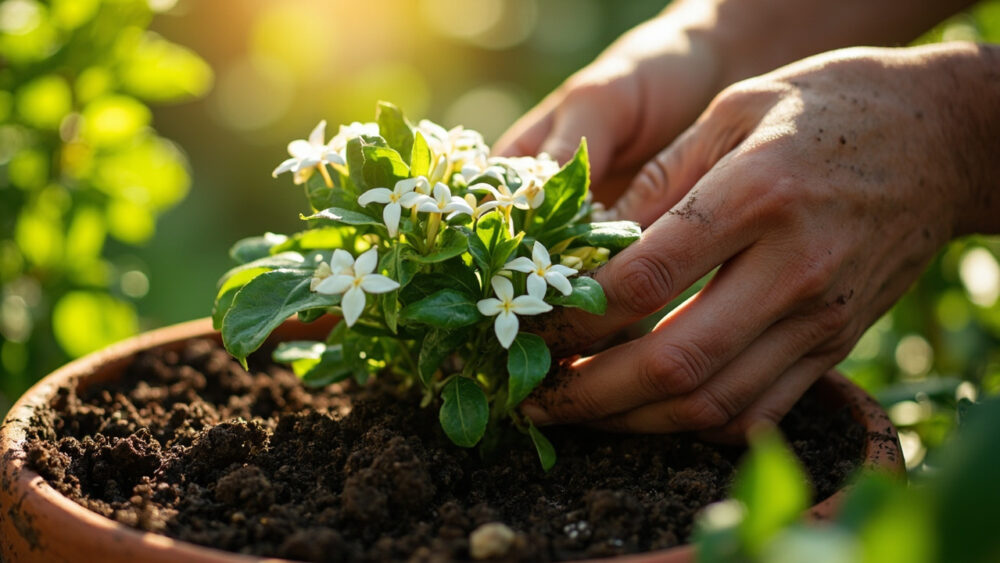
The short version: plant jasmine in spring after your last frost, once nighttime temperatures stay above 55 F, in a spot with at least six hours of sun and soil that drains fast. Give it something to climb, water it deeply but not often, and most varieties will start blooming within their first year, with fragrant flowers showing up in flushes from late spring through fall depending on the type. That is how to grow jasmine in a sentence, but the details are where most people lose the plant or lose the flowers.
Here is what trips people up before they ever get a bloom. There is a mistake with watering that looks exactly like underwatering but is the opposite, and it kills more jasmine than drought ever does. There is also a sign of stress everyone reads backward, mistaking a healthy dormant pause for a dying plant and yanking it out just before it was about to reward them. And there is the honest answer to the question every new jasmine grower eventually asks: why isn’t it blooming even though it looks perfectly healthy.
I will walk through all of it in order, planting through first flowers. Stick around to the bottom for the Jasmine at a Glance card, the saveable version of everything here in one place.
When to Plant Jasmine
Timing depends on whether you’re planting outdoors in the ground or starting in a container, and on your climate zone. In USDA zones 7 through 10, where many jasmines are hardy or near-hardy, plant outdoors two to three weeks after your last frost date, once soil temperature has warmed to at least 60 F a few inches down. Cold, wet spring soil stalls root growth and invites rot before the plant even gets started.
In zones 6 and colder, most jasmines need to live in containers that come indoors for winter. Plant those anytime from spring through early summer, then bring them in well before your first fall frost, since jasmine roots do not tolerate freezing.
Common white jasmine (Jasminum officinale) and star jasmine (Trachelospermum jasminoides, not a true jasmine but sold and grown the same way) both follow this same spring planting window.
Get the timing right and the rest of the season gets a lot more forgiving.
Choosing the Spot and Prepping the Soil
Jasmine wants sun, but the amount depends on your climate. In hot inland zones, give it morning sun with afternoon shade to avoid leaf scorch. In milder or coastal areas, full sun all day produces the heaviest bloom.
Drainage matters more than fertility. Jasmine roots sitting in soggy soil rot fast, full stop. If water still sits on the surface 30 seconds after you pour it, amend with compost and coarse grit, or plant in a raised bed or large container instead of fighting the native soil.
Aim for a slightly acidic to neutral soil, roughly pH 6.0 to 7.0. Work two to three inches of compost into the top eight inches of soil before planting, and if you’re training it up a trellis, arbor, or fence, set that support in place before you plant so you’re not driving stakes through new roots later.
The spot is only half the job. Getting it into the ground correctly is the other half.
Planting Step by Step
- Dig the hole: twice as wide as the root ball and just as deep, so the top of the root ball sits level with, or very slightly above, the surrounding soil.
- Loosen the roots: if the plant is rootbound, tease apart the outer roots or make two or three shallow vertical slices with a clean knife.
- Set and backfill: place the plant, backfill halfway, water to settle the soil, then finish backfilling.
- Space plants: 3 to 6 feet apart for vining types grown as a hedge or screen, or 18 to 24 inches from a wall or trellis so air can move behind the foliage.
- Mulch: two to three inches of bark or straw mulch, kept a couple inches back from the stem itself.
- Water in: a deep soak right after planting, then again every two to three days for the first two weeks while roots establish.
Once it’s in the ground and settled, the plant’s needs actually get simpler, not harder.
Watering and Feeding Through the Season
Here is the mistake I promised earlier. Wilting, droopy, slightly yellow leaves on jasmine almost always gets read as thirst, so people water more. That is usually backward.
Overwatering causes the exact same droop as underwateringbecause rotted roots can’t take up water regardless of how much is in the soil. Before you add water, push a finger two inches into the soil. If it’s still damp, the problem is too much water, not too little, and the fix is to back off and let it dry out, not to water again.
Once established, water deeply about once a week in the absence of rain, more often during a hot dry stretch, less in cool or rainy weather. Established jasmine tolerates brief dry spells far better than wet feet.
Feed lightly. A balanced, slow-release fertilizer in early spring is enough for most jasmine, with a second light feeding of a bloom-boosting, lower-nitrogen formula in early summer if you want heavier flowering. Too much nitrogen buys you lush green vines and very few flowers, which is its own common disappointment.
Get the water and food balance right and the plant mostly takes care of itself, except for a short list of problems worth watching for.
Problems That Actually Show Up
Jasmine is not a fussy plant, but a few issues are common enough to name plainly.
- Root rot: yellowing leaves, mushy stems near the soil line, a sour smell at the roots. Caused by poor drainage or overwatering. Pull back on water immediately and improve drainage; badly rotted plants often don’t recover.
- Aphids and spider mites: sticky residue, stippled or curling leaves, fine webbing on undersides. A strong water spray knocks most populations back; insecticidal soap applied per the label handles the rest.
- Powdery mildew: a white, flour-like coating on leaves, common where air circulation is poor. Space plants properly and water at the base, not overhead, and treat with a labeled fungicide if it persists.
- Scale insects: small, waxy brown bumps along stems. Scrape off light infestations by hand. Use a horticultural oil per label directions for heavier ones.
Now for the sign everyone misreads. Many jasmines, especially in containers or in cooler zones, drop leaves and go semi-dormant in winter, looking bare and half-dead. That is normal rest, not failure, and pulling a dormant jasmine out in February is the single most common needless loss I see. Leave it alone and check for new growth once temperatures rise in spring.
Handle those honestly and you’re left with the one question that actually matters most: when do the flowers show up.
When and How Jasmine Blooms
Most jasmine varieties bloom on and off from late spring into fall, with the heaviest flush usually in early to midsummer. A young plant from a nursery pot may bloom lightly its first year and hit full stride in year two or three, once its root system is established.
If yours looks healthy, green, and vigorous but simply won’t flower, here’s the honest answer: it’s almost always too much nitrogen, too little sun, or a plant that just hasn’t matured enough yet. It is rarely a disease, and there’s no quick trick to force blooms faster than the plant’s own age allows.
Flowers open most fragrantly in the evening and at night on many types, which is exactly why jasmine gets planted near porches, windows, and walkways instead of tucked in a back border. Harvest blooms for tea or scent by picking them freshly open, in early morning or evening, and using them the same day since the fragrance fades fast once cut.
Everything you actually need to remember is collected below, so you don’t have to scroll back to find it.
Jasmine at a Glance
- When to plant: two to three weeks after last frost, once soil hits at least 60 F, spring through early summer for containers.
- Sun: six or more hours daily, full sun in mild climates, morning sun with afternoon shade in hot inland zones.
- Soil: fast-draining, slightly acidic to neutral, pH 6.0 to 7.0, enriched with compost.
- Spacing and depth: plant at the same depth as the nursery pot, space 3 to 6 feet apart for hedges or 18 to 24 inches from a support structure.
- Watering: deep soak weekly once established, check soil moisture before assuming it needs water, since overwatering causes the same wilt as drought.
- Feeding: light balanced fertilizer in early spring, optional low-nitrogen bloom feed in early summer.
- Bloom time: late spring through fall, heaviest in early to midsummer, full maturity by year two or three.
Get the drainage and the sun right at planting time and jasmine forgives almost everything else.
The only real patience required is waiting for a young plant to grow up into its first real flush of flowers.