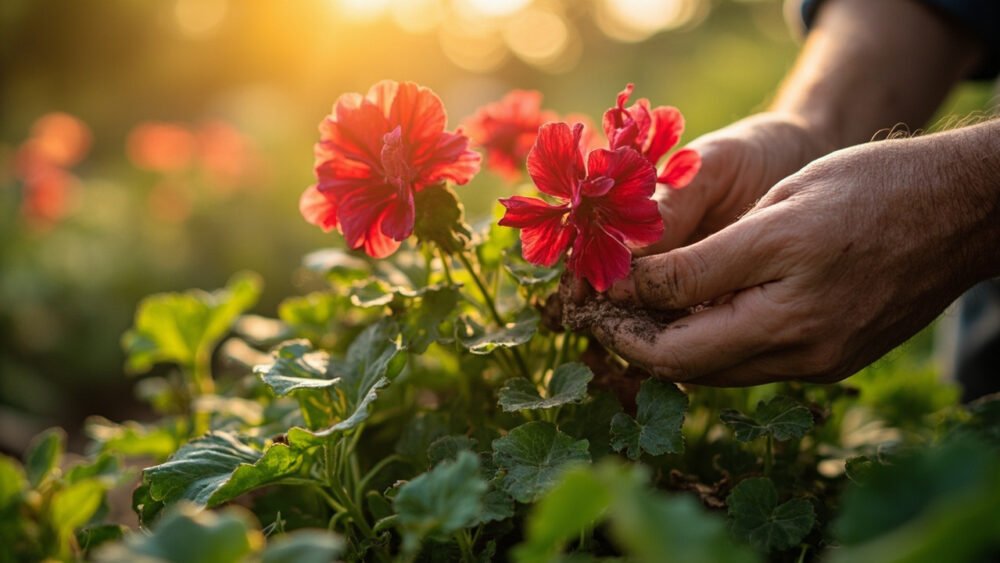
Geranium care comes down to four things the plant is picky about: at least six hours of direct sun, soil that dries out between waterings, a pot or bed with real drainage, and old flowers snipped off before they go to seed. Get those right and geraniums bloom from late spring through frost with almost no fuss. Get them wrong and you get a leggy plant with a handful of flowers and a lot of green.
Most people who struggle with geraniums are making one specific mistake, and it is almost never the one they suspect. They think they underwatered when the real problem was too much water sitting around the roots for too long.
There is also a pruning move nearly everyone skips because it looks brutal, and a feeding habit that quietly produces leaves instead of flowers. Stick around for both, plus the honest read on the mid-summer slump that panics a lot of first-time growers, and the saveable Geraniums at a Glance card waiting at the bottom of this page.
Light, Placement, and Temperature
Geraniums want full sunmeaning six or more hours of direct light a day. In hot climates (zone 9 and up) afternoon shade keeps the leaves from scorching, but everywhere else, more sun means more flowers, not fewer.
Indoors, a south or west window is the minimum. Less than four hours and the plant stretches toward the glass and stops blooming.
They like it warm during the day, 65 to 75°F, and cooler at night, down to around 55°F. That night drop is actually good for bud formation, so do not fight it by keeping them somewhere overheated around the clock.
Where you put the pot matters almost as much as the plant itself.
Watering: How Much, How Often, and How to Tell
If you assumed a droopy geranium needs more water, that guess is what kills most of them. Overwatering causes the exact same wilted, sad look as drought, and it is by far the more common cause.
Check the soil before you waternot the calendar. Stick a finger an inch or two down. If it is dry there, water thoroughly until it runs out the drainage hole. If it is still damp, wait.
In active growth and warm weather that usually means watering every 5 to 7 days in the ground, or every 2 to 4 days for a pot in full sun, since containers dry out much faster. In cooler weather or lower light, stretch that out considerably.
Root rot from soggy soil looks like wilting despite wet dirt, plus lower leaves that yellow and feel mushy rather than crisp. That is the real damage, and it is much harder to reverse than a plant that simply went a day too long without water.
Get the water right and the next question is what you are watering into.
Soil, Pots, and Feeding
Geraniums need soil that drains fast. A standard potting mix with perlite or coarse sand worked in does the job in containers; in the ground, raised beds or amended, loose soil beat heavy clay every time.
Any container needs a real drainage hole. Without one, no watering schedule will save the roots.
Feed lightlynot heavily. A balanced fertilizer at half strength every 4 to 6 weeks through the growing season is enough. High-nitrogen feed pushes out leafy growth at the expense of flowers, which is the quiet mistake behind a lot of “healthy but boring” geraniums.
Feeding is only half the routine, though, the other half is what you cut off.
Pruning, Deadheading, and Repotting
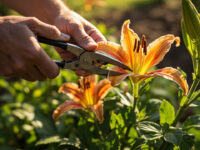
Deadheading is non-negotiable. Snap or snip off spent flower clusters right where the stem meets the base, not just the petals. Left on, they go to seed and the plant slows down bloom production to focus on that instead.
Pinch back leggy stems in spring, and do not be shy about it. Cutting a stretched stem back by a third feels drastic but forces bushier, more floriferous growth within a couple of weeks.
Repot when roots circle the bottom of the pot or growth stalls despite good light and food, typically once a year for actively growing plants, into a pot only one size up. Too large a jump in pot size holds excess moisture the roots cannot use, and you are back to root rot.
Clean off yellowed or dead leaves as you spot them; they are an easy entry point for fungal problems.
Even with good pruning habits, geraniums run into a predictable set of problems worth knowing before they show up.
Common Problems and Honest Fixes
Yellow lower leaves with soft, wet stems usually mean overwatering or poor drainage, not a nutrient problem. Let the soil dry out fully and check that the pot actually drains.
Fuzzy gray mold on flowers or stems, called botrytis, shows up in cool, damp, crowded conditions. Improve airflow, remove affected parts, and avoid watering late in the day so foliage isn’t damp overnight.
Small flying insects and sticky residue on leaves point to aphids or whitefly. A strong spray of water knocks most infestations back. For anything persistent, an insecticidal soap applied per the product label is the standard next step.
Brown, dry leaf edges with the plant otherwise upright often means too much direct heat and not enough water reaching the roots, common for potted geraniums in a hot afternoon spot. Move the pot or increase watering frequency rather than assuming disease.
If growth stalls in the hottest weeks of summer even though everything else looks fine, that is not a mistake, it is normal. Geraniums often pause blooming in extreme heat and pick back up as temperatures ease. Keep deadheading and watering, do not force feed to fix it.
Once the plant is past these snags, the signs of a genuinely happy geranium are easy to spot.
What Thriving Actually Looks Like
A geranium that is doing well has compact, bushy growth rather than long bare stems, with new flower buds forming continuously, not just one big flush that fades. Leaves stay a solid green without yellowing at the base.
Fast rebloom after deadheading is the clearest sign of all. If new buds show up within a week or two of snipping spent flowers, light, water, and feeding are all dialed in correctly.
Slow, sparse rebloom with otherwise green healthy foliage almost always traces back to insufficient light, not a watering or feeding issue, so that is the first thing to adjust before changing anything else.
Everything above collapses into one quick card, and that is what is worth saving to your phone before you walk back out to the garden.
Geraniums at a Glance
- Light: at least 6 hours of direct sun daily, with afternoon shade only in the hottest zones.
- Watering: check soil an inch or two down first, water thoroughly when dry, roughly every 5 to 7 days in ground beds and every 2 to 4 days for sunny containers.
- Soil: fast-draining potting mix with perlite or sand, and always a pot with a drainage hole.
- Feeding: balanced fertilizer at half strength every 4 to 6 weeks, never high-nitrogen.
- Temperature: 65 to 75°F by day, cooler nights around 55°F are fine and help buds form.
- Routine care: deadhead spent blooms at the base regularly, pinch leggy stems in spring, repot one size up yearly if rootbound.
- Warning signs: yellow, mushy lower leaves mean overwatering, not underwatering, almost every time.
If you remember nothing else, remember this: check the soil before you water, and deadhead like it is part of the job description.
Do those two things consistently and a geranium will outbloom almost anything else on the porch.