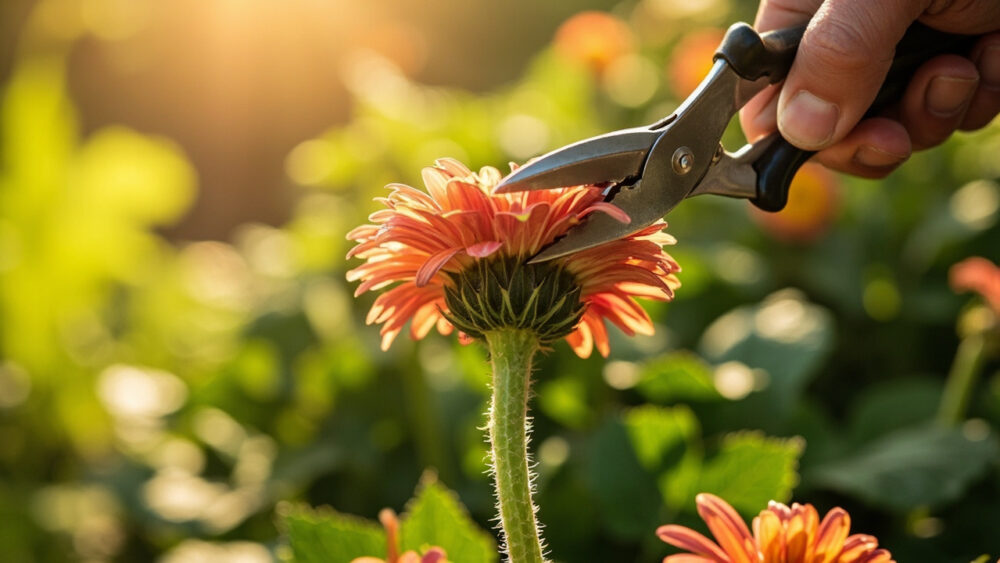
The right way to prune gerbera daisies is simple: deadhead spent blooms by cutting the flower stem all the way down to its base rather than snipping partway, and remove yellowing or damaged leaves at the crown as they show up, rather than shearing the whole plant back on a schedule. Gerberas don’t need the kind of hard, seasonal cutback that roses or butterfly bush do. Most of what people call pruning on a gerbera is really just deadheading and cleanup, done a little at a time, all season long.
That sounds easy, and it mostly is, but there are a few specific ways to get it wrong. One habit almost everyone brings over from other flowers actually starves the plant of its next round of blooms. There’s also a sign on the leaves that gets misread constantly, treated like a disease when it’s usually just the plant telling you something totally different.
Stick around and I’ll walk through exactly where to cut, how much is too much, and what a healthy gerbera looks like a week after you’ve tidied it up. Save-able quick-reference card is waiting at the bottom.
When to Prune (and When to Leave It Alone)
Deadhead continuously through the entire bloom season, which for most gardeners runs from mid-spring after the last frost through the first hard frost in fall. There’s no single “pruning day” on the calendar. You do it in small passes, every few days to once a week, whenever a bloom starts fading.
The one time to leave the plant alone is right after transplanting or during a heat spell above the mid 90s Fahrenheit, when gerberas are already stressed and extra cutting just adds insult to injury. Let it settle for a week or two first.
If you’re growing gerberas as houseplants or overwintering them indoors in a cool, bright spot, growth slows way down. Skip heavy grooming in winter and just remove anything that’s clearly rotting or mushy.
Timing is only half of it, though. What you actually cut matters more than when.
Tools and the One Prep Step That Matters
A pair of sharp bypass pruners or even sturdy scissors is all you need for stems. For the papery old leaves at the base, you can often just snap them off by hand.
The prep step people skip is wiping your blades with rubbing alcohol before you start, especially if you’ve just used them on another plant. Gerberas are prone to crown rot and fungal leaf spot, and a dirty blade is a very efficient way to introduce both. It takes fifteen seconds and it’s the difference between a clean cut that heals over and an open wound that invites disease.
Work on a dry day if you can. Wet foliage spreads fungal spores around far more easily than dry foliage does.
Once your tools are clean, the actual cutting is the easy part.
How to Prune a Gerbera Daisy, Step by Step
Step 1: Find where the flower stem meets the crown
Gerbera flowers sit on long, leafless stems that rise straight up out of the base rosette. Follow that stem down with your eyes or fingers until it disappears into the crown of leaves.
Step 2: Cut at the base, not partway up
This is the step almost everyone gets wrong. The instinct, carried over from deadheading roses or zinnias, is to snip the stem a few inches below the spent flower and leave a stub.
On a gerbera, that stub just sits there, turns brown, and rots instead of producing anything new. Cut the entire flower stem off right at the point where it emerges from the crown, as close to the base as you can get without nicking the surrounding leaves.
Step 3: Remove yellow or damaged leaves the same way
Leaves also attach at the crown. Grip a yellowed or damaged one near its base and either snap it off by hand or cut it close, again avoiding leaving a stub.
Step 4: Stop there
Do not shear across the top of the plant or cut healthy green leaves just to “tidy the shape.” Gerberas don’t hold a trimmed shape the way a boxwood does, and cutting healthy foliage only removes the leaves feeding the next flush of blooms.
Once you’ve made your cuts, the plant needs a few days to show you whether you did it right.
What to Expect Afterward
Within a week, you should see new flower buds starting low in the crown, often several at once if the plant is happy and getting at least six hours of sun. That’s the payoff for cutting stems at the base instead of leaving stubs behind.
Here’s the sign everyone misreads: a few outer leaves turning yellow even though you’ve been watering and feeding correctly. The guessable explanation is disease, and plenty of gardeners panic and reach for a fungicide immediately.
Usually it’s just the oldest leaves aging out naturally as the plant redirects energy into new growth, exactly like a tree dropping its oldest leaves in fall. Remove them and move on. It only becomes a disease concern if you see spotting, a fuzzy coating, or soft brown mush at the crown, in which case improve air circulation and remove affected tissue promptly, and consider a fungicide labeled for leaf spot on ornamentals, applied exactly per the label.
Healthy regrowth looks like this: firm, deep green new leaves, no mushiness at the crown, and buds pushing up on their own stems within one to two weeks.
Most of what actually costs people flowers happens before they even pick up the pruners, though.
The Mistakes That Cost You Flowers
- Leaving flower stem stubs: they rot at the crown and can invite the exact crown rot that kills the whole plant, so always cut flush to the base.
- Pruning in extreme heat or right after transplant shock: the plant needs its existing leaves to recover first, cutting on top of stress slows everything down.
- Overwatering after a hard prune out of guilt: gerberas want soil that dries slightly between waterings, and soggy crowns after cutting is one of the fastest routes to rot.
- Cutting healthy leaves for shape: gerberas rebloom from energy stored in their foliage, fewer leaves means fewer future flowers, not a neater plant.
- Dirty tools: reusing blades from a diseased plant without cleaning them is how fungal problems jump from one gerbera to the next.
Avoid those five and pruning a gerbera becomes almost boring, in the best way.
Gerbera Daisies at a Glance
- When to deadhead: continuously through the bloom season, from after last frost in spring until the first hard frost in fall, every few days to once a week.
- Where to cut: flower stems all the way down to where they emerge from the crown, never leaving a stub.
- What else to remove: yellow, damaged, or rotting leaves, snapped or cut off close to the base.
- When to skip pruning: right after transplanting, or during heat spells above the mid 90s Fahrenheit, and during winter dormancy indoors.
- Tools needed: sharp bypass pruners or scissors, wiped with rubbing alcohol before use.
- Sun and spacing for best rebloom: at least six hours of direct sun daily, plants spaced 12 to 18 inches apart for airflow.
- Warning sign to watch: soft, mushy, or spotted tissue at the crown means possible rot or fungal disease, not normal leaf aging.
Cut flower stems flush to the base, keep your blades clean, and let the plant keep its healthy leaves. Do that consistently and the gerbera does the rest of the work on its own.