The most common reason a peony refuses to bloom is planted too deep. Peony eyes (the pink buds at the crown) need to sit no more than 1 to 2 inches below the soil surface, and if a division got buried at 4, 5, or 6 inches during planting or got covered by mulch and top-dressing over the years, the plant will grow leaves happily and never flower. The fix is simple, if not instant: dig it up during the dormant season and reset the crown shallow.
But planting depth is not the only culprit, and it is not even always the right guess. Too much shade gets blamed constantly, but plenty of no-bloom peonies are sitting in six-plus hours of sun and failing for a completely different reason. The detail that actually tells you which cause you are dealing with is usually right at the crown, not the leaves, and most people never look there.
Some of these plants will bloom again next year with one correction. Others are a two or three year rebuild. Stick with me through the causes and the tell-apart section, and I will give you a two-minute diagnosis checklist at the very bottom you can run right now, standing at the plant.
Causes, Most to Least Likely
1. Planted or Mulched Too Deep
Confirm it: pull back mulch and soil at the crown with your fingers. If the pink eyes or old stem bases sit more than 2 inches under the surface, this is almost certainly it.
Peonies are famously fussy about this one detail. Fix it by dividing and replanting in early fall (best) or very early spring before growth starts, setting eyes just 1 to 2 inches deep, then keeping mulch off the crown itself.
Depth mistakes are the single most fixable problem on this list.
2. Not Enough Direct Sun
Confirm it: watch the spot for a full day. Peonies want at least 6 hours of direct sun; if a nearby tree or shrub has filled in over the years and the plant now gets 3 or 4, that is your answer.
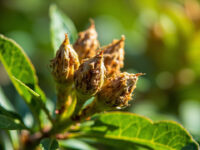
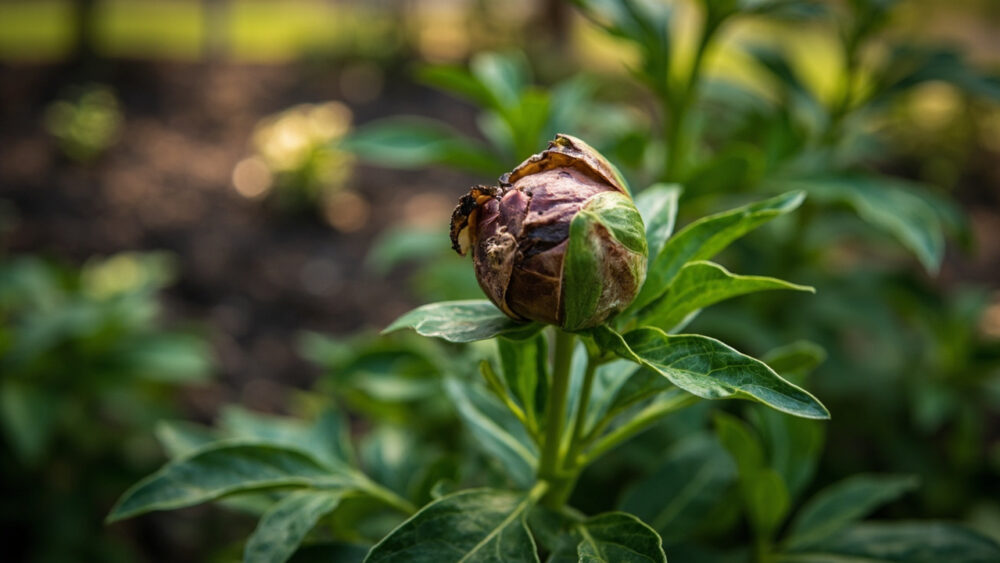
Plants in too much shade usually stay green and healthy-looking but produce few or no buds, and any buds that form often blast (shrivel brown before opening).
Fix it by transplanting the peony to a sunnier spot in early fall, or by thinning back whatever is casting the shade.
Light is easy to rule in or out just by watching the sky for a day.
3. Plant Is Still Too Young or Was Recently Divided
Confirm it: check your planting records or the size of the clump. A peony planted within the last 1 to 3 years, or a small division with only a few eyes, simply has not built enough root mass yet.
This is the most common answer for a peony that has never once bloomed since you put it in the ground.
Fix it with patience, not intervention: keep it fed lightly and watered, and expect first real flowers in year 2 or 3, with a full show by year 4 or 5.
If your peony is young, the honest fix is time, and that is worth knowing before you start pulling it apart looking for a problem.
4. Late Frost Killed the Buds
Confirm it: look for buds that formed pea-sized, then turned black, brown, or mushy and stopped developing, especially after a cold snap in early spring.
Peonies push growth early, and a hard late frost can nip buds before you ever see it happen. New foliage otherwise looks normal.
Fix it: there is no saving that year’s buds, but the plant itself is fine. Cover emerging growth with a sheet or frost cloth on nights when a late freeze is forecast next spring.
A frost year is a one-season problem, not a plant problem, and that distinction matters for what you do next.
5. Overfed with Nitrogen
Confirm it: dark green, lush, oversized foliage with few or no buds, especially if you have been feeding with a high-nitrogen lawn fertilizer nearby or a general all-purpose feed heavy on the first number.
Nitrogen pushes leaf growth at the expense of flower buds.
Fix it by switching to a low-nitrogen, higher-phosphorus fertilizer (or none at all for a season) applied lightly in early spring, and keep lawn fertilizer from drifting into the bed.
Too much of a good thing is an easy trap, and it is one you can just stop doing.
6. Foliage Cut Down Too Early Last Year
Confirm it: think back to last fall. If you cut the plant to the ground in late summer while leaves were still green, that is likely it.
Peonies build next year’s buds using energy stored through fall foliage; cutting green leaves early starves that process.
Fix it going forward by waiting until foliage yellows and dies back naturally, usually after the first hard frost, before cutting to 2 to 3 inches.
This year’s no-bloom might just be last year’s timing mistake catching up with you.
7. Overcrowded, Old Clump Needing Division
Confirm it: a mature clump, often 8 to 10-plus years old, that used to bloom well and has gradually produced fewer flowers each year, with a dense tangle of roots when you dig at the edge.
Old, congested crowns compete with themselves for water and nutrients.
Fix it by dividing in early fall, cutting the root mass into sections with 3 to 5 eyes each, and replanting shallow in refreshed soil.
Now that you have the individual suspects, the real trick is telling them apart on your specific plant.
How to Tell the Causes Apart
Where the problem shows up tells you almost everything. If the issue is at the crown itself, buried eyes or an overcrowded root mass, planting depth or old age is your answer. If the foliage looks lush and normal but nothing above ground ever forms buds, look up at the sky before you look down at the soil.
Timing is the other big clue. Buds that form and then die (turning black or mushy) point to frost. Buds that never form at all point to youth, depth, shade, or nitrogen. A plant that bloomed fine for years and has tapered off gradually points to overcrowding.
Once you place your plant into one of those patterns, the fix gets obvious fast.
Will It Recover?
Depth and shade problems have a genuinely good prognosis. Fix the depth or move the plant into more sun, and you can expect blooms within 1 to 2 years, sometimes the very next spring if the correction is minor.
Young plants and overcrowded clumps are not broken at all, just on their own timeline. Give a young peony until year 3 to 5 before worrying, and give a freshly divided clump 2 to 3 years to reestablish.
Frost damage and one season of nitrogen overfeeding are both single-year setbacks with no lasting harm. Correct course and the next season is typically normal.
The only genuinely discouraging case is a peony that is deeply shaded, badly overcrowded, and poorly divided, all at once. That plant can take several years to bounce back even after every fix, and if it is in a spot that simply cannot get more sun, moving it is the honest answer rather than continuing to nurse it in place.
With the outlook clear, the last piece is making sure you are not back here again next spring.
How to Keep It From Happening Again
Plant shallow from day one. Eyes 1 to 2 inches deep, and keep mulch pulled back from the crown every spring, not piled on.
Choose a site with 6 or more hours of direct sun before you dig the hole, since peonies planted in a shady spot rarely improve without a move.
Leave foliage standing and green until after the first hard fall frost, then cut back to 2 to 3 inches.
Feed lightly in early spring with a low-nitrogen, phosphorus-forward fertilizer, and skip feeding altogether the year after a division.
Plan to divide overcrowded clumps every 8 to 10 years in early fall, before flowering drops off noticeably.
Now here is the two-minute checklist to run at the plant right now.
Diagnosis Checklist
- Pull back mulch and soil at the crown, check if eyes sit more than 2 inches deep, if so plan a fall replant.
- Watch the bed for a full day, count hours of direct sun, if under 6 hours plan a move or prune back shading branches.
- Check the plant’s age and planting history, if it is under 3 years old or recently divided, give it more time before changing anything.
- Look for small buds that formed then turned black or mushy, if present, note this as frost damage and cover buds next spring.
- Inspect foliage color and bud count together, dark oversized leaves with no buds points to nitrogen overfeeding, ease off fertilizer.
- Recall last fall’s cutback timing, if you cut green foliage early, resolve to wait for it to yellow naturally this year.
- Dig gently at the clump’s edge, if roots are a dense tangled mass and the plant is 8 or more years old, plan a fall division.
Run through those seven checks in order and you will land on the real cause almost every time. Fix that one thing, give it a season or two, and the blooms come back.