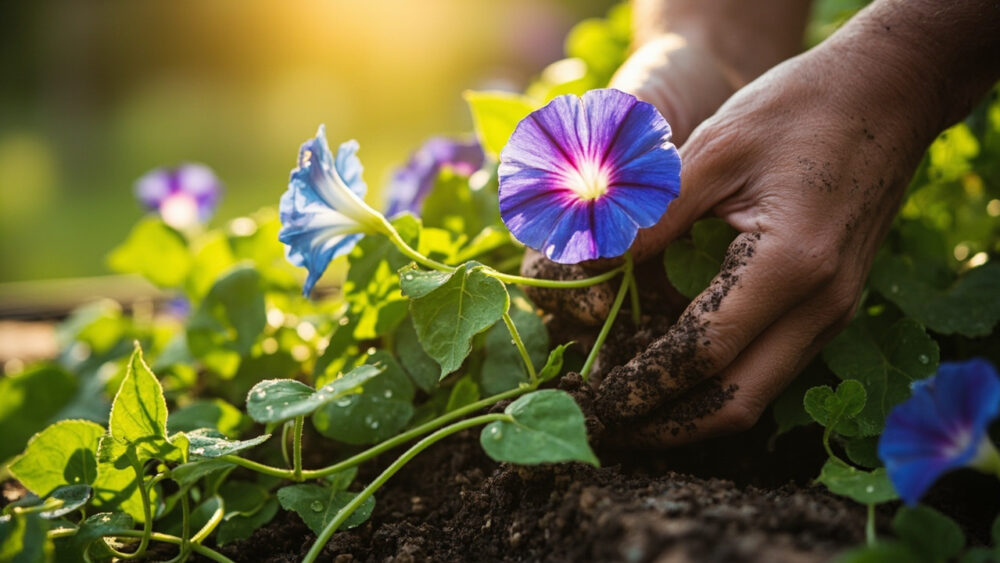
Here’s how to grow morning glories from seed to bloom: nick or soak the seeds overnight, plant them a half inch deep directly in the ground after your last frost once soil hits about 65°F, give the vines something to climb, and keep the soil on the leaner side. That last part surprises people. Morning glories bloom best when you basically ignore them once they’re established.
Most first-time failures come down to one of three things: soil that’s too rich, seeds that never got scarified and just sat there for three weeks doing nothing, or a support structure put up two months too late for vines that just climbed the tomato cage instead. There’s also a sign almost everyone misreads: tons of leafy growth with zero flowers, which looks like a happy plant but usually means the opposite.
Stick with this and you’ll get the timing, the spacing, the exact planting depth, and the feeding schedule that actually produces blooms instead of just vine. There’s a save-able Morning Glories at a Glance card waiting at the bottom once you’ve got the full picture.
When to Plant Morning Glories
Morning glories are frost-tender annuals, and cold soil is their biggest enemy at the start. Wait until soil temperature holds at 65°F or warmer, which is usually one to two weeks after your last spring frost date, not the same day. Seeds planted into cold, wet soil often just rot instead of germinating.
In zones 8 and warmer you can also direct sow in early fall for winter and spring bloom in mild climates. Everywhere else, spring planting after the soil has genuinely warmed is the move. If you’re impatient, start seeds indoors in biodegradable pots three to four weeks before your last frost, since the taproots hate transplant disturbance.
Get this part right and everything downstream gets easier.
Choosing the Spot and Prepping the Soil
Full sun is non-negotiable, six or more hours a day, or you’ll get a vine that grows fine and blooms poorly. This is where that leafy-no-flowers mistake usually starts: too much shade, too much nitrogen, or both.
Skip the compost binge. Morning glories actually perform better in average, even lean soil. Rich, heavily fertilized ground pushes them into producing leaves and vine length at the expense of flowers, which is the exact trap well-meaning gardeners fall into.
What they do need is drainage. If water pools more than a few seconds after a hard rain, work in some grit or coarse sand, but don’t load up on manure or bagged compost the way you would for tomatoes.
Pick the spot for the climbing, not for the flowerbed aesthetics, because where the vine goes next matters more than what’s under it.
Steps to Plant Morning Glory Seeds
- Scarify each seed by nicking the hard coat with a nail file or rubbing it between two pieces of sandpaper, then soak in room-temperature water for 12 to 24 hours.
- Sow seeds a half inch deep directly where they’ll grow, since long taproots resent transplanting.
- Space seeds 6 to 10 inches apart, thinning later to about 8 to 12 inches between plants.
- Install a trellis, fence, netting, or string support at planting time, not after the vines are already sprawling.
- Keep soil consistently moist, not soggy, until germination, which typically takes 5 to 10 days once soil is warm enough.
That scarification step is the one people skip and then wonder why nothing came up.
Watering and Feeding Through the Season
Once seedlings are established, morning glories get fairly drought-tolerant and actually prefer it that way. Water when the top inch or two of soil is dry, roughly once a week in normal conditions, more often during a real heat stretch.
Fertilizer is where good intentions backfire. If you assumed more feeding means more flowers, that’s the guess that produces a wall of green with barely a bloom on it. Skip regular fertilizing entirely, or if your soil is truly poor, use a low-nitrogen, phosphorus-leaning feed once a month at most.
Pinching the growing tips when vines are young encourages branching and more bloom sites rather than one long unbranched runner. It’s optional, but it works.
Get the vine blooming instead of just climbing, and the next question is usually what’s eating it.
Problems That Actually Show Up
Aphids are the most common visitor, clustering on new growth and buds, and a strong blast of water or insecticidal soap applied per the label handles most infestations before they matter. Japanese beetles will chew ragged holes in the leaves in midsummer in the regions where they’re established; handpicking in the morning when they’re sluggish helps, and if you go the pesticide route, follow the product label exactly.
Fungal leaf spot and rust show up as dark or orange-tinted blotches, usually after a stretch of humid, still weather. The fix is almost always airflow, not fungicide: thin crowded vines and avoid overhead watering late in the day.
The other honest issue: morning glories self-seed aggressively and can turn weedy where they’re happy, sometimes classified as invasive in mild-winter regions. It’s worth noting that all parts of the plant, especially the seeds, are considered toxic if ingested by people or pets, so if a child, dog, or cat eats a significant amount, call a veterinarian or poison control rather than waiting to see what happens.
Handle those two realities and you’re mostly just waiting on flowers now.
When Morning Glories Bloom and How to Keep Them Going
Expect first blooms 60 to 90 days after sowing, depending on variety and how warm the season has been. Each flower opens at dawn and closes by early afternoon, sometimes sooner on hot days, which is exactly what the name promises and exactly why some gardeners think their plant “stopped blooming” when it’s just doing what it always does.
There’s no harvest window in the vegetable-garden sense since you’re growing these for the flower show itself, but if you want to save seed, let some pods dry and brown on the vine in late summer before collecting them.
Deadheading spent blooms isn’t required but it does redirect energy into new flowers instead of seed production, so it stretches the bloom season if you’re inclined to bother.
Everything you actually need to remember is right below.
Morning Glories at a Glance
- When to plant: direct sow after last frost once soil holds at 65°F or warmer, or start indoors three to four weeks earlier in biodegradable pots.
- Planting depth: a half inch deep, seeds scarified and soaked 12 to 24 hours first.
- Spacing: 6 to 10 inches at sowing, thinned to 8 to 12 inches between plants.
- Sun and soil: full sun, six or more hours, average to lean soil with good drainage, no heavy compost or manure.
- Water and feed: weekly watering once established, little to no fertilizer needed.
- Support: trellis, netting, or string installed at planting time, not after vines take off.
- Bloom time: 60 to 90 days from seed, flowers open at dawn and close by early afternoon.
Give morning glories lean soil, real sun, and something to climb from day one.
Do that and the flowers take care of themselves.