Overwatering is the most common reason geranium leaves turn yellow, and it usually shows up on the lower, older leaves first while the soil underneath stays damp for days after you water. Let the top 1 to 2 inches of soil dry out completely between waterings and cut back the frequency before you touch fertilizer or repot anything. That single change clears up more yellow geraniums than every other fix combined.
But it is not always water. Most people blame the sun first, and that guess is wrong more often than it is right. The real clue is not whether the leaves are yellow, it is exactly where on the plant the yellow starts and whether it comes with spots, a soft stem, or just plain old age catching up to a lower leaf.
Stick with this. Below is the full list of causes ranked by how often they actually happen, a side-by-side way to tell them apart on your specific plant, an honest read on whether yours will bounce back, and a save-able diagnosis checklist at the very bottom you can run in two minutes standing right next to the pot.
Why Geranium Leaves Turn Yellow, Most Likely Cause First
1. Overwatering or poor drainage
Confirm it: stick a finger 2 inches into the soil. If it feels wet or cool and clings to your skin, and the pot has no drainage holes or sits in a saucer full of water, this is your cause. Yellowing starts on lower, older leaves and they often feel soft or slightly mushy, not crisp.
Fix it by letting the soil dry to that same 2-inch depth before watering again, dumping any standing saucer water, and moving the plant out of a pot without drainage holes. If roots smell sour or look brown and slimy when you tip the plant out, trim the mushy roots and repot into fresh, dry potting mix.
Water discipline fixes most geraniums, but a few keep yellowing for a different reason entirely.
2. Underwatering
Confirm it: the soil pulls away from the pot’s edge, feels bone dry more than an inch down, and the yellow leaves feel dry and papery rather than soft. Lower leaves usually go first here too, which is why it gets confused with overwatering.
Fix it with a thorough soak until water runs from the drainage holes, then get on a real schedule: check the soil every 2 to 3 days rather than watering on a fixed calendar.
Both watering problems look similar at a glance, so the feel test above matters more than the color does.
3. Nitrogen or magnesium deficiency
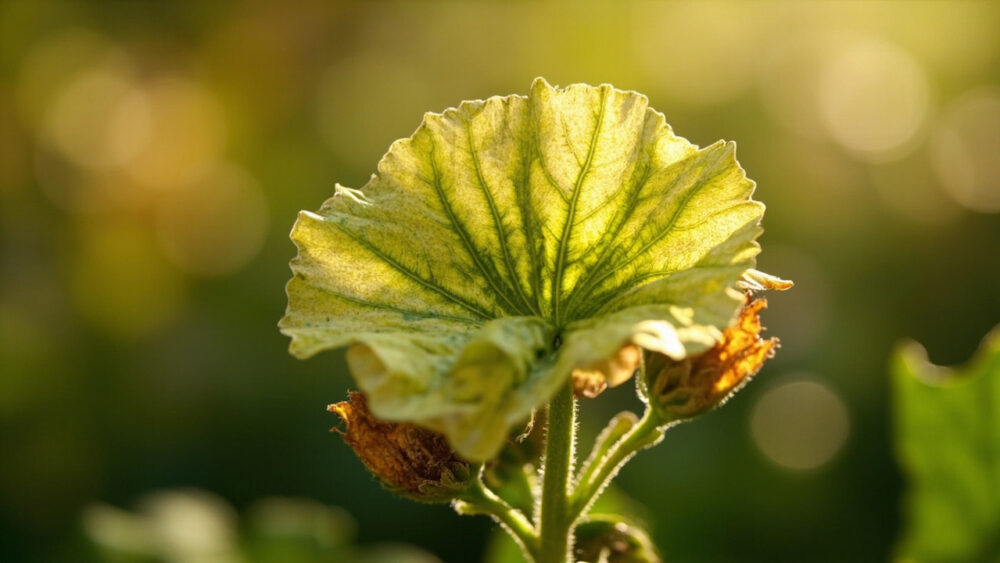
Confirm it: older leaves yellow between the veins while the veins stay green, and the plant has not been fertilized in a couple months, or it has been in the same pot for a year or more without fresh soil.
Fix it with a balanced liquid fertilizer at half strength every 2 to 4 weeks during active growth, following the label rate exactly. If the vein pattern is the main tell, a fertilizer with magnesium (or a diluted Epsom salt drench, about 1 tablespoon per gallon of water, applied once a month) usually resolves it within 2 to 3 weeks.
If feeding does not shift things within a few weeks, the cause is probably not nutrition.
4. Natural aging of lower leaves
Confirm it: only the oldest leaves at the base of the plant yellow and drop, one or two at a time, while everything above looks green and the plant keeps producing new growth and blooms normally.
There is nothing to fix here. Just snip the yellow leaves off at the stem so the plant is not wasting energy on them, and let it be.
This one is harmless, but the next few causes are not, and they need faster action.
5. Fungal or bacterial leaf spot and stem rot
Confirm it: yellowing comes with brown or black spots, a slimy black stem base, or a musty smell, often after a stretch of overwatering or poor air circulation. This tends to start anywhere on the plant, not just the bottom, and spreads fast.
Fix it by removing all affected leaves and stems immediately, improving airflow around the plant, watering at the soil line instead of overhead, and using a fungicide labeled for the specific disease if it keeps spreading, following the product label exactly. Severe stem rot at the crown often cannot be saved.
Rot moves quickly, so this is the one cause where waiting a few days actually costs you the plant.
6. Cold shock or temperature stress
Confirm it: the plant sat outside during a cold night below the mid 40s Fahrenheit, or near a drafty window, and the yellowing showed up within a day or two afterward, often with some leaf edges looking translucent or water-soaked.
Fix it by moving the plant somewhere steady between 65 and 75 degrees Fahrenheit during the day and above 50 at night, and away from cold glass or AC vents.
Once you rule out temperature, the last common cause is simply light.
7. Too much or too little light
Confirm it: a geranium kept in low light gets pale, yellowish new growth and leggy stems reaching toward a window, while one in intense afternoon sun through glass can get bleached, yellow-white patches on the leaves facing the light.
Fix it by giving geraniums at least 4 to 6 hours of bright light, direct morning sun is ideal, and shielding them from harsh midday sun behind glass, which intensifies heat.
Now that you have the full list, the trick is matching your plant’s exact pattern to the right one.
How to Tell the Causes Apart
Where the yellowing starts tells you the most. Lower and older leaves first points to water problems, aging, or a nutrient deficiency. Yellowing that starts anywhere, including new growth, with spots or a bad smell points to disease.
Texture is the tiebreaker between the two watering culprits: soft and mushy means too much water, dry and papery means too little.
Vein pattern narrows it further. Yellow between green veins on old leaves is almost always a magnesium or nitrogen shortfall, not water at all.
Speed matters too. Yellowing that appears overnight with black or slimy tissue is disease, not a slow drift you can fix over a week.
With those tells in mind, here is what actually happens next for each one.
Will It Recover?
Overwatering and underwatering both have good odds. Correct the watering habit and you should see new growth come in green within 2 to 3 weeks, though the yellowed leaves themselves will not turn green again and should be removed.
Nutrient deficiencies recover well too, usually within a month of consistent feeding, as long as the roots are still healthy underneath.
Natural aging needs no recovery since nothing is actually wrong.
Fungal and bacterial issues are the honest exception. Caught early with the affected parts removed, the rest of the plant often pulls through. Once rot reaches the main stem or crown, cut your losses and take healthy-looking cuttings instead of trying to save the original plant.
Cold shock and light stress recover fully once conditions are corrected, though it can take a few weeks for the plant to look fresh again.
A good recovery rate still depends on catching the cause early, which is exactly what prevention is for.
How to Keep It From Happening Again
Water by feel, not by schedule. Check the top 2 inches of soil before every watering and only water when it is dry, and make sure every pot has drainage holes.
Feed lightly during spring and summer with a balanced fertilizer at half the label strength, and skip feeding in winter when growth slows.
Give the plant real light, several hours of direct or bright indirect sun daily, and keep it out of cold drafts and off cold windowsills in winter.
Space plants for airflow and avoid wetting the leaves when you water, since damp foliage sitting still is what invites fungal spots in the first place.
Run through the checklist below next time yellow shows up, and you will usually know the cause before you finish reading it.
Diagnosis Checklist
- Check soil moisture 2 inches down: if wet and the leaves are soft, suspect overwatering, if dry and papery, suspect underwatering.
- Look at which leaves are yellow: only the oldest, lowest ones with the rest of the plant healthy means normal aging, no action needed.
- Check for a vein pattern: yellow between green veins on older leaves points to a nutrient deficiency, feed at half strength and watch for improvement over 2 to 3 weeks.
- Look for spots, black stem tissue, or a bad smell: if present, remove affected parts immediately and improve airflow, treat with a labeled fungicide if it spreads.
- Think back on recent cold exposure: a cold night below the mid 40s Fahrenheit or a drafty spot points to cold shock, move it somewhere steady and warm.
- Check the light: pale, leggy growth means too little light, bleached patches on sun-facing leaves means too much direct sun through glass.
- If none of these fit or the plant keeps declining after two weeks of the right fix, tip it out of the pot and check the roots for rot as the real underlying issue.
Most yellow geranium leaves trace back to a watering habit, not a mystery disease.
Fix the water, give it real light, and the next flush of leaves usually comes in green.