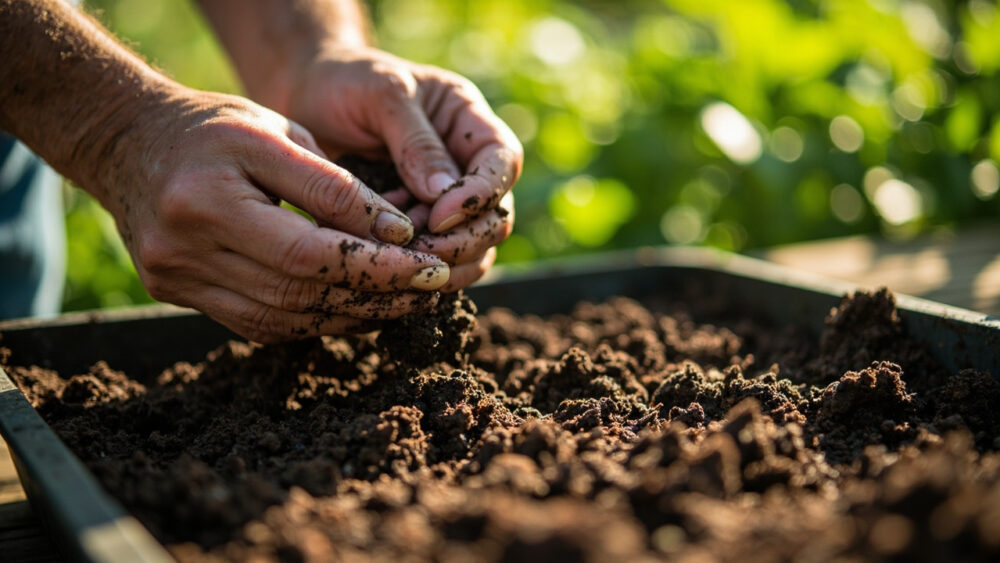
Growing eggplant from seed starts indoors, 8 to 10 weeks before your last spring frost, because eggplant needs warmth to germinate and a long head start before it can handle outdoor conditions. Sow the seed a quarter inch deep in a warm seed-starting mix, keep the soil around 80 to 85°F, and expect a seedling in one to two weeks. From there it is another 8 to 10 weeks of growing indoors before the plant is ready to move outside, and another 65 to 85 days after transplant before you are slicing into your first fruit.
Here is the part almost nobody gets right the first time: eggplant germinates on heat, not on light or water, and a cool windowsill will leave you staring at bare soil for three weeks wondering if the seed was dead. It usually was not. It was just cold.
Before you get to that first purple fruit, there are a couple of honest truths worth knowing now. Eggplant is slower and fussier than tomatoes or peppers, transplant shock can set a plant back two full weeks if you rush the hardening-off, and the moment you’re actually supposed to pick that first eggplant is not the moment most people think. Stick around, because the full Eggplant at a Glance card is at the bottom of this guide, saveable to your phone, with every number in one place.
When to Start Eggplant Seeds
Count backward 8 to 10 weeks from your average last frost date and that is your seed-starting window. Eggplant is not a plant you direct-sow in most of the country. It needs warm soil, 70°F or higher, and a long growing season that shorter summers simply do not hand you if you wait to sow outdoors.
In zones 9 and warmer, direct sowing after the soil has warmed is workable. Everywhere else, indoors is the only realistic path.
The mistake that costs people a season is starting too early. A seedling that sits indoors past 10 to 12 weeks gets rootbound, stalls, and never really recovers its momentum once it’s in the ground.
Getting the timing right matters less than getting the sowing conditions right, and that’s where things actually go sideways.
Sowing Eggplant Seed Step by Step
The steps themselves are simple. The details inside each step are where germination succeeds or fails.
Depth and medium
Sow seeds about a quarter inch deep in a sterile, well-draining seed-starting mix, not garden soil. Garden soil compacts in small containers and invites damping-off disease, which kills more indoor seedlings than any pest ever does.
Temperature
This is the step everyone underrates. Eggplant wants soil temperature between 80 and 85°F to germinate reliably. A heat mat under the tray is the single best investment you can make here. Without one, in a room at 65 to 70°F, germination can take three weeks or simply not happen at all.
Light
Light does not affect germination, but the second a sprout appears, it needs strong light immediately, ideally a grow light kept just a couple inches above the leaves. A windowsill alone almost always produces pale, leggy seedlings that never fully recover their strength.
Get the heat right and the sprouting part takes care of itself, but knowing what a healthy sprout should look like is the next hurdle.
Germination: What to Expect and When to Worry
On a heat mat at 80 to 85°F, expect the first sprouts in 7 to 14 days. Without supplemental heat, it can stretch to 21 days or more, and that delay is exactly what convinces people their seed was bad.
If nothing has emerged by day 21 and you’ve had consistent warmth and moisture, the seed likely was not viable, and it is fair to resow rather than keep waiting. But check your soil temperature with an actual thermometer before you give up. Room temperature at plant height is often 10 degrees cooler than you’d guess.
Keep the mix moist but never soggy. Eggplant seedlings are genuinely prone to damping-off, a fungal collapse that rots the stem right at the soil line. A small fan running nearby to keep air moving cuts that risk substantially.
Once true leaves show up and the seedling looks sturdy, the countdown to the outdoors begins, and that transition is where a lot of otherwise healthy plants get set back hard.
Hardening Off and Transplanting
Eggplant is more cold-sensitive than tomatoes, and this is the sign most people misread. A seedling that looks perfectly healthy indoors can sit in the garden and simply stop growing for two weeks if it goes out too fast or too cold. It is not dying. It is stalled, and that stall eats directly into your harvest window.
Do not transplant until nighttime temperatures reliably stay above 55°F and soil temperature is at least 65°F, which is usually two to three weeks after your last frost, later than most people move their tomatoes.
Harden off over 7 to 10 days: start with an hour or two of shade outdoors, and gradually build to a full day of sun and wind exposure before transplanting.
Space plants 18 to 24 inches apart in full sun, in soil amended with compost, and bury the stem to just below the first set of leaves.
Getting a plant through transplant without a stall is half the battle, and the other half is what you do to it all summer.
Caring for Eggplant Through the Season
Eggplant wants consistent moisture, roughly 1 to 1.5 inches of water a week, and it wants heat. Cool, wet summers produce small, slow plants no matter what else you do right.
Feed it a bit heavier than you’d feed a pepper. A balanced fertilizer at planting, followed by a side dressing once flowering starts, keeps production going. Too much nitrogen alone gives you a huge leafy plant with barely any fruit.
Watch for flea beetles riddling the leaves with small holes and aphids clustering on new growth. Both are manageable with a labeled insecticidal soap or row covers early in the season; follow the product label exactly.
Staking or caging matters more than gardeners expect, since a loaded eggplant branch snaps easily in wind or rain.
All that care is building toward one moment, and that moment is easier to get wrong than you’d think.
When to Harvest Eggplant
If you assumed bigger is better, that guess is exactly what ruins the texture. Eggplant left on the plant too long turns spongy, bitter, and full of hard seeds. The fruit you want is glossy-skinned, firm, and springs back gently when you press a thumb into it. A dull, dented skin that doesn’t bounce back means it’s already past its best.
Most varieties are ready 65 to 85 days after transplant, when fruits reach roughly two-thirds of their mature size, which is smaller than most first-time growers expect.
Cut, don’t pull, leaving a short stub of stem attached. Regular picking pushes the plant to keep setting new fruit right up until frost.
Everything above is the full process, and here is the condensed version worth keeping on hand.
Eggplant at a Glance
- When to start seeds: 8 to 10 weeks before your last frost date, indoors, on a heat mat.
- Germination temperature: 80 to 85°F soil temperature, sprouting in 7 to 14 days at that range.
- Sowing depth: about a quarter inch deep in a sterile seed-starting mix.
- When to transplant: two to three weeks after last frost, once nights stay above 55°F and soil hits at least 65°F.
- Spacing: 18 to 24 inches apart, full sun, in compost-amended soil.
- Watering: 1 to 1.5 inches per week, consistent, never letting the soil dry out completely.
- Days to harvest: 65 to 85 days after transplant, picked at about two-thirds mature size, glossy and springy to the touch.
Eggplant rewards patience more than effort, get the heat right early and the timing right late, and the plant handles the rest.
Everything else is just keeping it watered and picking before it gets too big to enjoy.