Growing cabbage from seed means starting indoors 6 to 8 weeks before your last frost, or direct sowing outside once soil hits about 45 to 50 F, then giving each plant 12 to 24 inches of space and a steady, unhurried 60 to 100 days to bulk up into a head. That is the whole arc. The details are what decide whether you get soccer-ball heads or a bed of loose, bolted disappointments.
Most failed cabbage crops do not fail from disease or bad luck. They fail from one of two timing mistakes, and both happen before the plant ever shows a symptom. There is also a sign gardeners misread constantly right at transplant time, one that looks like trouble but usually is not.
Stick around for the Cabbage at a Glance card at the very bottom, it is the version of this whole guide you can screenshot and check from the garden without scrolling through paragraphs again.
When to Start Cabbage Seeds
Cabbage is a cool-season crop that actually resents heat, which flips a lot of people’s instincts. Start seeds indoors 6 to 8 weeks before your last spring frost date so transplants go into the ground while the weather is still cool. You can also direct sow outside 2 to 4 weeks before last frost once soil has warmed past about 45 F, though indoor starts give you a head start on the size that matters most.
Cabbage also runs a fall crop well. Count backward from your first fall frost using the variety’s days-to-maturity number, add two weeks for insurance, and start seeds indoors or direct sow that far out.
The mistake that ruins most first attempts is starting too late for a spring crop, then watching heads try to form just as summer heat arrives.
Sowing Step by Step
- Depth: sow seeds 1/4 to 1/2 inch deep, no deeper. Cabbage seed is small and does not have the reserves to push up through heavy soil.
- Medium: use a light seed-starting mix if starting indoors, or fine, raked, weed-free soil if sowing direct.
- Temperature: germination is fastest between 45 and 85 F, with the sweet spot around 65 to 75 F. A cold windowsill will still work, just slower.
- Light: once seedlings emerge they need strong, direct light immediately, 12 to 16 hours a day. Weak windowsill light is the single biggest cause of tall, floppy seedlings that never recover.
Get the light right from day one, because germination itself is the easy part.
Germination: What to Expect, and When to Actually Worry
Cabbage seed is fast and reliable. Expect the first sprouts in 4 to 7 days at warm soil temperatures, stretching to 10 days if it is cooler. Germination rates are typically high, you should see most seeds up within that window.
If nothing has emerged by day 12 to 14, the seed is either too old, sat too wet and rotted, or the medium dried out at some point. Start over rather than waiting longer, cabbage does not trickle up late the way some slower crops do.
Thin seedlings once they have their first true leaves, down to one strong plant per cell or every 12 to 18 inches if direct sown. This feels wasteful and it is the step most new gardeners skip, which is the second real mistake: crowded seedlings stay small and weak no matter how good the soil is underneath them.
Thinning is the unglamorous step that decides how big your heads get months from now.
Hardening Off and Transplanting
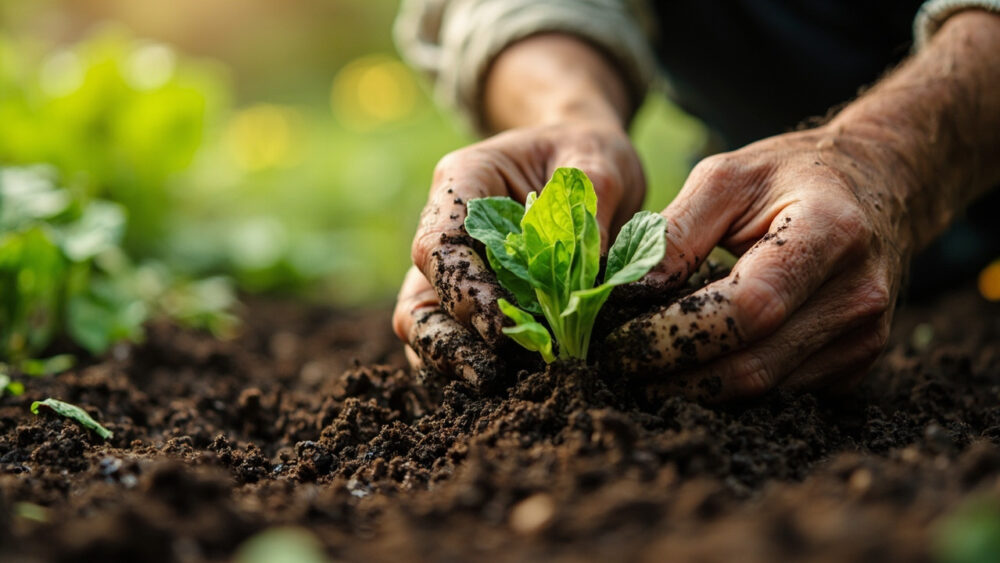
Cabbage seedlings are ready to move outside 4 to 6 weeks after sowing, once they have 4 to 5 true leaves and the outdoor soil has settled into the mid-40s or warmer. Harden them off over 7 to 10 days, starting with an hour or two of outdoor shade and building up to a full day outside before the final transplant.
Here is the sign everyone misreads. Transplants often go a little purple or bluish on the outer leaves in the first few cool nights outside, and gardeners assume something is wrong. That purpling is usually just cold-stress pigment, a normal reaction to temperature swings, not disease and not a nutrient problem. It typically fades as roots settle in.
Plant transplants at the same depth they were growing, spaced 12 to 18 inches apart for smaller varieties and up to 24 inches for large storage types, with rows 18 to 36 inches apart. Cabbage can shrug off a light frost once established but a hard freeze right after transplant will still set it back.
Get them in the ground at the right spacing and the real season of care starts immediately.
Caring for Cabbage Through the Season
Cabbage wants **consistent moisture**, about 1 to 1.5 inches of water a week, more in hot or dry stretches. Uneven watering, wet-dry-wet, is the fastest way to split heads later, so water deeply and on a schedule rather than whenever the surface looks dry.
Feed heavy. Cabbage is a nitrogen hog early on to build leaf mass, then benefits from a balanced feeding as heads start to form. A side dressing of compost or a balanced fertilizer at planting and again 3 to 4 weeks later covers most gardens.
Watch for cabbage worms and loopers, the small green caterpillars that chew ragged holes in outer leaves. Check the undersides of leaves regularly and remove eggs and caterpillars by hand for light infestations. For heavier pressure, a biological or labeled insecticide can help, always follow the product label exactly rather than guessing at rates.
Mulch to keep soil temperatures even and weeds down, cabbage roots are shallow and do not like competition.
Keep that moisture steady, because the next thing to watch for is what happens right as heads start to size up.
Here Is the Honest Answer About Splitting and Bolting
This is the follow-up question most people are about to have: why do cabbage heads split, and can you stop it once it starts? Splitting happens when a mature head gets a sudden rush of water after a dry spell, usually from a heavy rain following drought stress.
You cannot un-split a head, but you can prevent most of it with steady watering and by harvesting promptly once heads feel solid, rather than leaving them in the ground “just a little longer.” Bolting, where the plant sends up a flower stalk instead of a tight head, comes from prolonged heat or a hard cold spell during head formation and is also not reversible once it starts.
Neither is a disease and neither means you did everything wrong, they are both timing and weather problems, which is exactly why the planting window at the start of this guide matters so much.
All of that leads to the one question that actually has a satisfying, simple answer: when is it actually ready.
When Cabbage Is Ready to Harvest
Cabbage is ready when the head feels solid and dense all the way through when you squeeze it, not just firm on the outside. Most varieties reach this point 60 to 100 days after transplant, depending on type, with smaller early varieties finishing faster than big storage cabbages.
Cut, don’t pull. Slice the head off at the base with a sharp knife, leaving the outer wrapper leaves and root in the ground. Many varieties will send up several smaller secondary heads from that same root over the following weeks, a legitimate second harvest most gardeners never bother to wait for.
If a head starts to split before you get to it, harvest immediately, split heads still eat fine, they just will not store as long.
That is the whole cycle start to finish, and here is the short version to keep on hand.
Cabbage at a Glance
- When to plant: start seeds indoors 6 to 8 weeks before last frost, or direct sow 2 to 4 weeks before last frost once soil is above 45 F, plus a fall crop timed backward from first fall frost.
- Depth and spacing: sow 1/4 to 1/2 inch deep, thin or transplant to 12 to 24 inches apart depending on variety, rows 18 to 36 inches apart.
- Germination: 4 to 7 days at 65 to 75 F, worry if nothing shows by day 12 to 14.
- Hardening off: 7 to 10 days of gradually increasing outdoor exposure before transplant, purple-tinged outer leaves after transplant are usually just cold stress.
- Water and feed: 1 to 1.5 inches per week on a steady schedule, nitrogen-heavy feeding early, balanced feeding as heads form.
- Harvest: 60 to 100 days after transplant, when the head feels solid all the way through, cut at the base and leave the root for a possible second flush of small heads.
- Watch for: cabbage worms on leaf undersides, splitting from uneven watering, bolting from heat or cold stress during head formation.
Get the timing right at the start and cabbage mostly grows itself from there.
Everything else, worms, splitting, purple leaves, is just weather and patience, not failure.