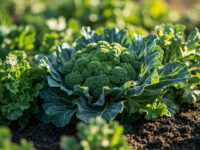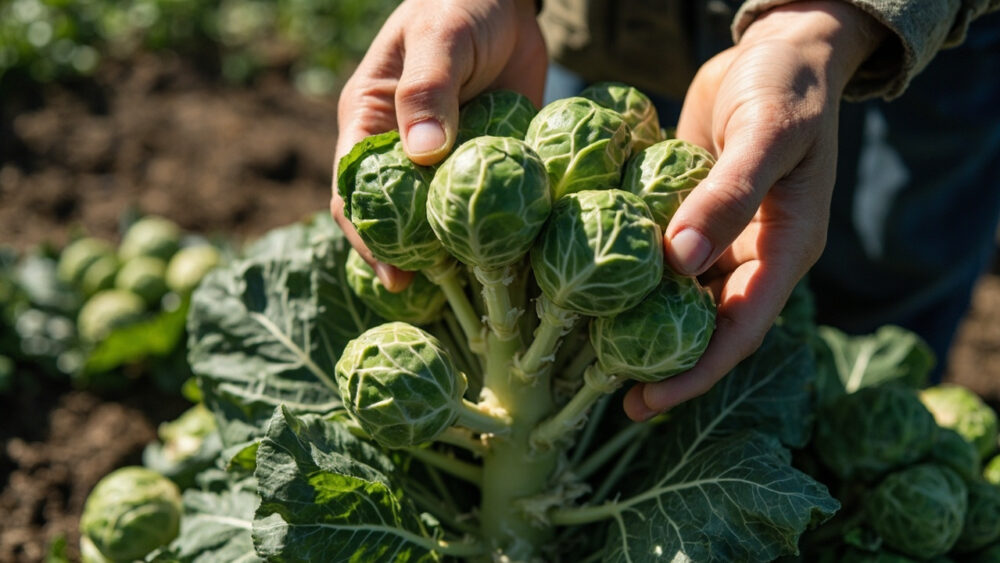
When to harvest brussels sprouts comes down to size and firmness, not the calendar. Pick the sprouts once they reach about 1 to 1.5 inches across and feel firm and tight when you squeeze them, starting from the bottom of the stalk and working up as the upper ones catch up over the following weeks. Most gardeners are pulling sprouts anywhere from early fall into winter, since this crop actually improves after a light frost or two.
Here is the part almost nobody tells you straight: the sprouts at the top of the stalk are not behind schedule, they are supposed to be smaller and slower. Pick the whole stalk at once because it looks tidy, and you will waste half your harvest on sprouts that needed another two or three weeks.
There is also a frost mistake that costs people a whole crop of flavor, and a “ready” sign that looks exactly like a warning sign. Stick around, because the save-able Brussels Sprouts at a Glance card at the bottom has every number in one place for your phone.
The Real Signs a Sprout Is Ready
Size and firmness
A ready sprout is firm enough that it does not give when you squeeze it gently between two fingers. Size matters less than density: a marble-sized sprout that is rock hard is better than a golf-ball-sized one that feels spongy or loose.
Color and the leaves around it
Sprouts should be a deep, matte green. If you see yellowing on the sprout itself, or the wrapper leaves right around it have gone papery and loose, that sprout is past its prime and will taste bitter or blow open.
Loose, open sprouts are not a disease, they are just old.
Why “It Turned Purple After Frost” Is Not a Problem
A lot of first-time growers see a purplish or bronze tint after a cold night and assume the plant is dying. That is the guess almost everyone makes, and it is backwards.
Cold actually helps this crop. A frost or two converts starches to sugars inside the sprout, so flavor gets noticeably sweeter and less bitter after temperatures dip into the low 30s F. The purple tinge is just a cold-stress pigment response, not damage, as long as the sprout itself is still firm.
What does hurt them is a hard freeze into the teens and low 20s F held for many hours, which can turn the sprouts mushy on thawing. Anything colder than that, or several nights in a row that cold, and quality starts to slide fast.
So the honest answer to “should I panic about frost” is: one or two light frosts are a flavor bonus, not a threat.
The Timing Window, and What Early or Late Costs You
Brussels sprouts run 80 to 100+ days from transplant to first harvest depending on variety, and they mature from the bottom of the stalk upward over 4 to 8 weeks. That staggered ripening is normal, not a problem to fix.
Harvest too early and you get small, loose, underdeveloped sprouts with thin flavor, because they have not had time to firm up or sweeten.
Wait too long and the lower sprouts turn yellow, crack open, or get pithy and bitter, and in a hard, sustained freeze the whole stalk can turn to mush overnight.
The safest habit is picking continuously starting when the bottom sprouts hit that 1 to 1.5 inch mark, rather than waiting for the whole stalk to look finished at once.
Next up is the actual mistake that ruins more harvests than bad timing does.
The Mistake That Ruins Most First Attempts
The number one error is topping too early or not at all, and picking the whole stalk in one shot instead of working bottom to top. Sprouts mature unevenly on purpose, low ones first, so treating the stalk like a single harvest event wastes the crop’s built-in staggering.
A second, quieter mistake: yanking sprouts off sideways instead of snapping or cutting them down and off the stalk. That tears the stem and can bruise or contaminate the sprouts still growing above it.
Get the technique right and this stops being an issue entirely.
How to Harvest Without Wrecking the Plant
- Start at the bottom. Find the lowest sprouts on the stalk, the ones closest to the soil, since they mature first.
- Twist or cut, don’t yank. Hold the sprout and snap it downward and to the side, or use a clean knife or pruners to cut it flush against the stalk.
- Strip the leaf beneath it. Remove the yellowing leaf just below that sprout; this opens airflow and light to the sprouts still forming above.
- Work up gradually. Return every 1 to 2 weeks and repeat as the next tier of sprouts firms up.
- Leave the top rosette alone until the very end; those small top leaves are still feeding the plant.
Once you have a handful picked, what you do in the next hour matters almost as much as the picking itself.
Right After You Pick: Don’t Let This Step Slide
Get harvested sprouts out of direct sun and into the refrigerator or a cool spot within an hour or two. They lose sweetness fast sitting warm, the same sugars that frost built up start breaking back down.
Leave sprouts on the stalk, unwashed, until you are ready to cook or refrigerate. They hold noticeably longer that way than pre-cut loose sprouts do.
Don’t wash before storing, moisture on the surface invites rot in the fridge.
If you are not eating them in the next few days, there is a longer-game option worth knowing.
Keeping the Harvest Going, and Storing the Extras
You can pick from a single stalk for weeks by working bottom to top as sprouts firm up, rather than harvesting once. In many climates a plant will keep producing usable sprouts right up until a hard, sustained freeze ends the season.
For a bigger one-time harvestan old trick works well: a week or two before your first expected hard freeze, cut off the top rosette of leaves. This stops upward growth and pushes the plant’s energy into finishing off every sprout on the stalk at once.
For storage, whole stalks keep in a cold garage or root cellar (around 32 to 40 F) for several weeks. Loose, picked sprouts keep in the fridge for about 1 to 2 weeks, or can be blanched and frozen for several months.
Everything you actually need to remember is right below, saved in one place.
Brussels Sprouts at a Glance
- When to plant: set transplants out in mid to late summer for a fall harvest, timed so the plant matures as temperatures cool.
- Days to maturity: 80 to 100+ days from transplant, varying by cultivar.
- Ready signs: sprouts 1 to 1.5 inches across, firm and tight when squeezed, deep matte green.
- Harvest order: bottom of the stalk first, working upward every 1 to 2 weeks as sprouts firm up.
- Frost effect: one or two light frosts sweeten flavor, a hard sustained freeze into the teens or low 20s F can turn sprouts mushy.
- How to pick: snap downward and to the side or cut flush with a clean blade, then strip the leaf just below it.
- Storage: whole stalks in a cold garage near 32 to 40 F for weeks, loose sprouts in the fridge 1 to 2 weeks, or blanch and freeze for months.
Pick from the bottom up, trust firmness over size, and let a little frost do its job.
That is the whole trick, everything else is just patience.