The right way to store onions is cured, dry, and cool: cure them for two to three weeks until the necks are papery and tight, then keep them in a mesh bag, basket, or old pantyhose leg in a dark spot around 40 to 55 degrees with good airflow. Done right, storage onions last four to eight months. Done wrong, they rot from the inside before you even notice.
Here is the part almost nobody gets right on the first try: the onion that looks perfectly fine on your counter can already be sprouting or rotting on the inside, and by the time you smell it, three of its neighbors have caught it too. There is also a widely repeated mistake involving your refrigerator that quietly ruins more onions than any pest or disease ever does.
Stick with me through the method, the timelines for every storage option, and the exact signs that tell you an onion is turning before it stinks up the whole bin. At the bottom you will find a save-able Onions at a Glance card with every number in one place.
Curing: The Step Almost Everyone Skips or Rushes
Curing is not optional if you want onions to last months instead of weeks. Fresh-pulled onions are wet inside the neck, and that moisture has to dry out before storage or it becomes a highway for rot.
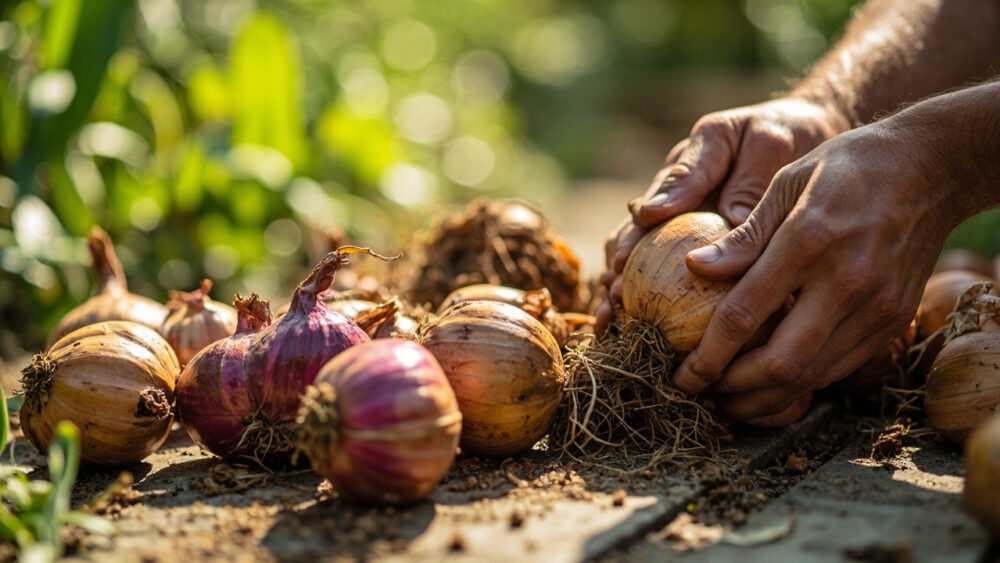
To cure properly, lay onions in a single layer somewhere warm, dry, and airy out of direct sun, on a screen, wire rack, or spread on newspaper in a garage or covered porch. Leave the tops and roots on. Give them two to three weeks.
You will know curing is finished when the outer skins turn papery and rustle, the neck above the bulb feels tight and dry rather than soft, and the roots have shriveled. Only then do you trim the tops to about an inch and snip the roots.
Skip this step and you are not storing onions, you are just delaying when they rot.
The Best Long-Term Method, Step by Step
Once cured, the setup is simple and it is the same setup that keeps onions going all winter in a root cellar or unheated pantry.
- Sort out any onion with a soft spot, thick sprouted neck, or a wound from harvesting. Those get used first, not stored.
- Load cured onions loosely into a mesh bag, a wire basket, or the leg of clean pantyhose tied off between each onion.
- Hang or set the bags somewhere dark, dry, and 40 to 55 degrees with air moving around them, a basement, closet, garage, or unheated pantry all work.
- Check every few weeks and pull any onion that has gone soft before it takes down its neighbors.
The mesh matters more than people think, because stacked onions in a closed bag or bowl trap humidity and heat against each other, and that is exactly the environment rot wants.
That setup handles the bulk of your crop, but not every onion belongs in long storage.
How Long Onions Actually Keep, Method by Method
On the counter, uncured or sweet onions like Vidalia types last only one to two weeks before softening. They are bred for eating fresh, not storing.
Cured storage onions like yellow, white keeper varieties, and most red onions last four to eight months in a cool, dark, ventilated spot. That is the real payoff of curing.
In the fridge, a cut onion wrapped tightly keeps seven to ten days before it starts drying out or picking up other smells in the crisper. Whole onions can also go in the fridge crisper for a few extra weeks, but only in breathable packaging.
In the freezer, chopped or diced raw onion keeps eight to twelve months in a sealed bag with the air pressed out. Texture goes soft on thawing, so this is for cooking, not for salads.
Every method has a different clock, and the mistake that resets all of them to zero is coming up next.
The Fridge Mistake That Ruins a Whole Bag at Once
If you guessed the fridge is the safest place for onions, that guess is exactly what causes the problem. Whole, uncut, unrefrigerated storage onions do better outside the fridge because the moisture and cold in there push them toward mush and mold, especially inside a plastic bag with no airflow.
The fridge is the right call only for cut onions, or for whole onions in climates too warm and humid for a pantry, and even then they need a breathable bag, not a sealed one.
Another quiet killer is storing onions near potatoes. Potatoes give off moisture and gases that speed up onion sprouting and rot, and onions do the same right back to potatoes. Keep them in separate bins, even a few feet apart.
Get the environment right and most of your losses disappear, but you still need to know what a turning onion looks like before it takes the rest down with it.
The Signs an Onion Has Turned
Catch these early and you save the batch instead of losing it.
- Soft spot or give: press gently near the neck and shoulders, any mushy give means rot has started inside.
- Sprouting green shoot: the onion is still edible if firm elsewhere, but it is using up its stored energy and won’t last much longer.
- Wet neck or leaking: a dark, damp, or leaking neck is the clearest sign of internal rot, that onion goes in the compost.
- Smell: a sharp, sour, or musty odor coming through the skin means rot before you even cut it open.
- Mold on the outer skin: often cosmetic if the flesh underneath is firm, but check that flesh before deciding.
One rotting onion in a bag can spread moisture and off odors to its neighbors within days, so pull it the moment you spot it.
Most of what causes these signs traces back to a handful of avoidable mistakes.
The Mistakes That Cost People the Whole Batch
Storing before curing is the single biggest cause of early rot, since uncured necks stay wet and invite decay from day one.
Washing onions before storage is the other classic error. Brush off dirt, but do not wash bulbs headed for long storage, moisture on the skin undoes the whole point of curing. Rinse only what you plan to use within days.
Sealed plastic bags and airtight bins trap humidity and turn a healthy bag of onions into a science experiment within weeks. Stacking onions deep in a bin does the same thing by crushing airflow out of the middle layer.
Warm storage, anything much above 60 degrees, speeds up sprouting and softening, while a spot that swings between warm days and cold nights causes condensation inside the bag, which is just as bad as never curing at all.
Fix those five habits and onion storage stops being a gamble.
Onions at a Glance
- Curing time: two to three weeks in a warm, dry, airy spot out of direct sun, until necks and outer skins are papery.
- Best storage spot: dark, dry, well ventilated, 40 to 55 degrees, in mesh bags or open baskets, never sealed plastic.
- Counter or uncured onions: one to two weeks before softening.
- Cured storage onions: four to eight months in the right conditions.
- Cut onion in the fridge: seven to ten days, wrapped tightly.
- Chopped onion in the freezer: eight to twelve months, sealed with air pressed out.
- Keep separate from: potatoes, which speed up sprouting and rot in both.
Cure them right, keep them dry and airy, and check the bag every few weeks.
That is the whole job, and it is the difference between onions that last until spring and onions you are pitching by Thanksgiving.