Here is how to grow okra from seed without wasting a month waiting on seeds that were never going to sprout: soak or nick the seed coat, sow direct into soil that has warmed to at least 65 to 70 F, plant a half inch to an inch deep, and keep it consistently moist until you see green in 5 to 12 days. Okra hates being transplanted and hates cold soil even more, so most of the “my okra never came up” stories trace back to one of those two things.
There is a specific mistake that stalls more okra crops than anything else, and it is not the seed itself. There is also a sign in the first two weeks that panics new growers for no reason at all, and a straight answer to the question you are already forming about whether to start these indoors like tomatoes.
Stick with this one and you will get all of it, including the save-able Okra at a Glance card at the very bottom with every number in one place.
When to Start Okra Seeds
Okra is a heat lover, full stop. It comes from a warm-climate plant family and it will sit in the ground doing nothing if the soil is still cold, no matter how good your seed is.
Direct sowing is the better method for most gardeners, and you should do it two to three weeks after your last frost date, once soil has warmed past 65 F. Check that by feel or a soil thermometer pushed two inches down, not by the calendar.
If you garden in a short-season climate, zone 6 or colder, you can start seed indoors 3 to 4 weeks before that outdoor window, in individual pots, so you are not disturbing roots later. Peat or paper pots you can plant whole are worth the extra cost here.
Get the timing right and the next decision, sowing itself, becomes almost foolproof.
Sowing Okra Seed Step by Step
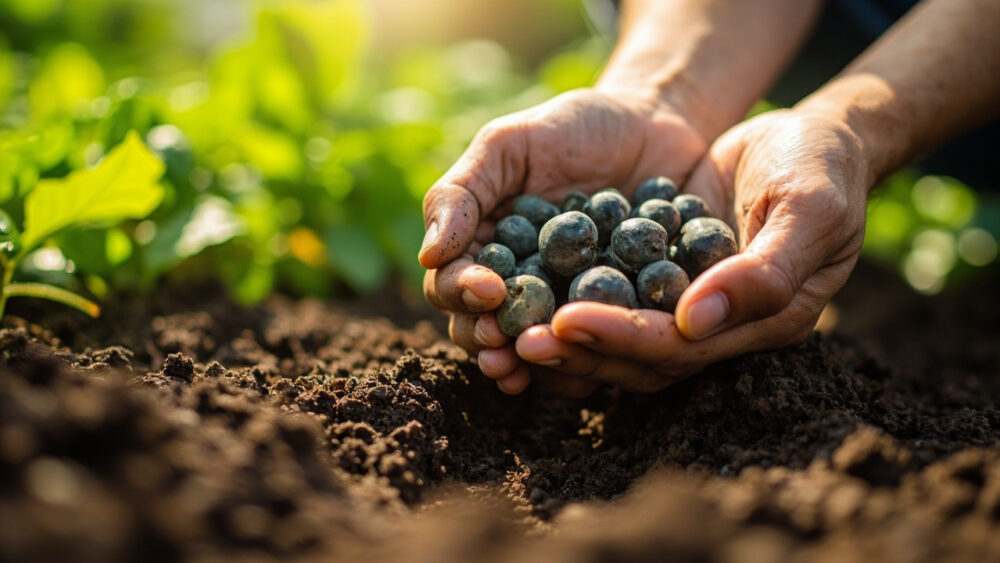
Okra seed has a tough outer coat, and skipping the prep step is the single mistake that ruins more attempts than anything else on this list. People sow it dry, straight from the packet, and then wait two or three weeks for nothing.
Step-by-step
- Prep the seed: soak seed in room-temperature water for 12 to 24 hours, or nick the seed coat lightly with a nail file, to break dormancy faster.
- Depth: sow a half inch to 1 inch deep, deeper end of that range in sandy soil, shallower in heavier soil.
- Medium: loose, well-draining soil or seed-starting mix, amended with compost, pH around 6.0 to 6.8.
- Spacing: 12 to 18 inches apart in rows 3 feet apart, or 2 to 3 seeds per hole thinned to the strongest seedling.
- Temperature: soil at least 65 F, ideally 75 to 85 F for fast, even germination.
- Light: full sun, 6 to 8 hours minimum, from the day seedlings emerge.
Sow it right and germination is where the waiting game, and the worrying, actually starts.
Germination: What’s Normal and What Isn’t
Expect seedlings in 5 to 12 days in warm soil. In cooler soil, closer to 65 F, it can stretch to 2 weeks or slightly beyond, and that is where most of the false alarms happen.
If you assumed no sprout by day 7 means dead seed, that guess sends a lot of perfectly good okra into the compost bin too early. Uneven germination is normal for this crop, and seedlings from the same row can pop up several days apart.
The real warning sign is different: seed that has sat in cold, soggy soil for two-plus weeks with no movement at all has likely rotted, not delayed. Soil that stays wet and cool, rather than moist and warm, is the actual killer.
Keep soil moist but never waterlogged while you wait, and resist the urge to resow too early.
Once seedlings are up with their first true leaves, the next test is getting them through the move outside.
Hardening Off and Transplanting
If you started okra indoors, harden it off over 5 to 7 days before it goes in the ground, same as you would tomato or pepper starts. Set trays outside in a sheltered, partly shaded spot for an hour or two the first day, and add an hour or two daily until they are outside full time.
Transplant on the gentler end of this because okra roots resent disturbance more than most vegetables. Move seedlings when they have 2 to 3 true leaves, handle the root ball as little as possible, and go in the evening or on an overcast day to cut transplant shock.
Water them in well immediately and expect a few days of sulking before new growth resumes.
Direct-sown or transplanted, from here the season is mostly about keeping the plant fed, watered, and thinned.
Care Through the Season
Thin seedlings to one strong plant per 12 to 18 inches once they have a couple of true leaves. Crowded okra grows tall and spindly and produces less.
Water about 1 inch per week, more during flowering and pod set, less once plants are established and the weather is mild. Okra tolerates dry spells better than most vegetables, but pod production drops hard under real drought stress.
Feed lightly. A balanced fertilizer or side-dressing of compost at planting and again when flowering starts is enough; too much nitrogen gives you a jungle of leaves and fewer pods.
Mulch to hold soil moisture and keep weeds down, since okra’s early growth is slow enough that weeds can outcompete it.
Watch for aphids and stink bugs on pods and leaves; a strong water spray or insecticidal soap handles light infestations, and for anything heavier, follow the label on a labeled garden insecticide exactly.
Do all that and you are only a matter of weeks from the part everyone is actually waiting for.
Bloom, Pod Set, and First Harvest
Okra typically flowers 50 to 60 days after sowing, with hibiscus-like yellow blooms that last just a day before dropping and leaving a small pod behind. From bloom, pods are ready in 4 to 6 days, so harvest windows come fast once the plant gets going.
The sign everyone misreads is size. Bigger is not better here. Pick pods at 2 to 4 inches long, while they still snap easily. Anything left past 4 to 5 inches turns woody and fibrous fast, sometimes within a couple of days.
Once plants start producing, check every day or two, since a productive okra plant can put out a harvestable pod daily in peak heat. Wear gloves and long sleeves if your variety has spines, and cut pods rather than pulling to avoid tearing the stem.
Regular picking, even of pods you do not plan to eat, keeps the plant producing instead of shutting down to make seed.
Everything above gets you a full season of pods, and here is the whole thing condensed onto one card worth saving.
Okra at a Glance
- When to plant: direct sow 2 to 3 weeks after last frost, once soil is at least 65 F, or start indoors 3 to 4 weeks before that if your season is short.
- Depth and spacing: sow a half inch to 1 inch deep, thin to 12 to 18 inches apart in rows 3 feet apart.
- Seed prep: soak 12 to 24 hours or nick the seed coat before sowing to speed germination.
- Germination: 5 to 12 days in warm soil, slower and uneven in cooler soil, so do not judge failure before 2 weeks.
- Water and feed: about 1 inch per week, light balanced feeding at planting and at flowering, avoid heavy nitrogen.
- Time to harvest: flowers around 50 to 60 days from sowing, pods ready 4 to 6 days after each bloom.
- Harvest size: pick pods at 2 to 4 inches long, checking plants every day or two once production starts.
Warm soil and a soaked seed solve most okra problems before they start.
After that, the only real skill left is picking pods small and picking them often.