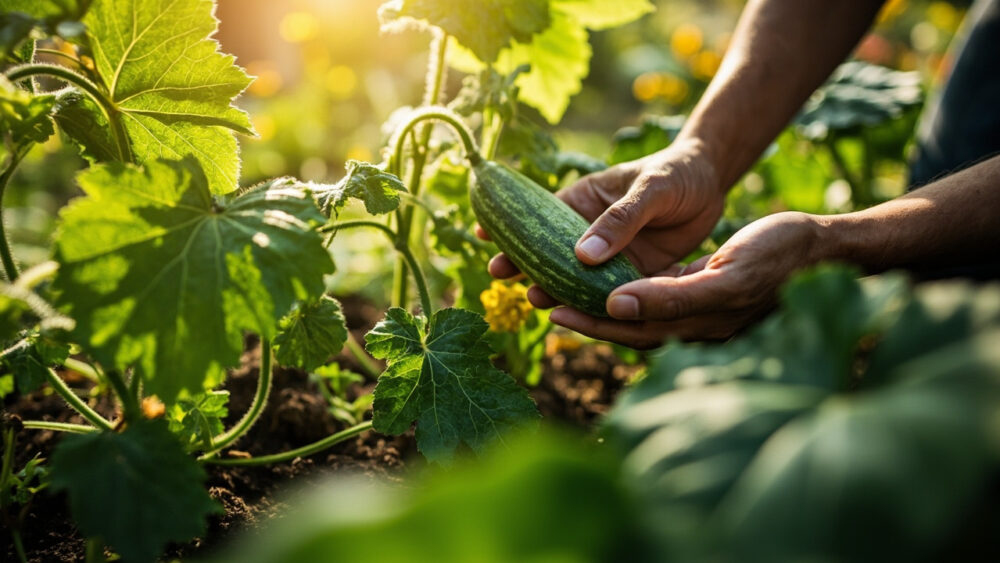
Knowing how to care for cucumbers comes down to five things: full sun, steady even moisture, rich fast-draining soil, something sturdy to climb, and warmth from start to finish. Miss any one of those and you get bitter fruit, stalled vines, or a plant that just sits there sulking all summer. Get them right and a single healthy vine can hand you cucumbers by the basketful for six to eight weeks straight.
Most of the trouble people run into traces back to one habit: inconsistent watering, which is the single fastest way to turn a sweet cucumber bitter and stunt the whole vine. There’s also a sign almost everyone misreads on their plant right now, and it isn’t a disease at all. Stick with me through the sections below and I’ll walk through exactly what’s normal, what’s a real problem, and what a genuinely thriving cucumber plant looks like, and I’ve put a save-able Cucumbers at a Glance card at the very bottom for exactly this reason.
Sun, Placement, and the Temperature Cucumbers Actually Need
Cucumbers want six to eight hours of direct sun a day, full stop. Less than that and vines get leggy, flowering slows, and you’ll wait weeks longer for fruit. They’re also heat-lovers: soil needs to be at least 60°F before you plant or transplant, and growth really takes off once air temps sit in the 70s and 80s.
Cold is the real enemy early on. A late frost or even a stretch of nights in the 40s will stunt seedlings hard, sometimes permanently. Wait until you’re a solid one to two weeks past your last frost date before planting outdoors, and don’t rush it just because the calendar says it’s time.
Give vining types a trellis, cage, or fence to climb, both to save space and to keep the fruit straighter and cleaner off the soil.
Get the location and timing right and everything downstream gets easier, starting with water.
Watering Cucumbers: How Much, How Often, and the Bitterness Myth
Cucumbers need consistent moistureroughly 1 to 1.5 inches of water a week between rain and irrigation, more during hot, dry stretches since the leaves are big and lose water fast. The goal isn’t just “keep it wet,” it’s keep it even. Check the soil an inch down: if it’s dry there, water; if it’s still damp, hold off.
If you assumed bitter cucumbers mean you didn’t water enough, that’s half right but it misses the actual mechanism. Bitterness comes from stress, and drought stress is the most common trigger, but wildly swinging between soaked and bone-dry does the same damage even if your weekly total looks fine on paper. A vine that gets flooded Monday and parched by Friday will still turn bitter, even though it technically got “enough” water.
Water at the base, not overhead, to keep leaves dry and cut down on fungal disease. Mulch with straw or shredded leaves to hold that moisture steady between waterings, which matters more for cucumbers than almost any other vegetable.
Even moisture solves more cucumber problems than any other single fix, but the soil underneath has to hold up its end too.
Soil, Mix, and Feeding Cucumbers Through the Season
Cucumbers want loose, fast-draining soil that’s loaded with organic matter, ideally amended with a couple inches of compost worked in before planting. In containers, use a quality potting mix, not garden soil, and go with at least a 5-gallon pot per plant so roots have room to run.
They’re heavy feeders. Work a balanced fertilizer or more compost in at planting, then side-dress or feed again once vines start running and a third time once flowering begins. Too much nitrogen late in the game gives you huge leafy vines and disappointing fruit set, so ease off nitrogen-heavy feeds once flowers show up and lean toward something with more phosphorus and potassium instead.
Soil pH in the 6.0 to 6.8 range is the sweet spot for nutrient uptake.
Good soil and steady feeding get the vine growing, but there’s upkeep only you can do by hand.
Pruning, Training, and the Routine Tasks That Actually Matter
Cucumbers don’t need much pruning, but a few habits pay off. Train vines onto a trellis as they grow by gently weaving or tying them, which improves airflow and makes harvesting far easier than hunting through a tangled ground-sprawled mess.
Pinch off the first few flowers if the plant is still small and stressed, so it can put energy into roots and leaves before it commits to fruit. Once it’s established, let it flower freely.
Check under leaves every couple of days once vines fill in. Fruit hides fast, and a cucumber left too long on the vine turns fat, seedy, and bitter, plus it signals the plant to slow down producing more.
Harvest regularly, every one to two days once production ramps up, since frequent picking is what keeps a cucumber vine cranking out new fruit.
That harvest rhythm is also your best early warning system for problems, which brings us to what actually goes wrong.
The Problems Most Likely to Hit Your Cucumbers
Here’s the sign almost everyone misreads: powdery white patches on the leaves. Most gardeners assume it’s a dusty residue or spray drift. It’s actually powdery mildew, a fungal disease that thrives in humid conditions with poor airflow, and it will spread across the whole plant if ignored.
Common cucumber troubles and what they mean:
- Powdery mildew: white powdery coating on leaves, worse in humid weather with crowded plants; improve airflow, water at the base, and use a fungicide labeled for powdery mildew if it’s spreading, following the label exactly.
- Wilting despite wet soil: often bacterial wilt, spread by cucumber beetles. There’s no cure once a vine is infected, so pull and discard affected plants and control the beetles early next season.
- Yellow, mottled leaves with stunted growth: likely a virus spread by aphids or cucumber beetles. Remove infected plants, since there’s no treatment.
- Misshapen or bitter fruit: almost always inconsistent watering or heat stress, not a disease at all.
- Flowers dropping without setting fruit: often a pollination issue, especially early in the season when few bees are active or in extended heat above the mid-90s.
Cucumber beetles and aphids are the two pests to watch for on sight, since both spread the diseases above. Handpick beetles in the early morning when they’re slow, and knock aphids off with a strong water spray before reaching for anything stronger.
Catch problems at this stage and most vines fully recover, but you also want to recognize what healthy actually looks like.
Signs Your Cucumber Plant Is Genuinely Thriving
A thriving cucumber vine grows fast, sometimes several inches a day once it’s established and the weather’s warm. Leaves are deep greenbroad, and held up rather than drooping in the afternoon heat.
You’ll see a steady stream of yellow flowers, both male and female, the female ones easy to spot by the tiny cucumber-shaped bump at the base. New fruit should be setting every few days once pollination is happening well.
Fruit should be firm, uniformly colored for the variety, and growing quickly, often reaching harvest size within a week or so of noticeably forming. Slow, lumpy, or pale fruit points back to inconsistent water or a feeding gap, not bad luck.
If your vine matches that description, you’re doing everything right, and the only job left is keeping up with harvest.
Cucumbers at a Glance
- When to plant: one to two weeks after your last frost, once soil is reliably at least 60°F.
- Sunlight: six to eight hours of direct sun daily.
- Spacing: 12 to 18 inches apart for trellised vines, 24 to 36 inches for sprawling bush types.
- Watering: 1 to 1.5 inches per week, kept even, checking soil moisture an inch down rather than watering on a fixed schedule.
- Soil: loose and rich with compost, pH 6.0 to 6.8, always fast-draining.
- Feeding: at planting, again when vines start running, and once more at flowering, easing off nitrogen once fruit sets.
- Harvest: every one to two days once fruiting begins, picking cucumbers before they turn pale, fat, or seedy.
If you take one thing from all this, make it consistent watering, since it prevents more cucumber problems than every other fix combined.
Everything else is just details layered on top of that one habit.