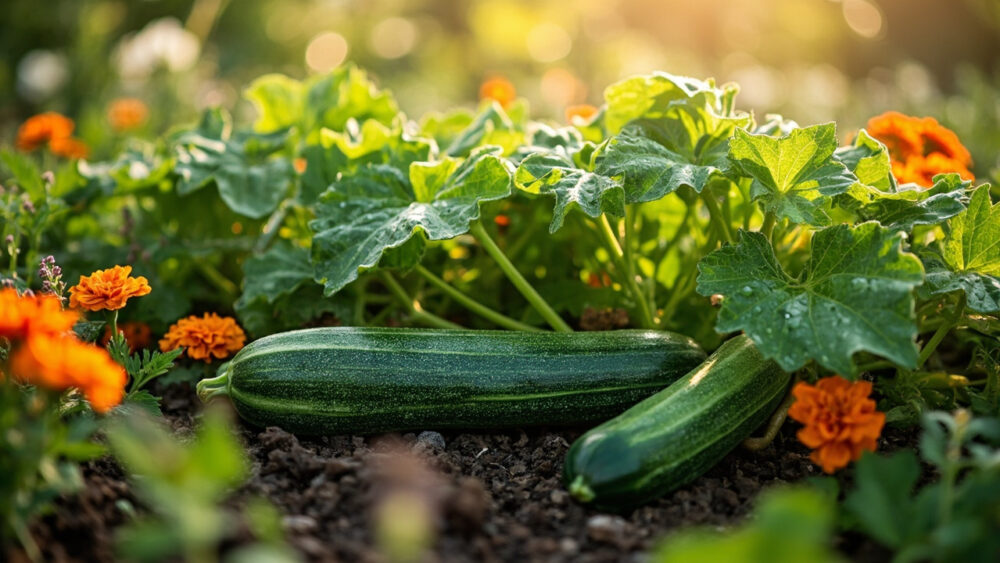
The best companion plants for zucchini are bush beans, radishes, dill, nasturtiums, borage, and corn, because each one either repels the squash bugs and cucumber beetles that ruin a zucchini season, feeds the soil nitrogen the plant burns through fast, or pulls in the bees your squash blossoms need to actually set fruit. On the flip side, potatoes and anything in the squash family itself belong nowhere near your zucchini bed.
Most of this seems obvious once someone tells you, but here is what nobody mentions until it is too late: the one mistake that tanks the whole bed is not a bad pairing, it is planting good companions too close, so everything shades everything else out by week six. There is also a sign on the plant itself that almost every new grower misreads as disease when it is actually the flowers just doing what zucchini flowers do.
Stick around for the layout that actually works in a real backyard bed, the pairing myths that sound smart but do nothing, and the save-able Zucchini at a Glance card at the very bottom with every number you’ll want pulled up on your phone this weekend.
The Companions Worth Growing
Each of these earns its space for a specific, provable reason, not just because it “goes well” with squash in some old gardening rhyme.
Bush Beans
Bush beans fix nitrogen in the soil through bacteria on their roots, and zucchini is a heavy nitrogen feeder that will strip a bed by midsummer. Plant beans 4 to 6 inches from the base of your zucchini once the squash has its first true leaves. They also stay low, so they don’t compete for light the way pole beans would.
Radishes
Radishes are the classic decoy crop for squash bugs and cucumber beetles, which seem to prefer them slightly over your zucchini. Sow them right at the base of each squash hill, about 2 inches apart, at the same time you plant your zucchini seed. You’ll pull the radishes for eating within 3 to 4 weeks, well before they’d compete for space anyway.
Dill and Other Umbels
Dill, fennel, and cilantro left to flower attract predatory wasps and hoverflies that hunt aphids and squash bug eggs. Let a few plants bolt and flower on purpose, that’s when they go to work. Tuck them along the bed edge, 12 inches out from the squash so their roots don’t tangle.
Nasturtiums and Borage
Nasturtiums act as another trap crop, drawing aphids and squash bugs away from your zucchini leaves, and they’re easy to yank and compost once infested. Borage does the opposite job: it pulls in bees by the dozen, which matters enormously for zucchini since poor pollination is the number one reason a plant produces flowers but no fruit.
That fixes the fruiting problem, but there’s a flower issue on the plant itself that trips up almost everyone.
The Flower Mix-Up Nobody Warns You About
If you assumed every blossom that shrivels and drops is a sign of disease or blossom end rot, that guess is wrong and it costs people confidence they didn’t need to lose. Zucchini produces separate male and female flowers on the same plant, and the male flowers are supposed to open, offer pollen, and then wither and drop within a day or two.
Female flowers have a small bulge (the baby squash) right behind the petals; males grow on a plain thin stem. Early in the season a plant may throw ten male flowers before a single female shows up. That’s normal, not a problem, and it’s exactly why the pollinator-attracting companions matter so much once females start opening.
Once you know which flower is which, the real threats become easier to spot.
What to Never Plant Nearby
Potatoes compete hard for the same soil nutrients and, worse, share the Colorado potato beetle and several soilborne blights with squash, so planting them close raises your disease pressure on both crops. Keep at least 3 to 4 feet of separation, or better, put them in different beds entirely.
Other Squash and Cucumbers
Never crowd zucchini next to other squash-family plants like cucumbers, pumpkins, or melons. They share every major pest, from squash vine borers to powdery mildew, and cross-pollination between squash varieties can affect seed saving even though it won’t hurt this season’s fruit. Give each squash-family planting its own patch, spaced by at least a few feet, or stagger planting dates so vulnerable young plants aren’t all exposed at once.
Skip fennel too, not the border-planted kind above but fennel planted directly in the bed, since it releases root compounds that stunt a lot of neighboring vegetables including squash.
Good neighbors only help if the layout gives them room to actually do their job.
Laying Out the Bed So Nothing Shades Out
Zucchini plants sprawl 2 to 3 feet wide and get tall enough to shade a 12-inch companion within weeks. Plan the bed with zucchini in the center or north side (in the northern hemisphere) so it doesn’t block sun from shorter plants as it matures.
- Space zucchini plants or hills 24 to 36 inches apart, sowing seed 1 inch deep once soil hits 60 to 70°F, usually 1 to 2 weeks after your last frost.
- Ring each zucchini plant with radishes and a couple of bush bean seeds within the first 6 inches.
- Push nasturtiums and borage to the outer edge of the bed, 12 to 18 inches from the squash, where they can spread without getting buried.
- Let dill or cilantro bolt in a strip along the sunniest border so it isn’t shaded by the widening squash leaves.
Get the spacing right and you rarely have to referee a fight for light later in the season.
Companion Myths That Don’t Hold Up
Marigolds are recommended for nearly every vegetable on the internet, and they do repel some nematodes in soil, but there’s no real evidence they do anything meaningful against the squash bugs and vine borers that actually threaten zucchini. Plant them if you like them, not as pest control.
Corn, beans, and squash together, the classic “three sisters” planting, gets repeated constantly, but in a small home bed the corn often shades the squash too heavily and the beans climbing the corn can smother young zucchini leaves. It works better on open ground with real spacing than in a typical backyard raised bed.
Garlic and onions get credited with repelling squash bugs too, and while alliums do discourage some soft-bodied pests, squash bugs specifically don’t seem to mind them much. They’re fine as a border crop but don’t count on them as your main defense.
Skip the myths and you’ll have room in the bed for the companions that are actually pulling weight.
Zucchini at a Glance
- When to plant: 1 to 2 weeks after last frost, once soil is consistently 60 to 70°F.
- Spacing: 24 to 36 inches between plants or hills, seed sown 1 inch deep.
- Best companions: bush beans, radishes, dill or cilantro left to flower, nasturtiums, borage.
- Never plant nearby: potatoes, other squash-family crops (cucumbers, melons, pumpkins), fennel in the bed itself.
- Pollination sign: female flowers have a small bulge behind the petals, males don’t, and males dropping after a day is normal.
- Layout tip: keep zucchini where it won’t shade shorter companions as it widens to 2 to 3 feet.
- Biggest myth: marigolds and three sisters planting sound great but rarely solve zucchini’s real pest problems.
Get the spacing and the pest-decoy companions right, and most of zucchini’s problems solve themselves before they start.
Everything else on this list is a bonus, not a requirement.