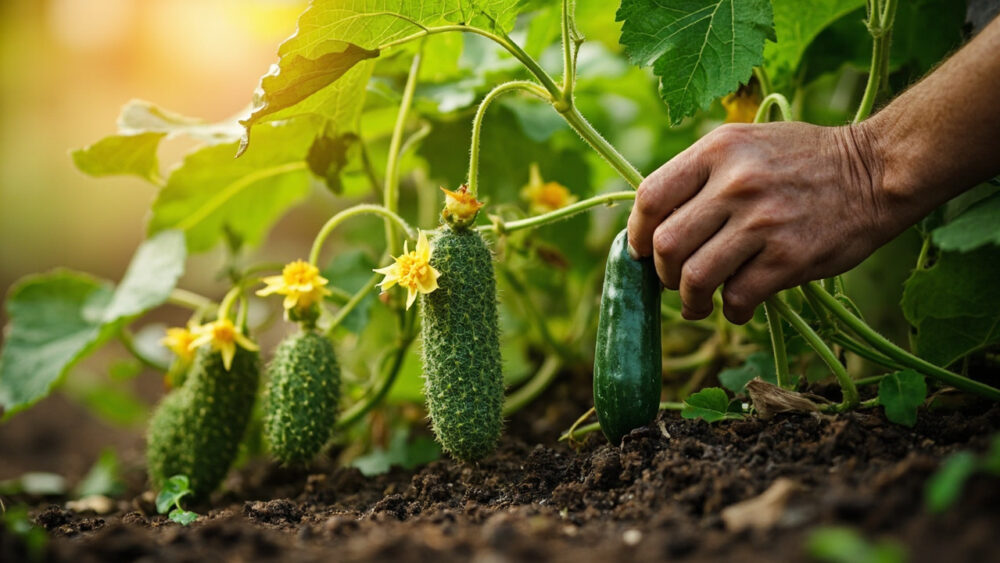
A cucumber plant moves through six distinct stages between seed and harvest: germination, seedling, vining, flowering, fruiting, and decline, and the whole trip takes 50 to 70 days depending on the variety. Right now, whatever stage yours is stuck at is telling you something specific, and most of the cucumbers growing stages confusion comes from not knowing which cues matter at which point. Get the sequence straight and you stop guessing.
Here is what nobody tells you upfront: the stage where most gardens fail isn’t germination, it’s the one right after, and it happens quietly enough that you won’t notice until the plant is already behind. There’s also a sign at the flowering stage that half of gardeners misread as a problem when it’s actually completely normal. And if your vines look healthy but nothing is happening, there’s an honest reason for that too, one that has nothing to do with fertilizer.
Stick with me through each stage and I’ll flag exactly what to look for and what to do about it. At the bottom there’s a saveable Cucumbers at a Glance card with the numbers you’ll want on your phone next time you’re standing in the garden wondering if things are on track.
Germination: Days 1 to 10
Cucumber seeds need soil at 65 to 95°F to germinate reliably, with 70 to 85°F being the sweet spot for fast, even sprouting. Below 60°F, seeds sit and rot more often than they sprout. Plant seeds half an inch to an inch deep, direct in the garden once the soil has warmed, usually two weeks or so after your last frost.
You’ll see the seed leaves, called cotyledons, push up first. They’re narrow and pale compared to the true leaves that follow.
Keep the soil consistently moist but not soggy during this window. A crusted-over soil surface is the number one reason seeds fail to emerge, so a light daily misting on hot, dry days makes a real difference.
The seedling that emerges next is more fragile than it looks.
The Real First Failure Point
If you guessed germination is where most cucumber attempts go wrong, that’s a reasonable guess, but it’s usually not the case. Seedlings fail more often than seeds do. The first two weeks after emergence are when damping-off fungus, slugs, and a hard transplant shock take out more plants than bad seed ever does.
Damping-off shows up as a seedling that suddenly collapses at the soil line, looking pinched and wet right at the base. Once you see that, that individual plant is done, there’s no reviving it. The fix going forward is not overwatering and giving seedlings airflow, not more water.
If you started seeds indoors, transplant shock is the other trap. Cucumbers hate having their roots disturbed, so if you must start indoors, use biodegradable pots you can plant whole rather than pulling roots out of a tray.
Once a seedling survives its first two weeks, it starts acting like a completely different plant.
Seedling Stage: Roughly Days 10 to 20
True leaves, the rougher, larger, more triangular leaves, appear within a week or two of the seed leaves. By this point the plant should have two to four true leaves and a visibly thickening stem.
This is your thinning and spacing window. Thin seedlings to one plant every 12 inches in rows, or two to three plants per hill spaced 3 to 4 feet apart if you’re growing on the ground. Vertical growers on a trellis can go tighter, closer to 9 to 12 inches apart.
Crowding here doesn’t kill the plant outright, but it sets up mildew problems later by cutting off airflow.
Once spacing is settled, the plant shifts into aggressive vine growth, and this is where it starts looking like a cucumber plant for real.
Vining Stage: Roughly Days 20 to 35
This is the stretch where cucumbers earn their reputation for taking over a garden. Vines can grow several inches a day in good conditions, sending out tendrils that grab onto anything nearby.
Consistent water matters most here. Cucumbers want about 1 to 1.5 inches of water a week, and irregular watering during vining is what causes bitter fruit and blossom drop later, even though the symptom won’t show up for weeks. This is the delayed-consequence stage, whatever you do wrong now, you pay for at fruiting.
If you’re trellising, start training vines now rather than waiting. A vine left to sprawl on soil is harder to redirect once it’s 3 feet long and already tangled.
Side shoots, called laterals, will start branching off the main vine. Leave them alone, they’re where a lot of your fruit will eventually set.
Right as the vines hit full stride, the plant starts putting out flowers, and this is where the misreading happens.
Flowering Stage: Roughly Days 35 to 45
Cucumbers produce male and female flowers separately on the same plant, and male flowers show up first, often a week or more before any females appear. This is the sign everyone misreads. Gardeners see flowers with no fruit forming and assume something’s wrong or that they need to hand-pollinate immediately.
You don’t. Male flowers have a thin, straight stem. Female flowers have a small bulge right behind the petals, that’s the immature fruit waiting to be pollinated. No bulge means no fruit is coming from that flower, and that’s expected, not a failure.
Bees do the pollination work in most gardens. If you’re seeing plenty of female flowers but no fruit set after a week, poor pollinator activity is the likely cause, not a plant problem, and hand-pollinating with a small brush moving pollen from male to female flowers fixes it.
Once pollination succeeds, you’ll know within days.
Fruiting Stage: Roughly Days 45 to 65
A pollinated female flower swells into a harvestable cucumber in as few as 5 to 8 days for pickling types, or 8 to 10 days for slicing types. Check plants every day or two once fruiting starts, cucumbers go from perfect to oversized and seedy fast, especially in hot weather.
Harvest slicing cucumbers at 6 to 8 inches and pickling types at 2 to 4 inches, picking while the skin is still glossy and firm. A dull, yellowing cucumber has stayed on the vine too long.
Keep picking. An unharvested cucumber left to mature signals the plant to slow down and stop setting new fruit, so the fastest way to end your harvest early is to let a few go too long.
Eventually, even a well-picked plant starts to wind down, and that’s worth recognizing separately from a genuine problem.
Telling a Stall From Real Decline
A healthy cucumber plant slows production after 6 to 10 weeks of solid fruiting, that’s normal decline, not disease. Leaves yellow gradually from the bottom up, growth slows, and fruit gets smaller. That’s the plant finishing its natural run.
A stall looks different. Sudden wilting despite wet soil, powdery white coating on leaves, or the whole plant collapsing within days points to a fungal or bacterial problem, most commonly powdery mildew or bacterial wilt spread by cucumber beetles. Those need cultural fixes like better airflow and removing affected leaves, and for beetle-spread wilt there’s no cure once a plant is infected, pulling it is often the right call to protect the rest of the row.
Either way, once you know which one you’re looking at, the next move is clear.
Cucumbers at a Glance
- When to plant: direct sow or transplant once soil hits 65°F or warmer, roughly two weeks after your last frost.
- Spacing: 12 inches apart in rows, 3 to 4 feet for hills, 9 to 12 inches for trellised vines.
- Planting depth: half an inch to one inch for seed.
- Days to harvest: 50 to 70 days total from seed, depending on variety.
- Water needs: 1 to 1.5 inches per week, kept consistent, especially during vining and fruiting.
- Harvest size: 6 to 8 inches for slicing types, 2 to 4 inches for pickling types.
- Biggest risk window: the first two weeks after seedlings emerge, when damping-off and slugs cause the most losses.
Every stage after germination is really just the plant reacting to decisions you made two or three weeks earlier. Stay a step ahead of it, especially on water and spacing, and the rest takes care of itself.