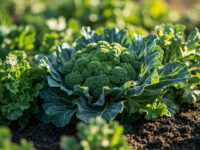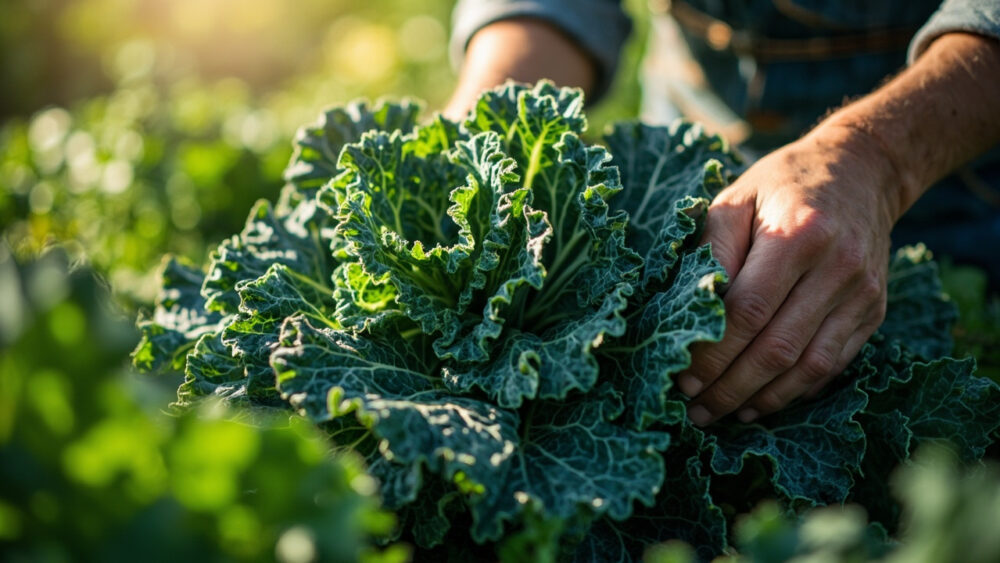
Harvest kale when the leaves reach about the size of your hand, roughly 4 to 8 inches long, starting from the bottom of the plant and working up. That first cut usually comes 55 to 70 days after planting, but kale does not stop there. It keeps producing new leaves for months, sometimes clear through fall and into winter if your climate allows it.
Most people either wait too long or pick the wrong leaves entirely, and both mistakes cost you tenderness you cannot get back once it is gone. There is also a sign gardeners misread constantly, one that looks like trouble but is actually kale telling you it is at its absolute best.
Stick with me and I will walk through exactly what to look for, how to cut without stunting the plant, and how to keep a single kale plant feeding you for months instead of weeks. The full Kale at a Glance card is at the bottom, save it before you head out to the garden.
The Real Ready Signs
Forget counting days as your only guide. Kale tells you it is ready with its size, color, and texture, and those cues matter more than the calendar.
Leaf size
Palm-sized leaves, about 4 to 8 inches from stem to tip, are the sweet spot for tenderness. Smaller leaves work fine for baby greens if you want them younger. Once leaves get much bigger than your forearm, they turn tough and fibrous, better for soups than salads.
Color and feel
Ready leaves are deep green (or deep purple-blue for varieties like Redbor), firm, and a little glossy. Leaves that look pale, thin, or limp need more time. Leaves that look dull and papery have gone past their prime.
Size and color get you close, but the timing window is what actually decides how good this batch tastes.
The Timing Window, and What Sweetens Kale Instead of Ruining It
Here is the sign everyone misreads: a light frost on kale leaves is not damage, it is flavor development. A lot of gardeners see frosted leaves and panic, assuming the plant is done for. The opposite is true.
Kale converts starches to sugars when temperatures dip into the mid-20s to low 30s Fahrenheit, and that is exactly when the leaves get sweeter and less bitter. Some of the best-tasting kale of the year comes right after the first couple of light frosts.
Harvest too early (leaves under 3 inches, still pale) and you get thin, watery leaves without much flavor. Harvest too late and older bottom leaves turn bitter, tough, and sometimes yellow before you get to them, wasted growth the plant spent energy building. A hard freeze into the low 20s and below, especially for several nights running, will eventually turn leaves to mush, so do not push your luck indefinitely.
The window itself runs from that first hand-sized leaf all the way through several frosts, as long as you keep harvesting correctly.
How to Cut Kale Without Stunting the Plant
This is the mistake that ruins most first attempts: cutting the top rosette instead of harvesting from the bottom up. Kale grows from a central crown, pushing new leaves out of the top while the oldest leaves sit at the bottom of the stalk. Take from the top and you remove the plant’s only growing point, and it is finished.
Work from the bottom instead:
- Start with the lowest, oldest leaves on the stalk, they mature first and are the ones getting tough or yellowing anyway.
- Snap or cut the leaf stem close to the main stalk, leaving a short stub rather than tearing into the stalk itself.
- Always leave at least 4 to 6 healthy leaves at the top, clustered around the growing point, on every harvest.
- Never strip an entire plant bare in one pass unless it is your final harvest of the season.
Use a clean knife, scissors, or your fingers. Kale stems snap fairly easily by hand once you get a feel for it, but a clean cut heals faster than a ragged tear.
Get the cut right and the next question is what to do in the first few minutes after.
Right After You Cut: Do Not Let It Wilt on the Counter
Kale loses crispness fast once it is off the plant, especially in warm weather. Get it cool within the hour if you want it to last.
Rinse leaves in cool water, shake off the excess, and either use them within a day or two or store them properly. For the fridge, wrap loosely damp leaves in a paper towel, tuck them into a loose plastic bag, and they will hold well for 5 to 7 days in the crisper drawer.
For longer storage, kale freezes better than almost any other green. Blanch leaves for about 2 minutes in boiling water, plunge into ice water, squeeze dry, and freeze flat on a tray before bagging. Frozen kale holds quality for 8 to 12 months.
Storage buys you time, but the real trick to eating kale for months is keeping the plant producing in the first place.
Keeping the Harvest Coming
Here is the honest answer to the question you are probably about to ask: yes, one kale plant really can feed you continuously from midsummer through the first hard freezes of winter, sometimes longer in mild climates. The trade-off is that you have to harvest lightly and often instead of stripping it all at once.
Pick no more than a third of the leaves at any one time. This keeps the crown healthy and photosynthesizing, which is what drives new leaf growth. Come back every 1 to 2 weeks and take the next round of lower, mature leaves.
Feed the plant lightly through the season, a balanced fertilizer or compost top-dress every 4 to 6 weeks keeps leaf production strong instead of petering out by late summer.
In zones 7 and warmer, kale often overwinters and keeps producing sporadically all season. In colder zones, a hard freeze in the low 20s or below for multiple nights usually signals the true end, and that is your cue for one last full harvest before the plant gives out.
Everything above comes together in the card below, the one worth screenshotting before you walk out the door.
Kale at a Glance
- When to start harvesting: once lower leaves reach 4 to 8 inches long, usually 55 to 70 days after planting.
- Best flavor window: after one or two light frosts, mid-20s to low 30s Fahrenheit, which sweetens the leaves.
- How to cut: take the oldest, lowest leaves first, snap or cut near the stalk, always leave 4 to 6 leaves at the top crown.
- How much to take: no more than a third of the plant per harvest, every 1 to 2 weeks.
- Signs it is past prime: leaves yellowing, papery, or bitter tasting, usually the oldest bottom leaves left too long.
- Storage: fresh in the fridge 5 to 7 days wrapped damp, frozen after a 2 minute blanch for 8 to 12 months.
- End of season: a hard freeze in the low 20s Fahrenheit or colder, for multiple nights, usually signals the final harvest.
Harvest from the bottom up, never the crown, and kale will keep feeding you far longer than you expect.
Let a frost hit it before you judge the flavor, that is when kale is doing its best work.