Here’s how to grow parsnips: sow the seed directly in loose, deep soil about 2 to 4 weeks before your last spring frost, thin the seedlings hard, keep the bed evenly moist, and then wait. Parsnips take 100 to 130 days to mature, which is longer than almost anything else in the vegetable garden, and rushing that timeline is where most people give up. Get the sowing and thinning right and the rest of the season mostly takes care of itself.
That said, there are a few honest traps here. Parsnip seed loses viability fast, so that packet from two years ago in your seed box is probably part of the problem, not part of the solution. Most people also thin too gently, which is the single mistake that ruins the crop before it ever gets going. And the harvest timing question has a genuinely surprising answer: the best parsnips of the year often come out of frozen ground, not warm ground.
Stick around for all of that, plus the Parsnips at a Glance card at the bottom of this guide, built to save straight to your phone for the next few months.
When to Plant Parsnips
Parsnips are a cool-season root crop and they actually prefer to start their life in cold soil. Sow seed 2 to 4 weeks before your average last frost date, once soil temperature is reliably above 40°F. They will germinate as cool as 40 to 50°F, though germination is slow and uneven down there, often taking 2 to 3 weeks instead of the 7 to 10 days you’d get closer to 60 to 65°F.
In zones 3 through 6, get seed in the ground as soon as you can work the soil in early spring. In zones 7 and warmer, you have a second option: a fall-into-winter sowing timed so the roots mature during cool weather, since parsnips sulk and turn woody in summer heat.
Do not start parsnips indoors and transplant them. The taproot resents disturbance and forks or stunts the moment it’s moved.
Get the timing right and the next decision, where you put them, matters just as much.
Choosing the Spot and Prepping the Soil
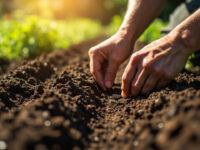
Parsnips need full sun and, more importantly, deep, loose, stone-free soil. This is the crop where soil prep decides the outcome before a single seed goes in the ground. Roots regularly run 8 to 12 inches deep, and anything that blocks that path, a rock, compacted clay, a hardpan layer, will send the root forking, stubbing, or twisting into something barely worth peeling.
Dig or loosen the bed to at least 12 inches deep. Remove rocks and clods as you go.
Skip fresh manure and any heavy, high-nitrogen amendment worked in right before planting. Rich, freshly manured soil is a classic cause of hairy, forked roots, so if your bed needs feeding, do it with compost worked in the prior fall, or choose a spot that grew a fed crop last season instead.
Aim for a loose, fine seedbed on top, since parsnip seedlings are weak and can’t push through a crust.
Once the bed is ready, the actual sowing is where most of the real skill in this crop shows up.
Step by Step: Planting Parsnips
- Get fresh seed: buy new seed every year. Parsnip seed viability drops fast, often to near nothing after a year or two in storage, and poor germination is usually a seed-age problem, not a technique problem.
- Sow direct, 1/2 inch deep: cover lightly, since seeds sown too deep in cool soil simply rot before they sprout.
- Space rows 12 to 18 inches apart.
- Sow seed thickly, roughly 3 to 4 seeds per inch, because germination rates on this crop are unreliable even with fresh seed.
- Keep the seedbed constantly damp until germination, which can take 2 to 3 weeks. A dry crust for even a day or two during that window can kill emerging seedlings.
- Thin to one plant every 3 to 4 inches once seedlings have their first true leaves, and do not skip this step or go easy on it.
That thinning step is the one almost everyone underdoes, and it’s worth explaining why.
The Thinning Mistake That Ruins Most Attempts
If you assumed crowded parsnips just come out a little smaller, that guess is too generous. Crowded parsnips come out thin, forked, and tangled around each other, wrestling for root space underground in a way that ruins the whole cluster, not just the weakest plant.
Because parsnip seed germinates unevenly and at a low rate, the instinct is to sow thick and then let everything that comes up just grow. Resist that. Once true leaves appear, thin ruthlessly to 3 to 4 inches between plants, snipping unwanted seedlings at the soil line rather than pulling them, since pulling disturbs the roots of the ones you’re keeping.
Do a second thinning pass two weeks later if the bed still looks crowded.
With spacing settled, water and feeding are next, and parsnips want less fuss here than you’d expect.
Watering and Feeding Through the Season
Parsnips want steady, even moisture, roughly 1 inch of water a week, more during dry stretches. Inconsistent watering is what causes split roots and a bitter, woody core, so the goal is even soil moisture all season, not deep soaks followed by drought.
Mulch around established plants to hold moisture and suppress weeds, since parsnip tops are slow to fill in and weeds will happily take over the row in the meantime.
Feeding needs are light. A single side-dressing of a balanced or low-nitrogen fertilizer partway through the season is plenty. Heavy nitrogen pushes lush tops at the expense of the root and can worsen forking, the same problem fresh manure causes at planting.
Keep weeds down by hand early on, since parsnip seedlings are too delicate for aggressive hoeing near the row.
Even with good care, a few pests and problems show up on this crop every year, and it helps to know them by sight.
Problems to Watch For
Parsnip canker is the most common headache: brown or orange-black rot at the shoulder of the root, often worsened by overly rich soil, poor drainage, or heat stress. Improve drainage, avoid fresh manure, and choose canker-resistant varieties if this has hit you before.
Carrot rust fly and parsnip canker often get blamed on each other, but rust fly leaves tunneling and rusty scarring rather than the soft rot canker causes. Floating row cover from sowing through midsummer keeps the adult flies from laying eggs near the roots.
Forked or hairy roots trace back to rocky soil, fresh manure, or crowding, all things you can fix at planting rather than midseason.
One safety note worth knowing: parsnip foliage can cause a skin reaction similar to a sunburn in some people when handled in bright sun, so if you notice redness or blistering after working with the tops, cover up next time and see a doctor if it seems severe.
Manage those few issues and the reward is a root that actually gets better the longer it waits.
When and How to Harvest Parsnips
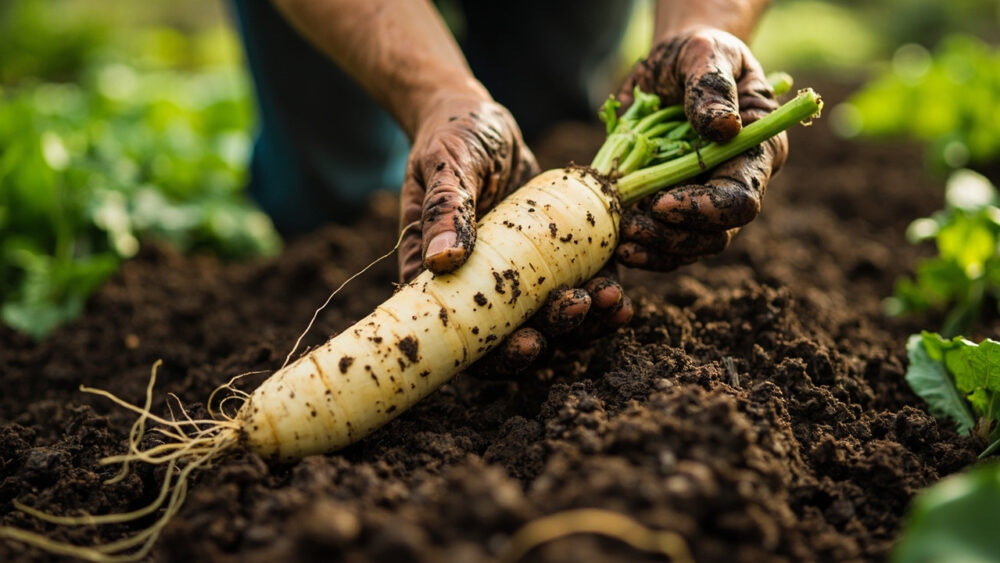
Parsnips are ready roughly 100 to 130 days from sowing, when roots are 1.5 to 2 inches across at the shoulder. But the real answer to when they taste best is more specific than a day count.
If you assumed parsnips are best pulled the moment they hit full size, that guess misses the whole point of this crop. Parsnips actually improve after one or two hard frosts, sometimes even after the ground has partially frozen, because cold temperatures trigger the roots to convert starches into sugars, turning them noticeably sweeter and less starchy.
In most climates, the best approach is to leave them in the ground through the first frosts and harvest anytime from then through winter, mulching heavily over the row so you can dig even after the ground would otherwise be frozen solid.
Loosen soil with a fork before pulling, since the long taproot snaps easily if you just yank the top.
Harvest what you need through winter and dig the rest before the ground fully thaws and the roots start regrowing in spring.
Parsnips at a Glance
- When to plant: sow seed direct, 2 to 4 weeks before your last spring frost, once soil is above 40°F, or in late summer to fall in warm zones for a winter harvest.
- Depth and spacing: sow 1/2 inch deep, rows 12 to 18 inches apart, thinned to one plant every 3 to 4 inches after true leaves appear.
- Soil needs: loose, deep, stone-free soil worked at least 12 inches down, with no fresh manure added at planting.
- Water: about 1 inch per week, kept steady and even to avoid split or bitter roots.
- Days to maturity: 100 to 130 days from sowing.
- Harvest sign: roots 1.5 to 2 inches wide at the shoulder, ideally dug after one or two hard frosts for the best flavor.
- Watch for: canker at the root shoulder, carrot rust fly damage, and forked roots from rocky or overly rich soil.
Get the sowing thick, the thinning brutal, and the patience long, and parsnips take care of the rest.
The frost you’re dreading is the thing that makes them worth growing in the first place.