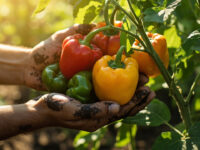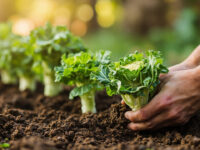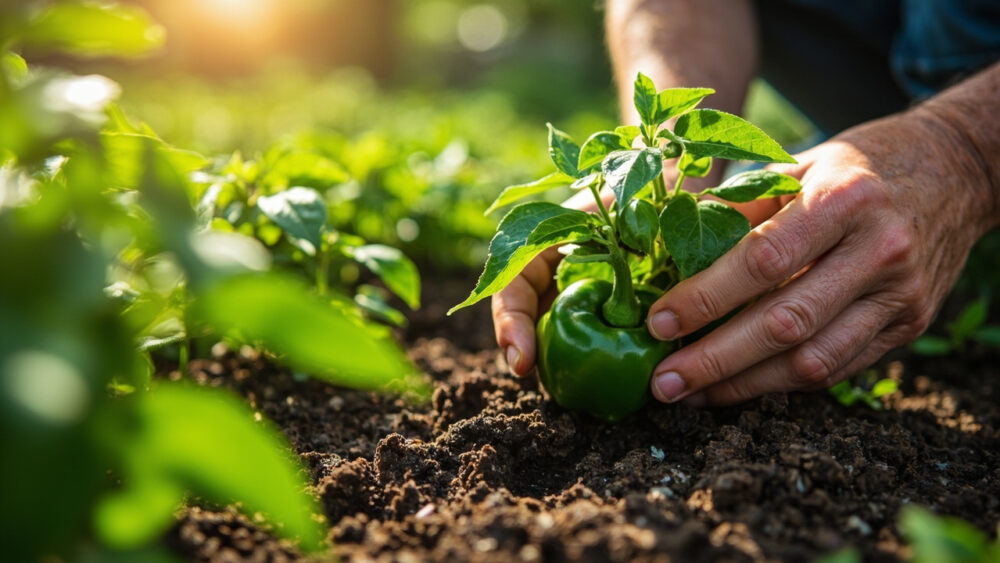
Plant bell peppers 18 to 24 inches apart within the row, with rows spaced 24 to 36 inches apart, and set them no deeper than they were growing in the pot. That spacing gives each plant enough root room and airflow to actually fill out and produce, instead of stretching thin and fighting its neighbors all summer. Bump the spacing to the wider end if you garden somewhere humid, and tighten it toward 18 inches only if you’re staking or caging every single plant.
That’s the number. But the number alone won’t save a crowded bed, and it won’t tell you why your pepper plants from last year grew tall, leafy, and produced six sad little peppers between the four of them.
Before you grab the trowel, there are a few things worth knowing. There’s a spacing mistake almost everyone makes in their first few seasons, and it has nothing to do with measuring wrong. There’s a sign of overcrowding that looks like a nutrient problem but isn’t. And there’s an honest answer about whether you can fix it once the plants are already in the ground, which most guides dodge. Stick around, because the full save-able spacing card is waiting at the bottom.
The Exact Numbers, and Why Peppers Need That Much Room
Bell pepper plants at maturity typically reach 18 to 24 inches wide and 2 to 3 feet tall, sometimes taller for indeterminate varieties in long, hot seasons. The spacing you give them at planting has to account for that mature width, not the size of the little seedling in your hand.
Plant too close and the canopies merge by midsummer, cutting off airflow and sunlight to the lower leaves and fruit.
Plant too far apart and you’re not wrong exactly, you’re just wasting bed space the peppers didn’t need.
Set transplants at the same depth they were growing in their pot, maybe half an inch deeper at most. Unlike tomatoes, peppers don’t root readily along a buried stem, so burying them deep doesn’t help and can encourage stem rot in wet soil.
Get the depth right and the spacing dialed in, and the next decision is how you lay out the whole bed.
Row Layout: Single Rows, Double Rows, and Grids
In a traditional row garden, space plants 18 to 24 inches apart within the row and leave 24 to 36 inches between rows. That row gap isn’t just for looks. It’s the width you need to walk through, water, and harvest without snapping branches loaded with fruit.
In a raised bed, a staggered grid works better than straight rows. Set plants 18 to 20 inches apart in every direction, offsetting each row so plants sit in the gaps of the row before it.
This hexagonal spacing packs slightly more plants into the same footprint while keeping the same distance between any two neighbors.
Either layout works, but the mistake most people actually make isn’t the layout at all.
The Mistake That Ruins Most Pepper Plantings
If you guessed the big mistake is measuring wrong or eyeballing the spacing, that’s not it, most people measure just fine on planting day. The real mistake is planting at correct spacing and then adding more seedlings later because a few looked weak or didn’t come up, and squeezing the replacements into whatever gap is left.
Six weeks later you’ve got a dense thicket in one corner of the bed and wide-open space everywhere else.
The fix is deciding your final plant count and spacing on day one, then holding to it even when a seedling looks rough. A slow-starting pepper often catches up once nights warm above 60°F, so resist the urge to fill every visible gap.
That patience matters more than it sounds like, because what overcrowding actually does to a pepper plant is worse than a smaller harvest.
What Overcrowding Actually Does (It’s Not What You’d Guess)
Most people assume crowded peppers just yield less fruit because they’re sharing soil nutrients. That happens, but it’s not the main damage, and it’s not even the first sign you’ll see.
The first real symptom is blossom drop and poor fruit set, because dense foliage blocks the airflow and light that pepper flowers need to pollinate and hold. The plants can look perfectly green and healthy while producing almost nothing.
Crowding also traps humidity around the leaves, which is exactly what fungal diseases like bacterial leaf spot and various blights want. A bed of pepper plants touching leaf to leaf dries out slower after rain or watering, and that extra wet time is when disease takes hold.
Crowded plants also stretch upward and lean toward whatever light gap exists, weakening the stem exactly where fruit will later need support.
So a thin harvest isn’t the disease, it’s a symptom, and the real problem started with airflow.
What Happens When You Plant Too Far Apart
Spacing too wide doesn’t damage the plant the way crowding does, but it’s not free either. Bare soil between distant pepper plants heats up, dries out faster, and invites weeds that compete for the same water and nutrients you’re trying to give the peppers.
In hot climates, exposed soil around pepper roots can also push soil temperature higher than the roots like, which stresses the plant during the exact weeks it should be setting fruit.
A light mulch layer solves most of this if you’ve gone wider than 24 inches, holding moisture and moderating soil temperature the closer spacing would have handled on its own.
Wide spacing is a minor inefficiency, not a mistake, and it’s a far easier problem to live with than crowding.
Growing Bell Peppers in Containers
Container spacing is really about volume, not inches between pots. One bell pepper plant needs a container at least 5 gallons in size, and ideally closer to 7 to 10 gallons for a full-size variety to reach its potential.
If you’re growing several plants in one large container or trough, give them the same 18 to 20 inch center-to-center spacing you’d use in a bed, sized to the container’s footprint.
Don’t be tempted to tuck a pepper into a shared pot with other vegetables unless that pot is genuinely large. Peppers are shallow-rooted but they’re thirsty, and they lose most competitions for water against something like a tomato in the same container.
Containers also dry out faster than ground soil, so the spacing question quickly becomes a watering question too.
Can You Fix an Overcrowded Pepper Bed Already in the Ground?
Here’s the honest answer to the question you’re probably about to ask. Yes, you can fix it, but only by removing plants, not by moving them.
Pepper roots resent transplanting once they’re established, and a plant dug up in July rarely recovers well enough to be worth the disruption to its neighbors.
If a bed is clearly too dense, the better move is to select the weakest one or two plants in the tightest cluster and remove them entirely, giving the strongest plants breathing room.
It feels wasteful to pull a living pepper plant, but a bed with six plants competing for light usually produces less total fruit than the same bed with four plants spaced properly.
Thinning is the fix, and it works, it’s just not the painless fix most people are hoping for.
Bell Peppers at a Glance
- When to plant: after all frost risk has passed and soil has warmed to at least 60 to 65°F, usually two to three weeks after your last frost date.
- Spacing within the row: 18 to 24 inches apart, using the wider end in humid climates or for large-fruited varieties.
- Spacing between rows: 24 to 36 inches, enough room to walk, water, and harvest without breaking branches.
- Raised bed grid spacing: 18 to 20 inches apart in a staggered pattern in every direction.
- Planting depth: set at the same depth as the pot, no more than half an inch deeper.
- Container size per plant: minimum 5 gallons, ideally 7 to 10 gallons for full-size varieties.
- If already overcrowded: thin by removing the weakest plants rather than transplanting them.
Get the spacing right at planting and you won’t be fighting airflow and blossom drop in August.
Measure once, resist the urge to squeeze in extras later, and let the plants you keep actually earn their space.