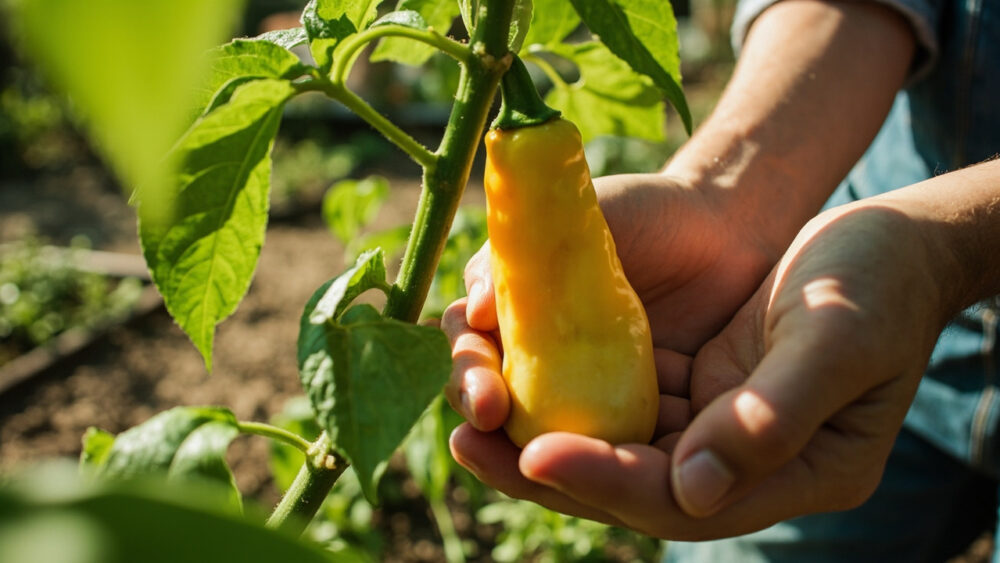
Banana peppers are ready to pick as soon as they hit 3 to 6 inches long and turn firm and glossy pale yellow, which usually happens 60 to 75 days after transplanting. You do not have to wait for red. Most people pick them yellow, and that is not a compromise, it is the whole point of the pepper.
But there are a few things about this that trip up almost everyone with their first plant. There is a color mistake that makes gardeners think their peppers are underripe when they are actually perfect. There is a snap-versus-cut question that determines whether your plant produces ten more peppers or sulks for two weeks. And there is the honest answer about red banana peppers that nobody tells you until you have already let half your crop rot on the vine waiting for it.
Stick with me through the signs, the timing window, and the harvest technique, and at the bottom you will find a save-able Banana Peppers at a Glance card with every number in one place.
The Color Sign Everyone Misreads
A banana pepper at peak eating quality is pale yellow, almost the color of a ripe banana skin, not green and not orange. If yours are still light green with just a blush of yellow starting, they are close but not there. Give them another 4 to 7 days.
Here is the part that fools people: banana peppers do not stop changing color at yellow. Left on the plant, they will slowly shift to orange and eventually deep red as they fully ripen and their sugars climb.
Red is not a warning sign. It just means the pepper has moved past the yellow stage into a sweeter, slightly hotter phase, and plenty of gardeners let some go red on purpose because they like that flavor better.
Color tells you where a pepper is in its life, but firmness is what tells you if it is actually ready to come off the plant.
The Feel Test That Matters More Than Color
Firmness
Grip the pepper gently. It should feel firm and taut, with no give when you squeeze. A pepper that feels soft or slightly wrinkled has either been sitting too long or is stressed from heat or inconsistent watering, and it will not improve by waiting.
Size
Most banana pepper varieties mature at 4 to 6 inches long and about 1 to 1.5 inches wide at the shoulder. Some plants throw a few short 3 inch peppers, especially early in the season, and those are still fine to pick and eat.
Skin
The skin should look glossy and smooth, not dull or puckered. Dull, thick-looking skin usually means the pepper has been hanging on too long in hot, dry weather.
Once you know what ready feels like in your hand, the only real question left is when in the season to start looking.
The Timing Window, and What Early or Late Picking Actually Costs You
From transplant, expect your first ripe peppers around 60 to 75 days, depending on your climate and the specific variety. Direct-seeded plants run 2 to 3 weeks behind that. Once the first peppers mature, a healthy plant in full sun will keep producing steadily until frost, which for most zones means an 8 to 12 week harvest window.
Pick too early and you get thin-walled, bitter peppers with almost no sweetness, since the sugars that make banana peppers mild and tangy develop in the last week or two before yellow.
Wait too long and two things happen. The peppers over-soften and their walls turn tough and chewy, and worse, the plant reads a fully ripe, uncut pepper as “mission accomplished” and slows down flower and fruit production because it is no longer racing to finish a crop.
That second point is the mistake that quietly ruins the most harvests. Gardeners let a few peppers go red for looks, forget them, and wonder why the plant stopped setting new fruit in August.
Timing the pick right is only half the job, the other half is not tearing up the plant while you do it.
How to Harvest Without Wrecking the Plant
Banana pepper stems are surprisingly tough for how delicate the plant looks, and yanking a pepper off by hand is the single most common way people snap branches or uproot shallow-rooted plants.
- Hold the pepper in one hand to support its weight and take the strain off the stem.
- Use scissors or garden snips to cut the stem about a quarter inch above the pepper’s cap, not flush against the branch.
- Cut, do not twist or pull. Twisting is what tears the branch and can take next season’s flower buds with it.
- Support the branch with your other hand if the pepper is growing in a tight cluster, so neighboring fruit does not get yanked or bruised.
If you genuinely have no snips on you, a firm upward snap right where the pepper’s stem meets the plant works, but it is riskier and it is the technique responsible for most broken side branches.
Once the pepper is off the plant, what you do in the next hour matters almost as much as the cut itself.
Right After the Pick
Harvest in the morning if you can, after the dew has dried but before the day heats up. Peppers picked cool hold their crispness longer and are less prone to going soft in storage.
Do not wash them right away. Extra surface moisture speeds up softening and rot in storage. Wipe off visible dirt with a dry cloth instead and wash just before you use them.
Fresh banana peppers keep in a paper bag or loosely closed produce bag in the crisper drawer for 1 to 2 weeks. For longer storage, pickling is the traditional route and it is where banana peppers genuinely shine, since their mild tang holds up beautifully in vinegar brine.
Handling the harvest right keeps this batch good, but the real prize is getting the plant to keep making more.
Keeping the Peppers Coming
Pick consistently and pick often. A banana pepper plant that is regularly relieved of ripe fruit will keep flowering and setting new peppers for weeks longer than one that is left to carry a full load of ripening fruit.
Check plants every 2 to 3 days once production starts. Peppers can go from perfect to overripe faster than you expect in hot weather.
Feed lightly with a balanced fertilizer or side-dress with compost every 3 to 4 weeks during heavy production, since continuous fruiting pulls hard on the plant’s reserves.
Keep soil evenly moist. Drought stress during fruiting is what causes the wrinkled, tough-skinned peppers that never quite recover.
Stay ahead of the picking schedule and a single healthy plant will easily hand you 25 to 50 peppers over a season, sometimes more in a long, warm year.
Banana Peppers at a Glance
- When to plant: transplant outdoors 1 to 2 weeks after your last frost date, once soil has warmed to at least 60 to 65 F.
- Spacing and depth: space plants 12 to 18 inches apart in rows 24 to 36 inches apart, planting at the same depth they sat in their nursery pot.
- Days to first harvest: 60 to 75 days from transplant, 2 to 3 weeks longer from direct seeding.
- Ready signs: pale yellow color, firm and taut skin, glossy surface, 4 to 6 inches long.
- How to cut: snip the stem a quarter inch above the cap, never twist or pull the pepper off by hand.
- Storage: unwashed in a paper or loosely closed bag in the fridge for 1 to 2 weeks, or pickled for months.
- Keep it producing: pick every 2 to 3 days and never let ripe peppers sit uncut on the plant.
Pick by feel and firmness, not just color, and cut instead of pull.
Do that consistently and one plant will feed you all summer.