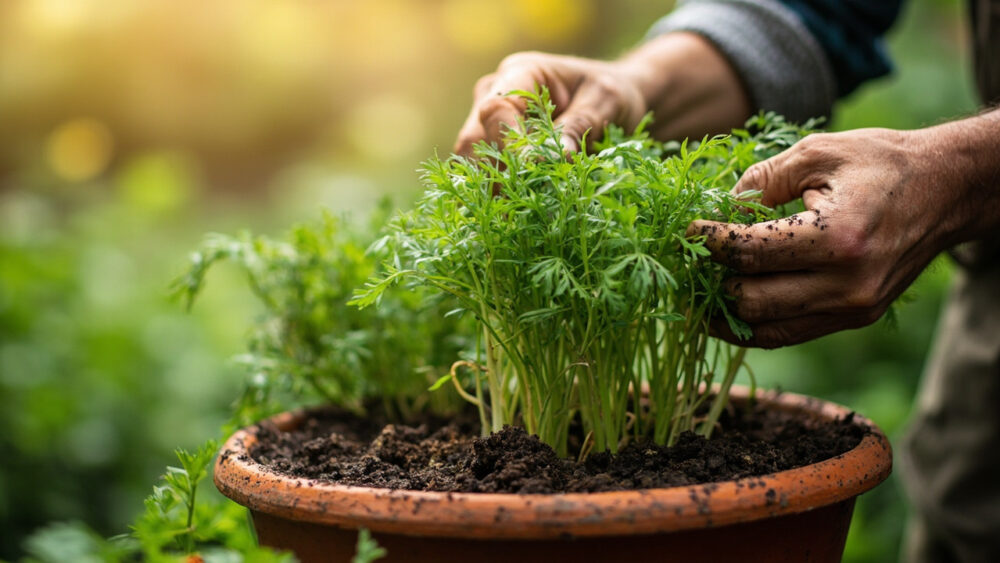
Carrots grow fine in containers as long as the pot is at least 12 inches deep for short varieties or 16 to 18 inches deep for full-length ones, the soil stays loose and rock-free, and you thin the seedlings ruthlessly. That last part is where most people fail. If you want to know how to grow carrots in containers and actually pull up straight, usable roots instead of a tangle of forked stubs, depth and spacing matter more than the fertilizer you buy.
Here is what nobody tells you up front: the seed packet’s spacing advice assumes you will actually follow it, and almost nobody does. Carrot seedlings look absurdly crowded when they are an inch tall, and thinning them feels like murder. Skip it anyway, and you will find out why in a few months.
There is also a container-specific problem that ground growers never deal with, and a watering habit that quietly stunts roots without ever making the leaves look sick. Stick around, because the full planting-to-harvest breakdown is below, and I will put a save-able Carrots at a Glance card at the very bottom with every number in one place.
When to Plant Carrots in Containers
Carrots are a cool-season crop, and containers actually give you an edge here because you can start earlier and move the pot if a hard freeze threatens. Sow seed two to three weeks before your last frost date, once soil temperature has reached at least 45°F, though germination is faster and more even once it hits 55 to 65°F.
In warm climates, zones 8 and up, skip the spring rush entirely and plant in late summer for a fall and winter harvest instead. Carrots actually sweeten after a light frost, so a fall crop is often the better one.
You can succession sow every two to three weeks through spring for a rolling harvest instead of forty carrots ready on the same day.
Get the timing right and you have already avoided the first big failure point, but the pot itself is the next one.
Choosing the Container and Prepping the Soil
Depth is non-negotiable. A round or half-length variety needs at least 12 inches of soil depth, but a standard full-size carrot like a Nantes or Danvers type wants 16 to 18 inches minimum, or the tip will hit the bottom and either stop, curl, or fork into a Y.
Width matters less than depth, but wider containers let you grow more per pot. Whatever you use needs drainage holes, because carrots sitting in soggy soil rot at the tip before they ever size up.
Skip garden soil or anything with clumps, rocks, or clay content. Use a loose, well-draining potting mix, ideally one blended with compost, and screen out anything that would deflect a growing root sideways.
This is the part everyone underestimates, and it is worth saying plainly: a rock the size of a pea can turn a carrot into a claw.
Planting Carrots Step by Step
1. Fill and level the container
Fill to about an inch below the rim with your loosened mix, and water it once before you sow so the seed bed is evenly moist, not dry and not soaked.
2. Sow at the right depth
Plant seeds ¼ to ½ inch deep. Carrot seed is tiny and easy to bury too deep, which is the single most common reason for spotty or absent germination.
3. Space wider than feels right
Sow seeds roughly 1 inch apart, in rows 3 to 4 inches apart if your container is large enough for rows. Yes, this looks sparse. That is correct.
4. Keep the surface moist until germination
Carrot seed germinates slowly, often 10 to 21 days, and the surface cannot dry out during that window or germination stalls. A light daily misting works better than a heavy soak.
5. Thin without mercy
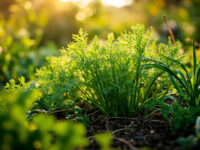
Once seedlings show their first true leaves, thin to one carrot every 2 to 3 inches. This is the step everyone skips, and it is the difference between a harvest and a tangle of forked, stunted roots fighting each other underground.
Get the seedlings up and thinned, and the hardest part is already behind you.
Watering and Feeding Through the Season
If you assumed carrots want frequent shallow watering like lettuce, that guess is what produces short, forked, or hairy roots. Containers dry out fast, but the fix is consistent deep watering, not frequent sipping.
Water when the top inch of soil feels dry, and water deeply enough that it runs out the drainage holes. Inconsistent moisture, wet then bone dry then wet again, is what causes cracking and splitting far more often than any pest does.
Skip high-nitrogen fertilizer. It pushes lush leafy tops at the expense of the root, which is the opposite of what you want. A balanced or root-focused feed once or twice during the season, worked into moist soil, is plenty.
Get the water rhythm steady, and the next thing to watch for is what tries to eat or deform the root itself.
Problems That Actually Show Up in Container Carrots
- Forked or stunted roots: almost always a container that is too shallow, compacted soil, or a chunk of debris the tip hit. Prevention happens at planting, not after.
- Carrot rust fly or carrot weevil: larvae tunnel into roots. Covering containers with fine insect netting from sowing onward is the most reliable cultural prevention.
- Green shoulders: the top of the root turns green and bitter when sunlight hits it directly. Mound a little soil over exposed shoulders as roots size up.
- Splitting: caused by uneven watering, usually a dry spell followed by a heavy soak. Consistency prevents it.
- Slow or patchy germination: seed sown too deep or allowed to dry out during the two-to-three-week germination window.
Most of these are prevented at planting and watering, not fixed after the fact, which is why the next section on harvest timing matters so much.
When and How to Harvest
Carrots are ready in roughly 60 to 75 days from sowing, depending on variety, but the calendar is a guess and the shoulder is the real answer. Once the top of the root, visible right at the soil line, reaches ¾ inch or more across, it is harvest-ready.
Push soil away from a shoulder to check width before you commit to pulling. Color also darkens slightly as roots mature, though this varies by variety.
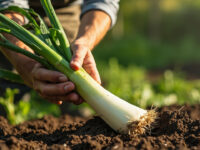
Loosen the soil around the root before pulling, especially in a container where roots can grab tightly. Grip at the base of the leaves, close to the crown, and pull straight up with steady pressure rather than yanking.
If the soil is compacted or the leaves snap off in your hand, use a hand fork to loosen the surrounding mix first rather than fighting it.
Everything you need to remember from all of this fits on one card, and it is right below.
Carrots at a Glance
- When to plant: two to three weeks before last frost, once soil hits at least 45°F, or in late summer for a fall crop in warm zones.
- Container depth: 12 inches minimum for short varieties, 16 to 18 inches for full-length types.
- Planting depth and spacing: sow ¼ to ½ inch deep, 1 inch apart, then thin to one plant every 2 to 3 inches once true leaves appear.
- Watering: deep and consistent when the top inch of soil is dry, never frequent shallow sips.
- Feeding: balanced or root-focused fertilizer once or twice a season, no heavy nitrogen.
- Days to harvest: roughly 60 to 75 days, confirmed by a shoulder ¾ inch or wider at the soil line.
- Biggest mistake to avoid: skipping the thinning step, which causes more forked and stunted carrots than any pest or soil problem.
Get the depth right and the thinning done, and everything else about growing carrots in containers is just patience.
Pull one, check the shoulder, and let that first carrot tell you whether the rest are ready.