The best companion plants for spaghetti squash are bush beans, dill, nasturtiums, radishes, and corn, because each one either feeds the soil, confuses squash bugs and vine borers, or draws in the bees these squash need for every single fruit. Skip anything in the cucurbit family nearby, and think twice before tucking squash next to potatoes.
That part is simple. What trips people up is everything downstream of it: the spacing mistake that turns a tidy bed into a tangled mess by August, the “helpful” pairing that actually invites the exact pest you’re trying to avoid, and the timing question nobody asks until their squash vines are already six feet long and swallowing the tomatoes.
Stick around for the full layout, the pairings that sound smart but aren’t, and the save-able Spaghetti Squash at a Glance card at the very bottom with everything worth writing on a plant tag.
Companions That Actually Earn Their Spot
Bush Beans
Beans fix nitrogen in the soil through bacteria on their roots, and spaghetti squash is a hungry feeder that will take every bit of it. Plant bush beans (not pole beans, which will fight the squash for space) about 12 to 18 inches from the base of each squash mound.
They also fill the ground layer while the squash vine is still small, which means fewer weeds to fight in June.
That nitrogen boost only works if you get the timing right.
Dill and Other Umbrella Flowers
Dill, fennel flowers, and yarrow attract parasitic wasps and hoverflies, both of which prey on squash bugs and the aphids that spread cucumber mosaic virus. Let a few dill plants bolt and flower right at the edge of the squash bed instead of harvesting them all young.
The flat flower clusters are a landing pad for tiny beneficial insects that ignore taller, showier blooms.
But attracting good bugs is only half the job, you also need pollinators showing up on schedule.
Nasturtiums
Nasturtiums are a trap crop for aphids and, to some degree, squash bugs, pulling them off the squash and onto themselves. They also pull in bees with their bright, simple flowers, which matters because spaghetti squash flowers open for one day only and need a bee visit that same morning to set fruit.
Plant them at the base of the mound or along the bed’s sunny edge.
Poor pollination is the quiet reason a lot of squash plants flower for weeks and produce almost nothing.
Radishes
Radishes germinate in 4 to 7 days and mature in 3 to 4 weeks, which means they’re up, growing, and gone before the squash vine needs the space. Some gardeners swear radishes repel squash bugs and vine borers by scent; the evidence is thin, but radishes cost you nothing and improve soil texture as their roots push down.
Interplant them along the row between squash mounds and harvest them out before the vines spread.
Corn does something radishes can’t, and it’s worth understanding why the classic Three Sisters pairing works at all.
Corn
Corn gives climbing shade and a windbreak, and its shallow, narrow root system doesn’t compete hard with squash roots for water and nutrients the way another heavy feeder would. This is the “sisters” logic behind the traditional corn, beans, and squash planting: corn stands tall, beans climb it and feed the soil, squash spreads low and shades out weeds.
Give corn a 2 to 3 week head start so it has height before the squash vines reach it.
Now for the pairings that look reasonable on paper and cause real problems in the bed.
What to Never Plant Near Spaghetti Squash
Never plant spaghetti squash near cucumbers, melons, pumpkins, or zucchini. They’re all cucurbits, which means they share the same pests (squash bugs, cucumber beetles, vine borers) and the same soil-borne diseases (powdery mildew, bacterial wilt). Planting them together doesn’t just risk cross-pollination affecting seed saving, it concentrates every cucurbit problem into one section of your garden instead of spreading the risk.
If a striped cucumber beetle finds your zucchini, it will find your spaghetti squash next, they’re 10 feet apart and it’s a short flight.
Skip potatoes too. Both are heavy feeders competing for the same nutrients, and both can host verticillium wilt, a soil fungus that persists for years once established. Give squash and potatoes separate beds, not just separate rows.
The instinct to spread pests thin by mixing crops is right, you just picked the wrong crop to mix them with.
Laying Out the Bed So Nothing Fights for Space
Spaghetti squash vines run 8 to 12 feet, so give each mound a genuine 3 to 4 foot radius of open ground before anything else starts. Space mounds 4 to 6 feet apart center to center if you’re planting more than one.
Plant seeds direct after soil hits 65 to 70 F, roughly 1 to 2 weeks after your last frost date, sowing 4 to 5 seeds per mound at a 1 inch depth and thinning to the 2 or 3 strongest seedlings once true leaves appear. Transplants started 2 to 3 weeks before last frost work too, but squash resents root disturbance, so use biodegradable pots you can plant whole.
Put fast, shallow-rooted companions (radishes, bush beans, dill) around the outer edge of that radius, not inside it, so they finish their job before the vine arrives and swallows the ground.
Good spacing solves half your pest problems before they start, but one popular belief about spacing is actually backwards.
The Companion Myths Worth Dropping
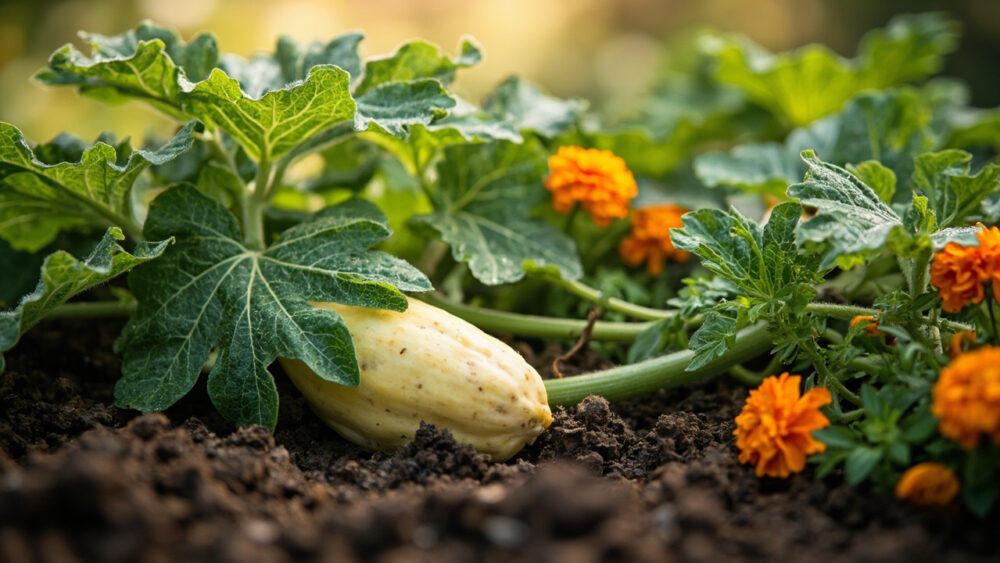
Myth: marigolds are a universal pest shield. Marigolds do repel some nematodes in the soil over a full season of growth, but they do very little against squash bugs or vine borers, the two pests that actually kill spaghetti squash plants. Plant them for the bed’s overall health, not as squash bug insurance.
Myth: planting squash and beans in the very same hole recreates the Three Sisters method. Traditional Three Sisters plantings space corn, beans, and squash on mounds with real distance between them, staggered by weeks. Crammed into one hole, all three just compete and stunt each other.
Myth: more flowers nearby always means more fruit. If squash bees, bumblebees, or honeybees aren’t active in your yard at all, no amount of companion flowers fixes that. Hand-pollinating with a small brush, moving pollen from a male flower to a female flower first thing in the morning, is the honest fix when fruit set is low.
All of that groundwork means nothing if you can’t remember it in October, which is exactly what the card below is for.
Spaghetti Squash at a Glance
- When to plant: direct sow 1 to 2 weeks after last frost once soil is 65 to 70 F, or transplant seedlings started 2 to 3 weeks before last frost.
- Spacing: mounds 4 to 6 feet apart, with a 3 to 4 foot clear radius around each for vine growth.
- Depth: sow seeds 1 inch deep, 4 to 5 per mound, thinned to 2 to 3 seedlings.
- Best companions: bush beans, dill, nasturtiums, radishes, corn.
- Never plant nearby: cucumbers, melons, pumpkins, zucchini, potatoes.
- Pollination check: flowers open for one day only, hand-pollinate in the morning if bee activity is low.
- Days to maturity: roughly 90 to 100 days from direct sowing to harvest, when the rind is dull and resists a thumbnail.
Get the spacing and the pest-family separation right and most of the rest takes care of itself.
Everything else on this list just improves your odds at the margins, which in a squash bed is exactly where seasons are won or lost.