Pick pole beans when the pods are firm, snap cleanly, and are still slim enough that you can barely see the seed bumps through the skin, usually 55 to 70 days after planting and about 7 to 10 days after the flowers drop. That’s the window for snap-type pole beans you eat fresh. If you’re growing them for dry beans instead, you wait far longer, until the pods rattle and the plant itself is dying back, which is a completely different endpoint than most people expect.
When to harvest pole beans really comes down to checking the plant every two to three days once it starts flowering, because pole beans do not ripen all at once and do not wait around for you.
Here’s what nobody tells you upfront: the mistake that costs most people their whole harvest isn’t picking too early, it’s picking too late on just a few pods. Leave a handful of pods to mature into fat, seedy ones, and the vine slows or stops making new flowers entirely. There’s also a sign everyone misreads as “not ready yet” when it actually means the opposite. And there’s a real answer to the question you’re about to ask next: why did my pods get tough and stringy overnight. Stick around, because the save-able Pole Beans at a Glance card at the bottom has every number in one place for your phone.
The Real Signs a Pole Bean Is Ready
Forget the calendar for a minute and look at the pod itself. A ready pole bean snaps clean in half with an audible crack, not a bend or a slow tear.
Size and firmness
Most pole bean varieties are ready at 5 to 8 inches long, depending on type, filled out but still slender. Squeeze gently: if you feel hard lumps along the length, that’s the seeds sizing up, and you’ve waited a little too long already.
The snap test
Bend a pod between two fingers. Fresh, ready beans break clean with a snap. If it just folds over and stays bent like a rubber hose, it’s either underripe or past its prime and gone fibrous, and only picking one and biting it will tell you which.
The color is the sign people get backwards, and that’s next.
The Color Trap: Why Bright Green Doesn’t Mean Ready
Most gardeners assume the greenest, glossiest pods are the best ones to pick. Actually, that glossy tightness often means the pod still needs another day or two.
As a pole bean pod matures toward peak eating quality, the color dulls very slightly and the surface goes from taut to just barely relaxed. It still looks green and healthy, just less shiny. That subtle dulling is often your best signal, more reliable than size alone, especially on varieties that stay slim even when they’re overmature.
Purple and yellow wax bean varieties are easier: purple pods hold their color right up to harvest, and yellow pods should look clean and waxy, not translucent.
Once you know what ready actually looks like, the harder question is what happens if your timing is off.
The Timing Window, and What Early or Late Actually Costs You
Pole beans start producing pickable pods roughly 55 to 70 days from planting, and then they keep producing for six to eight weeks straight if you stay on top of them. That’s the whole appeal of pole beans over bush beans: one planting, a long harvest, as long as you don’t let it stall.
If you pick too early
Pods under 4 inches are technically edible but mostly water and skin, not much flavor, and you’re leaving yield on the table for no real gain. There’s no damage done, just wasted potential.
If you pick too late
This is the expensive mistake. Overmature pods turn tough, stringy, and starchy as the seeds inside swell and pull sugars out of the pod wall. Worse, a plant that’s been allowed to mature even a few pods to full seed thinks its job is done and shifts energy into seed production instead of new flowers. Your harvest window can shrink from eight weeks to two if you let this happen early in the season.
So the real skill here isn’t spotting one ready bean, it’s never letting any bean get past ready.
How to Pick a Pole Bean Without Wrecking the Vine
Pole bean vines are surprisingly fragile at the point where the pod meets the stem, and pole structures put a lot of tension on those vines already.
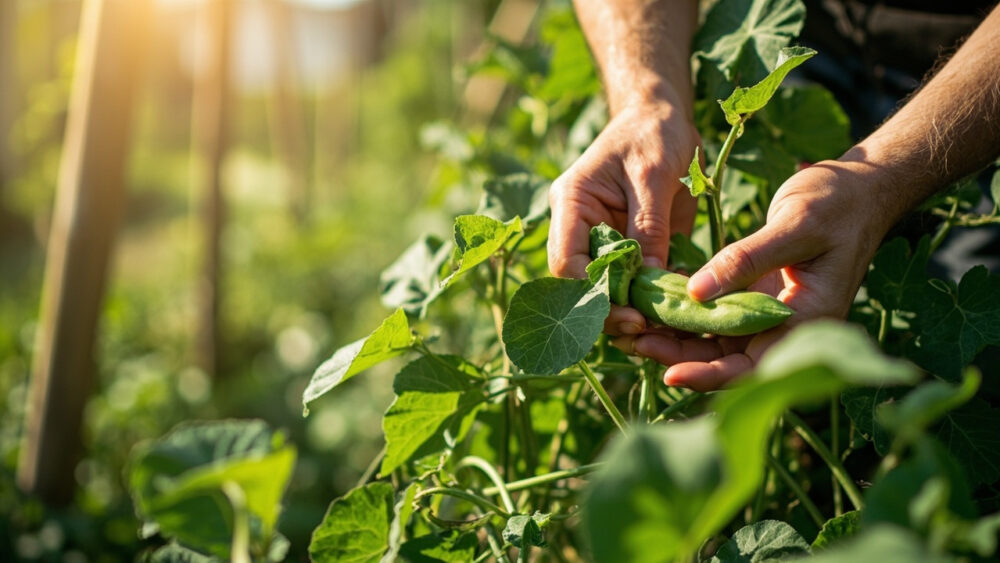
- Use two hands. Hold the stem or vine steady with one hand and pull or snap the pod off with the other. One-handed picking is how vines get torn down off their supports.
- Snap at the stem end, not by yanking the pod sideways. A clean snap or a quick twist takes the pod off without tearing the small stem tissue that feeds the next flower cluster.
- Work from the bottom up. Lower pods mature first, so check there first each time, then work upward through the foliage.
- Pick in the morning after dew dries but before the day heats up. Pods are crisper and the plant handles the disturbance better than in afternoon heat.
Once the pods are off the vine, what you do in the next hour matters almost as much as the picking itself.
Right After Harvest: Don’t Let the Clock Run Out
Pole beans start losing sugar and crispness the moment they’re picked, faster than most vegetables. Get them out of the sun immediately.
Cool them fast. A quick rinse in cold water, then into the refrigerator unwashed and dry in a perforated bag, holds quality for 4 to 5 days. Beyond that they soften and dull.
Don’t wash and store wet beans in a sealed bag; trapped moisture causes soft spots and speeds up rot far faster than dry storage does.
If you’re drowning in beans faster than you can eat them fresh, there’s a longer game worth knowing.
Keeping the Harvest Going, Or Switching to Dry Beans
The single best thing you can do for total yield is pick every single ready pod, every time, even the ones you don’t need. An unpicked mature pod is a signal to the plant to stop flowering.
Harvest at least every two to three days during peak production, more often in hot weather when pods size up fast. Consistent picking is what actually gets you six to eight weeks of beans instead of two heavy flushes and then nothing.
If you want dried beans for storage or seed instead of fresh eating, leave a section of the vine unpicked deliberately. Let those specific pods go all the way to papery, tan, and rattling with hard seeds inside, usually several weeks past the fresh-eating stage, then pull the whole plant and finish drying it hanging in a dry, airy spot out of direct sun.
Blanching and freezing is the easiest way to bank a big flush: 2 to 3 minutes in boiling water, then straight into ice water, then freeze.
Everything above works best when you can check it in ten seconds standing at the row, so here’s that card.
Pole Beans at a Glance
- When to plant: after soil hits about 60 to 65 F and all frost danger has passed, since pole beans are frost-tender and slow to germinate in cold soil.
- Days to first harvest: roughly 55 to 70 days from planting, depending on variety.
- Ready pod size: 5 to 8 inches long, firm, slender, seeds barely visible through the skin.
- Ready test: a fresh pod snaps clean with an audible crack, doesn’t bend or fold.
- Harvest frequency: every 2 to 3 days during peak season to keep new flowers coming.
- Harvest season length: 6 to 8 weeks of continuous picking if pods are never left to overmature.
- Storage: refrigerate unwashed in a perforated bag for 4 to 5 days, or blanch and freeze for longer keeping.
The whole system runs on one habit: pick every ready pod, every few days, without exception.
Miss that and the vine slows down on its own, no matter how good your soil or timing was.