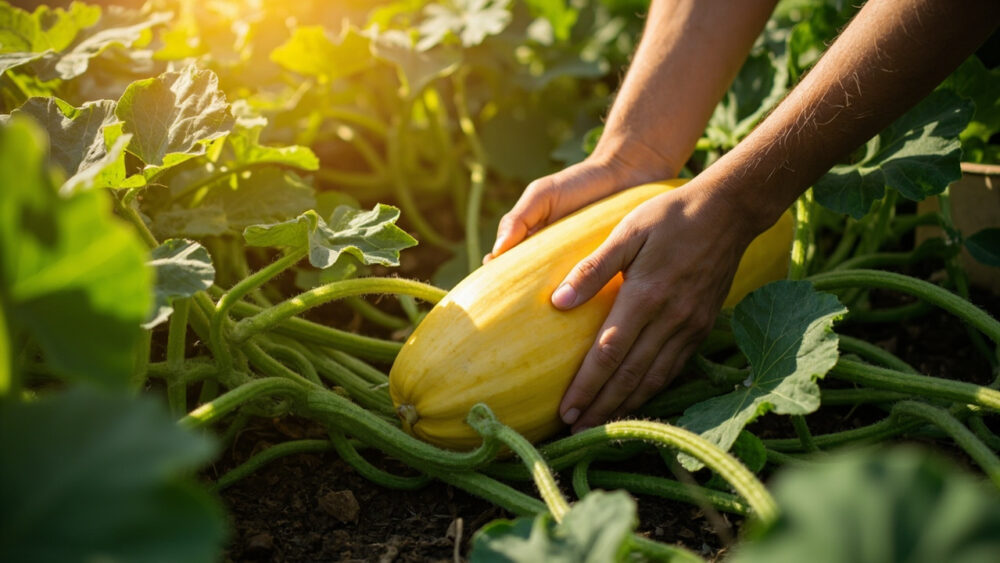
How to grow spaghetti squash in one line: plant it in full sun after your soil warms past 65°F, give each plant 4 to 6 feet of room to sprawl (or a sturdy trellis if you’re short on space), keep the soil evenly moist, and expect a pale yellow, football-shaped squash ready to harvest in 80 to 100 days when the rind turns hard and dull.
That’s the whole arc. But the details in between decide whether you get eight good squash off two plants or a tangle of vines with nothing to show for it come September.
There’s one timing mistake that wrecks more spaghetti squash crops than any pest ever will, and it isn’t planting too late. There’s also a sign on the fruit itself that fools almost everyone into harvesting too early, when the squash still tastes bland and watery instead of nutty and firm. Stick with me through the growing season and I’ll flag both, plus the honest answer to the question you’re probably already forming: can you really grow this space-hungry vine in a small yard. The full Spaghetti Squash at a Glance card is waiting at the bottom, saveable to your phone before you walk back out to the garden.
When to Plant Spaghetti Squash
Spaghetti squash is a warm-season crop through and through. Wait until all frost danger has passed and soil temperature has reached at least 65°F, not just 50 or 55. Cold, damp soil is exactly where squash seed rots before it ever sprouts.
In most of the country that means two to three weeks after your last frost date. If you’re in a short-season northern zone (roughly zone 3 to 5), start seed indoors 2 to 3 weeks before that window in biodegradable pots, since squash hates having its roots disturbed at transplant.
In zones 6 and warmer, direct-seeding outdoors works fine and often outgrows transplants within a month anyway.
Get the timing right and the next decision is where in the yard this vine actually gets to live.
Choosing the Spot and Prepping the Soil
Spaghetti squash wants full sun, at least 6 to 8 hours a day, and it wants room. A single plant can send runners 8 to 10 feet if left to sprawl on the ground.
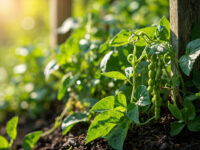
If you assumed you need a dedicated squash bed the size of a small patio, that’s the guess that talks people out of growing it at all. The real fix is vertical: a cattle panel or sturdy trellis lets you grow spaghetti squash in a 3-foot-wide strip, with the vine climbing instead of crawling. Heavier fruit may need a sling made from an old t-shirt or netting once it’s the size of a fist.
Work in 2 to 3 inches of compost or aged manure before planting. Squash is a heavy feeder and thin soil shows up later as pale leaves and small fruit.
Once the bed is ready, the actual planting takes ten minutes.
Planting Step by Step
- Depth: sow seed about 1 inch deep, or set transplants at the same depth they were growing in their pot.
- Spacing: if growing on the ground, plant in mounds or “hills,” 2 to 3 seeds per hill, hills spaced 4 to 6 feet apart in every direction.
- Thinning: once seedlings have their first true leaves, thin to the strongest 1 to 2 plants per hill.
- Trellis method: space plants 18 to 24 inches apart at the base of the support and train runners upward as they grow.
- Water in: soak thoroughly right after planting, then keep soil consistently damp until germination, which takes 7 to 10 days in warm soil.
Germination is the easy part, keeping the plant fed and hydrated through summer is where most seasons are won or lost.
Watering and Feeding Through the Season
Squash roots run shallow, so consistency matters more than volume. Aim for about 1 to 1.5 inches of water a week, more during heat waves, delivered at the base rather than overhead to keep foliage dry and reduce mildew risk.
Mulch heavily, 2 to 3 inches of straw or shredded leaves, once the soil has warmed. It holds moisture and keeps developing fruit off wet dirt.
Feed with a balanced fertilizer or compost tea at planting, then switch to something higher in phosphorus and potassium once flowers appear. Too much nitrogen late in the season buys you a jungle of leaves and very few squash.
Even with perfect watering and feeding, one visitor or one silent fungus can undo a whole season fast.
The Problems Most Likely to Strike
The two big threats are squash vine borers and powdery mildew, and they show up in completely different ways.
Vine borers tunnel into the base of the stem, and the first sign is often a healthy-looking plant that suddenly wilts in the afternoon heat despite moist soil. Check the stem base for a small hole with sawdust-like frass around it. Once a vine is bored through, that runner is usually done; the honest fix is removal of the damaged section and hoping side runners survive, plus wrapping stem bases with foil or fabric collars next season as prevention.
Powdery mildew shows up as white, dusty patches on leaves in humid weather. It rarely kills the plant outright but weakens it and shortens your harvest window. Improve airflow, water at the soil line, and if it takes hold, a fungicide labeled for powdery mildew on vegetables can slow it. Always follow the product label exactly.
Poor pollination is the quieter problem: female flowers (the ones with a small swollen bulb behind the petals) drop without setting fruit if bees are scarce. Hand-pollinating with a small paintbrush, moving pollen from a male flower’s center to a female’s, solves this in a few minutes each morning.
Once the vine survives all of that, the last skill left to learn is reading the fruit itself.
When and How to Harvest
Spaghetti squash matures in 80 to 100 days from seed, though transplants can shave a couple weeks off that. The color change from creamy white to pale yellow is what most people watch for, and that’s the guess that gets people picking too soon.
Color shifts weeks before the squash is actually ready. The real test is the rind: press it with a fingernail. If it dents or scratches easily, leave it. You want the skin hard enough that your nail barely marks it, and the color should be a deep, uniform yellow with no green streaking.
Cut fruit with a few inches of stem attached rather than snapping it off; a torn stem invites rot in storage. Cured in a cool, dry spot for a week or two, spaghetti squash keeps for 1 to 3 months.
Here’s the card worth saving before you head back outside.
Spaghetti Squash at a Glance
- When to plant: 2 to 3 weeks after last frost, once soil hits at least 65°F, direct-seed or transplant in warm climates, start indoors 2 to 3 weeks early in short-season zones.
- Sun and spacing: full sun, 6 to 8 hours minimum, hills spaced 4 to 6 feet apart on the ground or 18 to 24 inches apart on a trellis.
- Planting depth: seeds 1 inch deep, transplants at their original pot depth.
- Water needs: 1 to 1.5 inches per week, steady moisture at the soil line, mulch to retain it.
- Feeding: compost or balanced fertilizer at planting, switch to phosphorus and potassium heavy feed once flowering starts.
- Watch for: squash vine borers at the stem base and powdery mildew on leaves, hand-pollinate if fruit keeps dropping.
- Harvest sign: deep uniform yellow rind that resists a fingernail scratch, typically 80 to 100 days from seed.
Get the timing and the rind test right and everything else about this plant forgives you.
Give it sun, steady water, and room to climb, and one or two vines will keep your kitchen stocked well past the growing season.