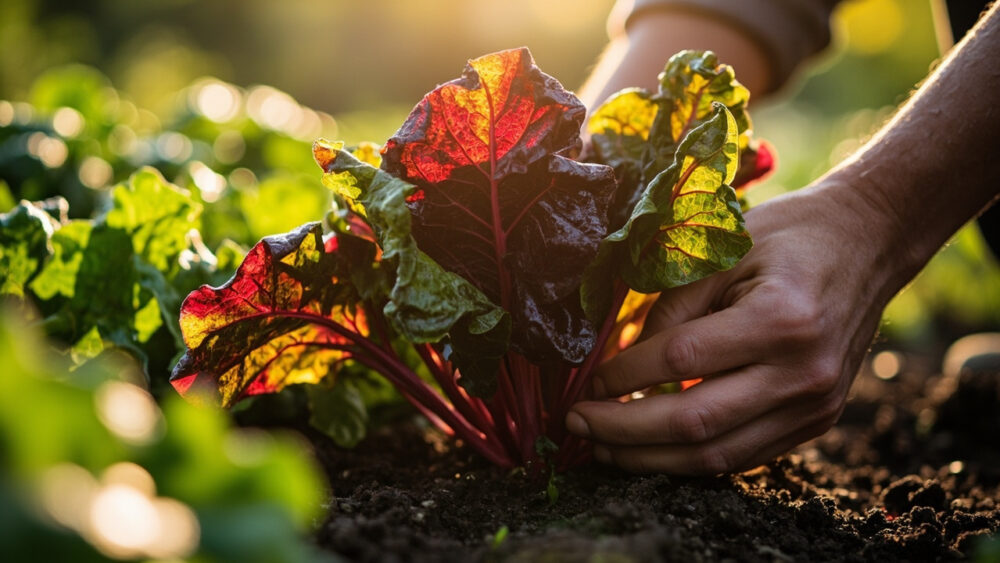
The real window for planting Swiss chard is two to three weeks before your last spring frost, once soil temperature hits at least 50 F, and it stays open again in late summer for a fall crop about six to eight weeks before your first fall frost. Chard tolerates a light frost better than most vegetables you’re growing beside it, so you have more room to move than the seed packet’s cautious language suggests. That flexibility is also where most people get it wrong.
Here’s the mistake that costs people the most: they treat chard like a tender summer crop and wait until after the last frost to plant it, the same week as their tomatoes and peppers. That single decision can cost you six weeks of the best growth chard ever puts on.
There’s also a sign in your own soil right now that tells you more than any calendar date will, and a genuinely honest answer to the question you’re about to ask next: can you still plant chard if you’re already past the “ideal” window. Stick around, the answer is yes more often than not, and the full Swiss Chard at a Glance card is waiting at the bottom to save to your phone before you head out to the garden.
The Planting Window, Anchored to Frost and Soil
Chard is a cool-season vegetable that acts like a warm-season one once it’s established, which is exactly why the timing confuses people. For spring planting, get seed in the ground two to three weeks before your average last frost date, as soon as soil temperature reaches 50 F. It germinates faster and grows sturdier once soil hits 60 to 70 F, but it doesn’t need to wait for that warmth to go in.
For a fall crop, count backward six to eight weeks from your first expected fall frost and plant then, taking advantage of cooling soil and shorter, milder days that chard actually prefers over peak summer heat.
Frost dates are averages, not promises, which is exactly why the next section matters more than the calendar.
How to Tell Your Actual Window, Not the National Average
If you assumed your planting date should match whatever the seed packet or a national planting chart says, that guess is only half right. Chard cares about your soil, not a zip code average. Grab a trowel and check the top 2 inches of soil where you intend to plant.
If it’s workable, not waterlogged, and a cheap soil thermometer reads 50 F or higher for a few consecutive mornings, you’re in your window regardless of what the calendar says.
Soil that’s still cold, gray, and sticks together in a wet clump when squeezed isn’t ready, even if the calendar insists it should be. Wait another week or two and check again.
A thermometer poked into your own dirt will always beat a printed date, and that’s true for the mistakes below too.
What Too Early or Too Late Actually Costs You
Planting too early, into cold, wet soil below 50 F, mostly costs you germination. Seeds sit and rot instead of sprouting, or they sprout weakly and get outcompeted by weeds that don’t mind the cold.
Planting too late is the more common and more forgivable mistake, but it isn’t free. Chard seeded into hot midsummer soil in full sun often bolts or struggles through germination, and the flavor turns more bitter as temperatures climb past 80 F.
The honest answer to the question you’re probably already asking: yes, you can plant chard later than the ideal window and still get a harvest, especially if you give it afternoon shade and consistent water through the hottest stretch. It’s a forgiving crop. It’s just not an infinite one.
What you do in the weeks before that window opens decides how much of this risk you avoid entirely.
Prep to Do Before the Window Opens
Chard wants loose, well-drained soil with a decent amount of organic matter, and it does not want to fight through compacted clay or a crust of unbroken sod. Work compost into the top 6 to 8 inches a week or two before planting if you can.
Direct-seed chard about half an inch deep, spacing seeds 2 inches apart in rows 18 to 24 inches apart, then thin seedlings to 6 to 12 inches once they have their first true leaves. Crowded chard stays smaller and bolts sooner under stress.
If you started seedlings indoors, harden them off over 5 to 7 days before transplanting, moving them outside for a few hours at a time so they don’t scorch or wilt in direct sun and wind.
Get this part right and the rest of the season mostly takes care of itself, which brings us to where you actually live.
Zone and Region Notes Worth Knowing
In USDA zones 3 to 6, you’re working with one solid spring window and one fall window, and in the coldest of these zones a hard freeze will end the fall crop, so plant fall chard on the early side of that six-to-eight-week count.
In zones 7 to 9, chard often survives light winter frosts outright, and gardeners in these zones frequently keep plants going from a spring planting clear through fall, sometimes into a mild winter with row cover.
In zone 10 and warmer, treat chard as a cool-season crop for fall through spring instead, since summer heat there is too intense and too long for it to hold quality.
Wherever you are, the numbers on the card below travel with you, only the calendar dates change.
Swiss Chard at a Glance
- When to plant: two to three weeks before your last spring frost for a spring crop, or six to eight weeks before your first fall frost for a fall crop, once soil is at least 50 F.
- Ideal soil temperature: 50 F minimum to germinate, 60 to 70 F for faster, sturdier growth.
- Planting depth: about half an inch deep for direct-seeded chard.
- Spacing: seed 2 inches apart, thin to 6 to 12 inches between plants, with rows 18 to 24 inches apart.
- Days to harvest: roughly 50 to 60 days to full size, though you can start cutting outer leaves in as little as 4 to 5 weeks.
- Frost tolerance: handles light frost well once established, making it more forgiving than most warm-season vegetables planted around the same time.
- Biggest timing mistake: waiting until after last frost to plant, which skips weeks of the mild weather chard grows best in.
If you remember one thing, remember this: check your soil temperature, not the calendar, before you plant.
Get chard in during its real window and it will feed you from one season almost into the next.