Here is the short answer: plant shallots in early spring, four to six weeks before your last expected frost, once soil temperature sits at 40 to 50 F, or in fall, four to six weeks before your ground typically freezes solid, if you garden somewhere with mild winters. Shallots are one of the few crops where the fall planting often outperforms the spring one, and most first-time growers never try it. That single choice, spring versus fall, is where most shallot disappointments actually start.
There is also a mistake that quietly ruins a good chunk of shallot crops before they even sprout, and it has nothing to do with timing the calendar. It is about reading your own soil instead of a seed packet. I will walk you through exactly how to check that in your yard, what actually happens if you plant too early or too late, and the prep that needs to happen before the window even opens.
Stick with me to the bottom, where I have laid out a full Shallots at a Glance card, the kind of thing worth screenshotting before you head out to the garden bed.
The Real Planting Window, Spring and Fall
Shallots grow from small bulbs called sets, and those sets want cool soil to root into before they push top growth. In spring planting regions, that means going in the ground four to six weeks ahead of your last frost date, as soon as the soil can be worked and reads 40 to 50 F at a 2 inch depth.
In milder climates, roughly zone 6 and warmer, fall planting is often the better move. Set them four to six weeks before the ground typically freezes, so they root through fall, sit dormant over winter, and take off the moment soil warms in spring.
Fall-planted shallots almost always outsize spring-planted ones by harvest.
How to Tell Your Actual Window, Not a Generic One
Forget the calendar for a second. Soil temperature is what shallots respond to, not the date on your phone. A basic soil thermometer pushed 2 to 3 inches down, checked in the morning before the sun warms the top layer, tells you everything.
You want a steady 40 to 50 F for spring sets going in, or soil that has not yet frozen hard for fall sets.
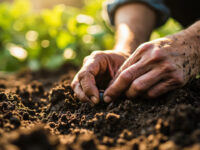
Texture matters just as much as temperature. Grab a handful of soil and squeeze it. If it forms a muddy ball and stays that way, it is too wet to plant, shallots will rot before they root.
If it crumbles apart once you open your hand, you are in business.
That crumble test has saved more shallot crops than any thermometer.
The Mistake That Ruins Most Attempts
If you assumed the biggest risk is planting too late, that is the guess almost everyone makes, and it is only half right. Planting too early into cold, waterlogged soil is actually the more common killer. Sets sitting in cold mud rot at the root end before they ever push a shoot, and you will not know anything went wrong until six weeks later when nothing has come up.
Planting too late has its own honest cost, just a different one. Shallots need a real stretch of cool weather early on to size up their bulbs properly.
Push planting into late spring, once soil is already warming past 60 F, and you will get skinny, small bulbs, sometimes just a single clove instead of a full cluster.
Neither mistake kills the plant outright, but both quietly shrink your harvest.
What Too Early or Too Late Actually Looks Like
Plant too early and the visible sign is simple: nothing happens for weeks, then patchy, uneven sprouting, with some sets rotted soft and black at the base when you dig to check. That rot does not recover. Those sets are done, and only the ones that escaped the wet cold will grow.
Plant too late and the sign shows up much later in the season. The tops grow fine, green and upright, but when you dig at harvest the bulbs are small, often just one or two cloves where you expected a cluster of six or more. The plant put its energy into leaves instead of bulb division because it never got that early cool stretch.
Neither problem is fixable once it starts, which is exactly why the window matters more than most people think.
Prep Before the Window Opens
Do this work before soil ever hits that 40 to 50 F mark, not after. Loosen the bed 8 to 10 inches deep and work in an inch or two of compost. Shallots want loose, well-draining soil, they sulk and rot in anything heavy or compacted.
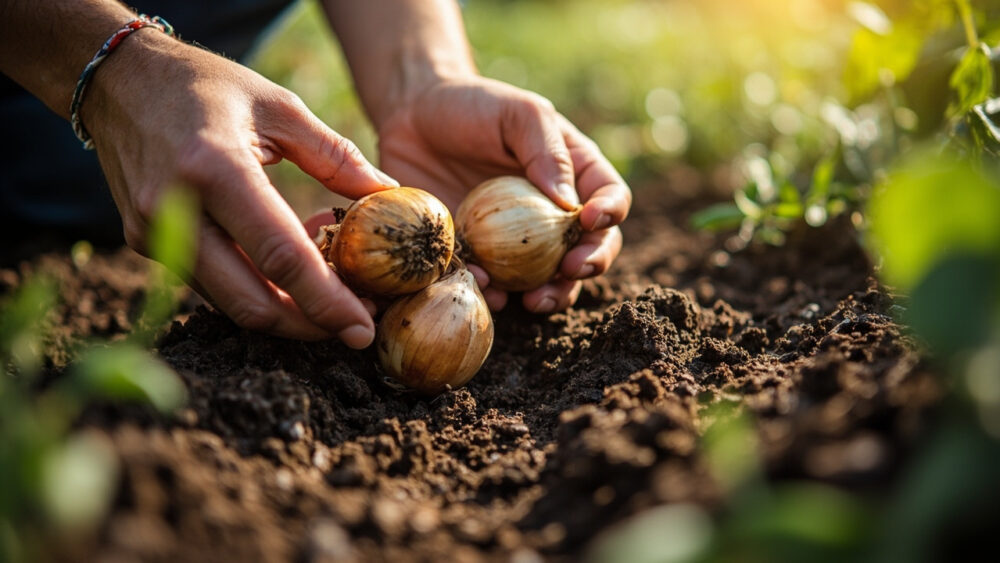
Sort your sets before planting. Toss any that are soft, moldy, or shriveled, plant only the firm ones. Push each set into the soil pointed end up, deep enough that the tip sits just at or barely below the surface, spaced 4 to 6 inches apart in rows 12 to 18 inches apart.
Good prep done a week early is worth more than a perfect date done on bad soil.
Region Notes Worth Knowing
In cold winter regions, roughly zone 5 and colder, fall planting risks winterkill unless you mulch heavily, so spring planting is the safer default. In zones 6 through 8, fall planting usually wins, mulch with 3 to 4 inches of straw once the ground starts to cool, and pull it back in early spring.
In zone 9 and warmer, treat shallots almost like a fall-through-winter crop. Plant in fall, harvest in late spring before summer heat arrives, since shallots stop bulbing well once temperatures push consistently past 75 to 80 F.
Wherever you garden, the same rule holds, cool soil to root in, then a genuine cool stretch before summer heat kicks in.
Shallots at a Glance
- When to plant, spring regions: four to six weeks before your last frost, once soil hits 40 to 50 F.
- When to plant, mild winter regions: four to six weeks before ground typically freezes, usually fall, zone 6 and warmer.
- Depth and spacing: sets pointed end up, tip at or just below the surface, spaced 4 to 6 inches apart, rows 12 to 18 inches apart.
- Soil check: squeeze a handful, it should crumble apart, not clump into mud.
- Biggest early mistake: planting into cold, wet soil, which rots sets before they sprout.
- Biggest late mistake: planting after soil warms past 60 F, which shrinks bulb size at harvest.
- Prep beforehand: loosen soil 8 to 10 inches deep, work in compost, sort out soft or moldy sets before planting.
Get the soil temperature right and the rest of the season mostly takes care of itself. When in doubt, trust the crumble test over the calendar.