Nine times out of ten, a peace lily turning yellow is overwatered, not underwatered. The fix is simple but not fast: let the soil dry out well past what feels comfortable, and stop watering on a schedule. Check the pot’s drainage while you’re at it, because soggy roots sitting in a cachepot with no escape route are the actual root of most yellow leaves, literally.
Here’s the part almost everyone gets wrong first: they see yellow and assume the plant is thirsty, so they water more. That single guess is responsible for more dead peace lilies than actual drought ever has. The real diagnosis depends on one detail you can check right now: exactly where on the plant the yellowing started, and whether it’s the old leaves or the new ones.
Below, every plausible cause ranked by how often it’s actually the culprit, the two-minute test that confirms each one, and the honest odds that your plant bounces back. Save the diagnosis checklist at the very bottom for the next time this happens, because with peace lilies, it will.
Most Likely Causes, Ranked
1. Overwatering or waterlogged roots
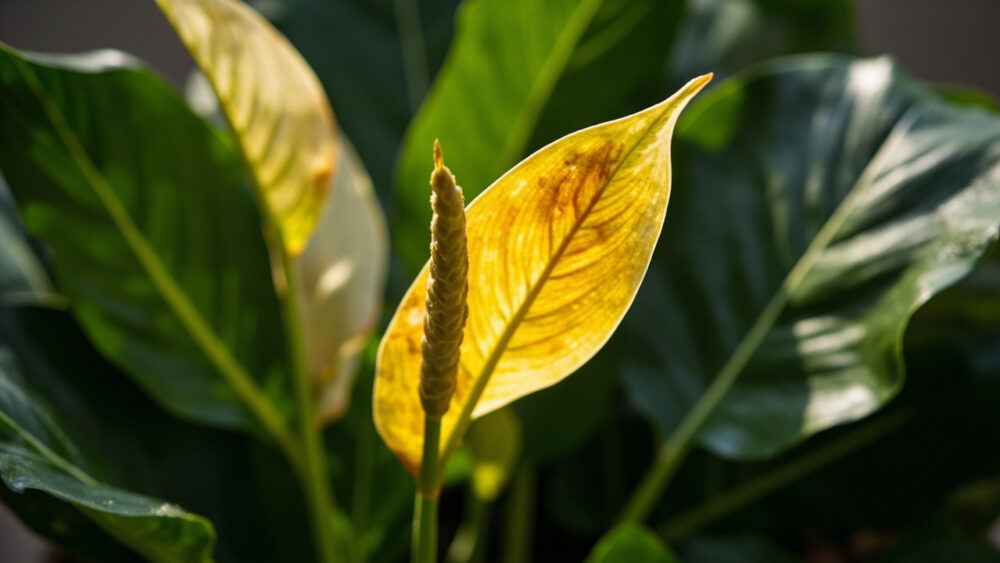
Confirm it: stick a finger two inches into the soil. If it’s wet or cool and clingy several days after your last watering, or if the pot has no drainage hole, this is almost certainly it. Yellowing shows up on lower and inner leaves first, often with a soft, almost translucent look before they go fully yellow and limp.
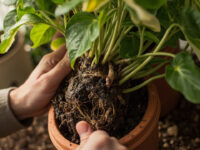
Fix it: stop watering until the top two inches are dry to the touch. Dump excess water out of any saucer or decorative pot within 15 minutes of watering, always. If roots have been sitting wet for weeks, unpot and check for brown, mushy roots, that’s root rot and needs trimming, not just a drier schedule.
But an underwatered plant looks almost identical at first glance, so don’t rule it out yet.
2. Underwatering and drought stress
Confirm it: the soil is bone dry more than an inch down, the pot feels suspiciously light, and the leaves are yellowing while also going crispy or curling at the edges rather than staying soft. Peace lilies droop dramatically when thirsty, that’s their signature move, so a plant that’s been flat on the table for days before yellowing points here.
Fix it: water thoroughly until it runs from the drainage holes, then get on a check-first routine: test the soil with your finger every 4 to 7 days instead of watering on autopilot. Peace lilies like to dry out between waterings, not stay damp.
If the soil test doesn’t clearly point to wet or dry, the light in the room is worth a hard look next.
3. Too much direct light
Confirm it: yellowing appears on leaves facing a bright window, sometimes with bleached or scorched patches rather than uniform color change, and new growth looks pale rather than deep green. Peace lilies are understory plants by nature and direct sun is genuinely too much for them.
Fix it: move the plant a few feet back from south or west-facing windows, or filter the light with a sheer curtain. Bright, indirect light is the target, the kind where you can read comfortably but see no harsh shadows.
If light isn’t the issue, the age of the plant’s oldest leaves matters more than you’d think.
4. Natural aging of old leaves
Confirm it: only the oldest, lowest leaves are yellowing, one or two at a time, while everything else stays glossy green and new growth keeps coming steadily. There’s no droop, no soil oddity, nothing dramatic.
Fix it: nothing to fix. Snip the yellow leaf at the base with clean scissors and move on. This is normal turnover, not a problem, and every houseplant does it.
Normal aging is the easiest cause to confuse with a nutrient shortfall, so here’s how to tell those apart.
5. Nutrient deficiency
Confirm it: the plant hasn’t been fed in six months or more, it’s been in the same soil for a couple of years without repotting, and yellowing shows up as a general pale or faded look across older leaves rather than sharp, isolated spots. Sometimes you’ll see yellowing between green veins, a classic sign of an iron or magnesium shortfall.
Fix it: feed with a balanced houseplant fertilizer at quarter to half strength during active growth, roughly spring through early fall. Skip feeding a plant that’s already stressed from wet roots, fertilizer won’t fix that problem and can make root damage worse.
Cold air and drafts cause a version of yellowing that looks alarming but is easy to trace once you know what to look for.
6. Temperature stress or cold drafts
Confirm it: the plant sits near an air conditioning vent, a drafty window, or an exterior door, and the yellowing or blotchy discoloration appeared suddenly after a cold spell or a specific location change. Peace lilies sulk badly below about 55°F and dislike sudden swings.
Fix it: relocate the plant away from vents, drafts, and cold glass. Keep it somewhere that stays reliably between 65 and 80°F, and give it a few weeks to settle before judging whether it’s recovering.
One more cause worth ruling out, especially if your peace lily is fairly new to your home.
7. Tap water sensitivity or chemical buildup
Confirm it: you water straight from the tap consistently, the soil surface shows a white or crusty mineral buildup, and yellowing shows up with brown, crisp leaf tips alongside it rather than alone. This is a slow-building cause, not a sudden one.
Fix it: switch to distilled water, rainwater, or tap water left out overnight to let some chlorine dissipate. Flush the soil thoroughly every couple of months by running plain water through the pot until it drains freely, to clear out accumulated salts.
With seven possible causes on the table, the next step is narrowing down which one is actually yours.
How to Tell the Causes Apart
The single most useful clue is location on the plant. Overwatering, underwatering, and natural aging all start with the oldest, lowest leaves. Light scorch and cold drafts show up on whichever leaves are physically closest to the window or vent, regardless of age.
Pattern matters just as much. Yellowing that’s uniform and slow points to nutrients or aging. Yellowing paired with droop and soft tissue points to water issues. Yellowing paired with crispy brown tips points to tap water or dry air.
Speed is the tiebreaker: sudden yellowing after a location change or cold snap is environmental, while yellowing that crept in over weeks with no obvious trigger is almost always a watering habit.
Once you know which cause fits, the next honest question is how much damage is already done.
Will It Recover?
A peace lily with a few yellow leaves from overwatering, light, or drafts recovers well once the condition is corrected, usually within 3 to 6 weeks as new growth comes in green and the old yellow leaves get trimmed off. Those yellow leaves themselves never turn green again, they’re done, but the plant as a whole bounces back.
Underwatering recovery is similarly good and often faster, sometimes visible within days of a thorough watering, though already-yellowed leaves still won’t reverse.
Root rot from prolonged overwatering is the one with real stakes. If more than half the roots are brown and mushy when you unpot it, trim the dead roots, repot into fresh dry soil, and expect a slow recovery over a couple of months, if it recovers at all. A plant that’s lost most of its root system and keeps collapsing despite care is one where cutting your losses is the honest call.
Natural aging and nutrient deficiency have the best outlook of all, since neither one was ever really a crisis.
How to Keep It From Happening Again
The habit that prevents almost all of this is simple: stop watering on a calendar and start watering by soil feel. Check with a finger two inches down, and only water when it’s dry there.
Make sure every pot has a drainage hole, and always empty standing water from saucers or decorative outer pots. Give the plant bright, indirect light rather than direct sun, and keep it away from vents and drafty glass.
Feed lightly during the growing season, flush the soil every couple of months if you use tap water, and repot into fresh soil every 1 to 2 years so nutrients and drainage don’t quietly decline.
Keep this next part handy, because it’s the fastest way to solve this problem the next time it shows up.
Diagnosis Checklist
- Check the soil two inches down: if it’s wet or the pot has no drainage hole, suspect overwatering first.
- If the soil is bone dry and the pot feels light, suspect underwatering, then water thoroughly and set a check-first schedule.
- Note which leaves are yellow: oldest and lowest points to aging, watering habits, or nutrients, leaves nearest a window or vent points to light or temperature.
- Look for droop and soft tissue: this pattern means a water problem, either too much or too little.
- Look for crispy brown tips alongside the yellow: suspect tap water minerals or dry air.
- Check the plant’s location: direct sun, cold drafts, or vents nearby confirm an environmental cause.
- If only one or two old leaves are yellowing and everything else looks healthy, trim them and do nothing else.
- If roots have sat wet for weeks, unpot and inspect: mushy brown roots mean rot, trim and repot in fresh dry soil.
- Once you’ve matched a cause, fix only that one thing and wait 3 to 6 weeks before judging results.
Yellow leaves on a peace lily are almost always fixable once you know what you’re looking at. Run the checklist, make one change, and give it time to show you were right.