When to plant brussels sprouts comes down to one fact most gardeners miss: this crop is planted for a fall and early winter harvest, not a summer one, so you are counting backward from your first fall frost, not forward from your last spring frost. That means starting seeds indoors roughly 12 to 16 weeks before your first fall frost, then transplanting outside about 4 weeks after that, once daytime highs settle into the 70s and soil has cooled a bit from summer peak. Get the direction of that math wrong and you will spend all summer growing a plant that never sizes up before frost shuts it down.
That backward-counting mistake is the one that ruins most first attempts. People plant brussels sprouts like tomatoes, in spring, and end up with leggy plants that bolt or stall in the heat.
There is also a sign almost everyone misreads: the sprouts themselves. Gardeners assume big, loose buttons mean it is harvest time, when tight and firm is what you actually want, and loose is a sign you waited too long. And there is a harder truth waiting in the prep section, about why the plants that get hit by a light frost or two often taste better than the ones you rush to protect. All of it, plus the exact spacing, depth, and a save-able Brussels Sprouts at a Glance card with every number in one place, is at the bottom of this page.
The Real Planting Window, Counted Backward From Fall Frost
Brussels sprouts need 80 to 100 days from transplant to harvest, and they taste best after they have hung on the stalk through a few light frosts, which sweeten them. So the target is having mature or near-mature plants in the ground by the time nights start dropping into the 30s.
Count backward: take your average first fall frost date, subtract 80 to 100 days for the days to maturity, then subtract another 4 to 6 weeks for the time the seedlings need to reach transplant size. That total, usually 12 to 16 weeks before fall frost, is when you start seeds, either indoors or direct-sown where summers are not brutally hot.
In most of the country that lands seed-starting in early to mid summer and transplanting in mid to late summer, which feels backward until you have done it once.
Your actual transplant date depends on your soil, not the calendar.
How to Tell Your Window in Your Own Yard
Forget the calendar for a second and check the soil. Brussels sprout transplants want soil temperature in the 50 to 75 F range at planting, with 65 to 70 F being the sweet spot for quick root establishment.
Push a soil thermometer 4 inches down in the bed you plan to use, at the same time of day for a few days running. If you do not have one, the back-of-hand test works in a pinch: soil that still feels distinctly warm to hot in July usually needs another few weeks before transplants will settle in without stalling.
Watch your seedlings too. They are ready to go in the ground when they have 4 to 6 true leaves and stems about as thick as a pencil, usually 4 to 6 weeks after sowing. Thin, floppy stems mean they need more time or more light, not an earlier transplant date.
Timing looks simple on paper, but the two failure modes on either side of this window are where most gardens actually go wrong.
Too Early Versus Too Late: What Each Mistake Actually Costs You
Plant too early, while summer heat is still peaking, and the transplants sit and sulk, sometimes bolting or turning bitter, since brussels sprouts are a cool-season crop that resents 85 F and up. You will get a spindly stalk with sparse, badly formed sprouts by the time cool weather finally arrives.
Plant too late, and the math simply does not work out. A plant that goes in the ground 8 weeks before frost instead of 12 to 16 never gets its 80 to 100 days, and you end up with small, tight buttons that stop developing when a hard freeze hits, or a plant that never forms usable sprouts at all.
Neither mistake is reversible once the season is underway. If you are more than three weeks past your ideal window, it is usually more honest to shift to fast-maturing greens for that bed and plan brussels sprouts properly for next year, rather than force a planting that cannot finish.
The plants that do make it through this window still need real prep before they ever touch soil.
The Prep That Actually Makes the Window Work
Brussels sprouts are heavy feeders that grow for a long season, so bed prep matters more here than for a quick crop like lettuce. Work a couple inches of compost into the bed before transplanting, and aim for a soil pH between 6.0 and 7.5, since sprouts genuinely struggle in acidic soil.
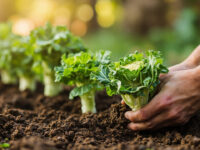
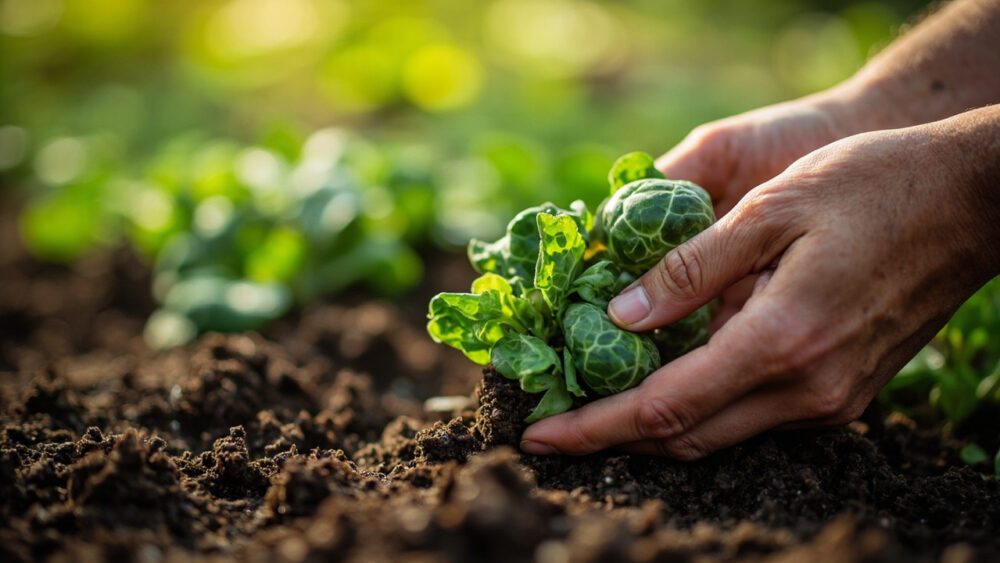
Space plants 18 to 24 inches apart, in rows 24 to 36 inches apart, and set transplants slightly deeper than they sat in their pots, burying the lowest set of leaves to encourage a sturdy stem, since these plants get top-heavy by fall and need support at the base.
Stake tall stalks loosely if your site is windy. As frost approaches, resist the urge to rush plants indoors or cover them at the first light frost warning.
A frost or two in the 28 to 32 F range actually improves flavor by triggering the plant to convert starches to sugars, so cover only when a hard freeze below the mid-20s is forecast, and even then a simple frost cloth over the row is enough.
Where you garden changes some of these numbers more than others.
Zone and Region Notes Worth Knowing
In USDA zones 3 to 6, with shorter growing seasons, start seeds indoors in early summer so transplants go out by mid to late summer, giving the crop enough runway before hard frost shuts things down.
In zones 7 to 9, you have more room to breathe, and can push transplanting into late summer or even early fall in milder areas, since winters are gentler and light frost is more common than a hard freeze.
In the warmest zones, 9 and up, brussels sprouts often do best as a true winter crop, planted in fall for a late winter harvest, since summer heat there is too intense for any part of this plant’s life cycle.
Wherever you garden, the target is the same: mature plants meeting the first cool nights, not summer heat.
Every number that matters, in one place, is right below.
Brussels Sprouts at a Glance
- When to plant: start seeds 12 to 16 weeks before your first fall frost, transplant outside about 4 weeks after sowing, once soil is in the 50 to 75 F range.
- Days to maturity: 80 to 100 days from transplant, so count backward from fall frost rather than forward from spring.
- Spacing and depth: 18 to 24 inches between plants, 24 to 36 inches between rows, transplants set deep enough to bury the lowest leaves.
- Soil needs: rich, compost-fed soil with pH 6.0 to 7.5, consistent moisture, and full sun.
- Signs it’s ready to transplant: 4 to 6 true leaves, pencil-thick stem, usually 4 to 6 weeks after sowing.
- Frost tolerance: light frosts in the 28 to 32 F range improve flavor, only cover for hard freezes below the mid-20s.
- Harvest sign: sprouts firm and tight, about 1 to 2 inches across, picked from the bottom of the stalk upward.
Get the backward count right and the rest of this crop mostly takes care of itself.
When in doubt, plant a little later rather than earlier, since cool weather forgives sprouts far more than heat does.