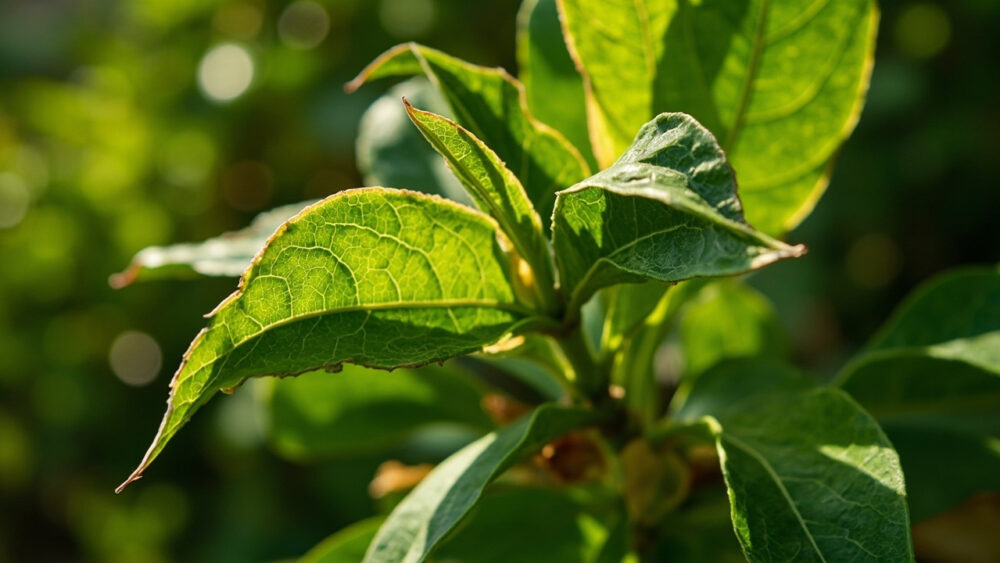
Nine times out of ten, curling avocado leaves mean the air around the plant is too dry or the roots are too dry, and the fix is raising humidity and checking your watering habits before you touch anything else. Avocado leaves curl upward and inward like a taco shell when the plant is losing water faster than the roots can replace it, whether that water loss is from low humidity, wind, heat, or a root system that just cannot keep up.
Here is the part that trips people up: most gardeners see curling and immediately blame overwatering, since that is the go-to explanation for almost every houseplant problem. With avocados, curling is far more often a moisture stress issue than a soggy-soil issue, and treating it like overwatering by yanking back on water can make things worse.
The detail that actually tells you which cause you are dealing with is where the curling starts on the plant and whether it comes with color change. Stick with this page and you will know exactly which of the six real causes fits your plant, whether it bounces back, and how to stop the cycle for good. The full diagnosis checklist you can run in two minutes is waiting at the bottom.
Causes, Most to Least Likely
1. Low Humidity or Hot, Dry Air
Avocados evolved in humid subtropical air, and indoor heating, air conditioning, or a dry summer wind will curl leaves fast. Confirm it by checking your indoor humidity if you have a gauge, or just noticing if the plant sits near a heater vent, AC unit, or drafty window. Curling tends to show up evenly across the whole canopy rather than in one spot.
Fix it by grouping the plant with others, running a humidifier nearby, or setting the pot on a tray of pebbles and water so the water evaporates around the leaves without soaking the roots. Misting helps a little but evaporates too fast to matter much on its own.
Get the air right and you have solved the most common cause outright.
2. Underwatering or Root Stress
If the soil has gone bone dry between waterings, or if roots are stressed from being pot-bound, the leaves curl to reduce surface area and cut water loss. Confirm it by pushing a finger two inches into the soil. If it is dry all the way down and the pot feels light, water is the problem.
Fix it with a deep, slow watering until it runs from the drainage holes, then get on a real schedule instead of watering on a whim. Avocados want soil that dries slightly between waterings, not soil that goes fully dry for days.
If the pot has been dry for a while, check next whether it has simply outgrown its container.
3. Overwatering and Root Rot
This is the cause everyone jumps to first, and it is real, just less common than dry-air curling. Overwatered avocados curl too, but the leaves usually feel soft or limp rather than crisp, and lower leaves often yellow or brown at the same time. Confirm it by checking drainage: if the pot has no drainage hole, or the soil stays wet and smells sour a week after watering, suspect the roots.
Fix it by letting the soil dry out significantly before watering again, and repot into fresh, fast-draining soil if the current mix stays soggy. Trim any black, mushy roots you find with clean shears.
Root rot is the one cause on this list that can genuinely be too far gone to save, so catching it early matters.
4. Heat Stress or Direct Sun Scorch
A plant recently moved to a hot window, a patio in full afternoon sun, or a car window on the drive home can curl leaves within a day. Confirm it by checking for curling paired with dry, papery brown patches on the leaf edges, concentrated on the side facing the sun or heat source.
Fix it by moving the plant to bright but indirect light, or filtering direct afternoon sun with a sheer curtain outdoors under light shade cloth. Reintroduce strong sun gradually over one to two weeks rather than all at once.
If your plant just moved locations, that alone might explain everything.
5. Salt or Fertilizer Buildup
Avocados are genuinely sensitive to salt, and tap water minerals or heavy fertilizing leave residue in the soil that burns roots and curls leaf tips. Confirm it by looking for a white or tan crust on the soil surface or pot rim, often paired with brown, crispy leaf tips before the curling starts.
Fix it by flushing the pot with a large volume of distilled or rainwater, letting it drain fully two or three times, and cutting back fertilizer to a light feeding during the growing season only.
Buildup takes weeks to cause damage and weeks to reverse, so patience matters here.
6. Pests, Especially Mites or Aphids
Spider mites and aphids feed on leaf undersides and cause localized curling, usually starting on new growth first. Confirm it by flipping a curled leaf over and checking for tiny specks, fine webbing, or a sticky residue on the leaf or the surface below it.
Fix it by rinsing the plant thoroughly with a strong spray of water, then treating with insecticidal soap or a horticultural oil, following the product label exactly for timing and reapplication.
Pests are the easiest cause to rule in or out, since you either see them or you do not.
How to Tell the Causes Apart
Where it starts matters most. Whole-plant, even curling points to humidity or watering. Curling isolated to new growth points to pests or a recent stress event like a move or transplant. Curling on lower, older leaves paired with yellowing points to overwatering.
Texture is the second clue. Crisp, dry, curled leaves mean water loss. Soft, limp, curled leaves mean waterlogged roots.
Check the leaf undersides before you decide anything else.
Will It Recover?
Humidity and underwatering cases recover fully, usually within one to two weeks of correcting conditions, since the leaves rehydrate and new growth comes in normal. Heat scorch and salt buildup also recover well, though the damaged leaf tissue itself will not un-curl; you are waiting on new leaves, not fixing old ones.
Overwatering and root rot are the honest exception. Mild cases bounce back once drainage and watering improve. Advanced root rot, where roots are widely black and mushy, often means cutting your losses on that plant or taking a cutting if healthy stem tissue remains.
Pest damage recovers as soon as the infestation is under control, though a heavy mite infestation can take several treatment cycles to fully clear.
Recovery speed depends entirely on catching the cause early, which is exactly what prevention is for.
How to Keep It From Happening Again
Consistency beats intensity with avocados. Water on a schedule tied to soil feel, not a calendar, checking two inches down before every watering. Keep the plant somewhere with stable temperature and away from heater vents, AC blasts, and drafty doors.
Use a pot with real drainage holes and a soil mix that includes perlite or bark for airflow around the roots. If your tap water is hard or heavily treated, flush the pot every couple of months to prevent salt buildup.
Inspect leaf undersides monthly so pests get caught before they spread.
Run through the checklist below any time curling shows up again.
Diagnosis Checklist
- Check the air: is the plant near a heater, AC vent, or in a dry room, if yes, suspect humidity first.
- Check the soil two inches down: bone dry means underwatering, soggy or smelly means overwatering.
- Check leaf texture: crisp and dry points to water loss, soft and limp points to root trouble.
- Check where curling started: whole plant means environment, new growth only means pests or recent stress.
- Check for a white crust on the soil surface: if present, suspect salt or fertilizer buildup.
- Flip a curled leaf and inspect the underside for specks, webbing, or sticky residue, confirming pests.
- Check the pot for drainage holes and root crowding, both common hidden root-stress causes.
- Match your findings to the cause above and apply that fix before changing anything else.
Most curling avocado leaves fix themselves once the air and watering match what the plant actually needs.
Give it two weeks after your fix before judging whether it worked, since avocados respond on their own schedule, not yours.