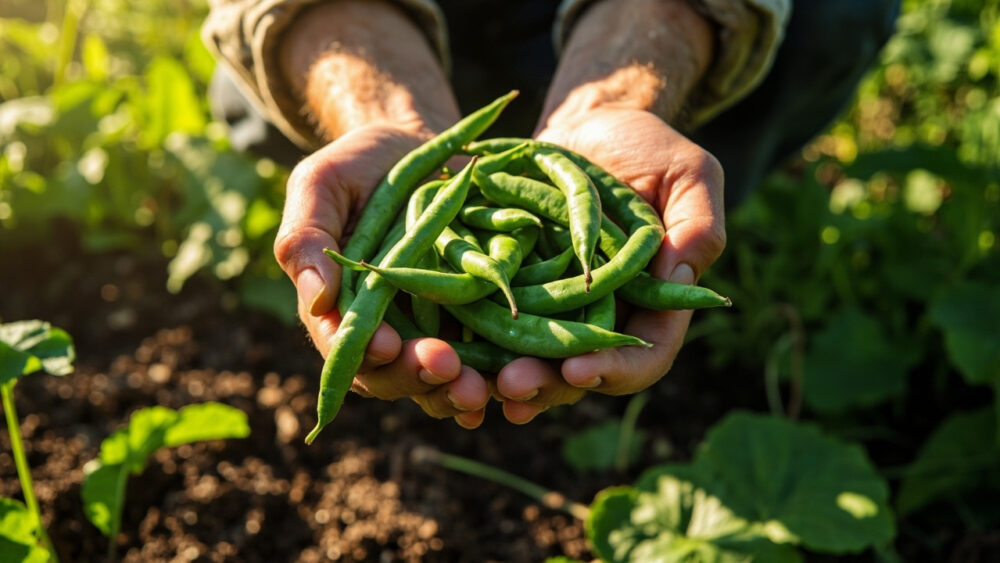
Fresh green beans keep about a week in the fridge unwashed in a loose bag with a paper towel, and a year or longer in the freezer once blanched. That’s the honest answer to how to store green beans if you need it right now. Everything past this point is about which method fits your pile of beans and the mistakes that turn a good harvest into a slimy bag of regret.
Most people wash their beans before storing them, and that single habit is why so many bags turn mushy by day three. There’s also a step in blanching that people either skip or rush, and it’s the difference between beans that taste like summer in January and beans that taste like wet cardboard.
Stick around and I’ll also tell you the exact signs that mean a bean has turned, not just “it looks bad.” And down at the bottom there’s a Green Beans at a Glance card worth saving to your phone before you forget any of this in the produce aisle.
The Best Way to Store Fresh Green Beans (Short Term)
Do not wash them first. Water on the surface speeds up rot faster than almost anything else you can do to a green bean. Store them dry, unwashed, in a produce bag with a paper towel tucked in to absorb stray moisture, and keep the bag loosely closed, not sealed airtight.
Put them in the crisper drawer, ideally the one with higher humidity if your fridge has that option. Beans want cold and damp air around them, not a dry blast from the vents.
Done this way, fresh green beans hold up well for five to seven days, sometimes longer if they were freshly picked and never got warm in between.
That’s the fridge answer, but it’s not the only path, and the freezer changes the math completely.
How Long Green Beans Actually Keep, Method by Method
On the counter, green beans are living on borrowed time. **A day, maybe two,** in a cool kitchen before they start softening. Counter storage is really just a holding pattern until you get them into the fridge.
In the fridge, unwashed and bagged loosely, expect five to seven days of good quality, occasionally stretching to ten if they were rock hard and fresh when you bought or picked them.
In the freezer, after proper blanching, you’re looking at eight to twelve months without much quality loss, and they’ll technically stay safe to eat well beyond that, just with fading texture and flavor over time.
Pickled or canned in a proper water bath or pressure canner, cured beans keep on a shelf for up to a year, sometimes longer, though flavor and crispness are best within the first several months.
Each method has its own prep requirements, and skipping the right one is where most batches go wrong.
The Prep Step That Makes or Breaks Frozen Beans
If you assumed you could just wash, chop, and freeze green beans raw, that guess is why so many freezers are full of gray, rubbery beans nobody wants to eat. Raw freezing without blanching lets enzymes keep working even at freezing temperatures, which breaks down texture, color, and flavor over just a few weeks.
Blanching stops that process cold. Boil beans for two to three minutes, no longer, then plunge them immediately into ice water for the same amount of time. That ice bath isn’t optional garnish, it’s what halts the cooking and locks in color and snap.
Drain thoroughly and pat dry before bagging, because wet beans in a freezer bag turn into an ice block fused together, and you’ll end up thawing the whole bag just to get a handful out.
Lay them flat on a tray to freeze individually for twenty minutes before bagging if you want to scoop out small portions later instead of chiseling at a solid brick.
Skip blanching and you’re not saving time, you’re pre-loading disappointment for six weeks from now.
Curing and Pickling: The Other Storage Path
Green beans aren’t cured the way onions or garlic are, but they do have a real long-term storage tradition: pickling. Dilly beans, done in a proper vinegar brine with the correct acidity and processed in a water bath canner, are shelf stable for up to a year in a cool, dark pantry.
The acidity ratio matters more than the recipe’s flavor add-ins. Follow a tested canning recipe’s vinegar-to-water ratio exactly, since under-acidified brine is a genuine food safety risk, not just a texture issue.
Once opened, refrigerate pickled beans and expect them to stay good for one to two months, sometimes longer if you keep the jar clean and the beans fully submerged in brine.
That’s the slow route, but most people storing green beans are working with fresh ones today, which brings up the question of when they’ve actually gone bad.
The Real Signs a Green Bean Has Turned
Everyone assumes a bad bean looks obviously rotten, slimy and dark all over. Sometimes that’s true, but the earlier and more common sign is subtler: **a bean that’s gone soft and bendy** instead of snapping cleanly when you try to break it.
Other signs to check:
- Wrinkled, shriveled skin, which means moisture loss even if the bean isn’t rotten yet
- Slimy or wet-looking spots, especially near the stem end
- A sour or musty smell instead of the faint grassy scent of a fresh bean
- Visible mold, usually white or gray fuzz, which means the whole batch touching it should go, not just the spotted one
A bean that’s just gone limp but still smells clean is fine cooked, even if you wouldn’t eat it raw anymore.
Knowing the signs only helps if you’re not accidentally causing them yourself, which is the next problem.
The Mistakes That Ruin a Whole Batch
Most ruined green beans die from one of these, and they’re all avoidable.
- Washing before storing: surface moisture accelerates rot in the fridge, wash right before you cook instead
- Sealing them airtight in the crisper: beans need some airflow, a fully sealed bag traps humidity and speeds decay
- Skipping the ice bath after blanching: beans keep cooking from residual heat and lose their snap
- Freezing wet beans: they clump into a solid mass and you lose the ability to portion them
- Storing near ethylene-producing fruit like apples or bananas, which speeds yellowing and softening
- Letting them sit warm after harvest or purchase before refrigerating, even an hour or two on a hot counter shortens their fridge life noticeably
Fix these and a batch of green beans behaves exactly as well as the numbers above promise.
Here’s everything condensed into the one card worth actually saving.
Green Beans at a Glance
- Fridge storage: unwashed, in a loose bag with a paper towel, in the crisper drawer, lasts five to seven days.
- Counter storage: only good for a day or two before quality drops.
- Freezer storage: blanch two to three minutes, ice bath the same amount of time, dry thoroughly, then freeze for eight to twelve months.
- Pickled or canned: shelf stable up to a year using a tested water bath recipe, one to two months once opened and refrigerated.
- Never wash before storing fresh: wash right before cooking instead.
- Signs of spoilage: soft bendy texture, wrinkled skin, slimy spots, sour smell, or visible mold.
- Biggest mistake: skipping blanching before freezing, which ruins texture within weeks.
If you remember one thing, remember this: dry and unwashed for the fridge, blanched and iced for the freezer.
Get those two right and green beans will outlast whatever plan you had for cooking them this week.