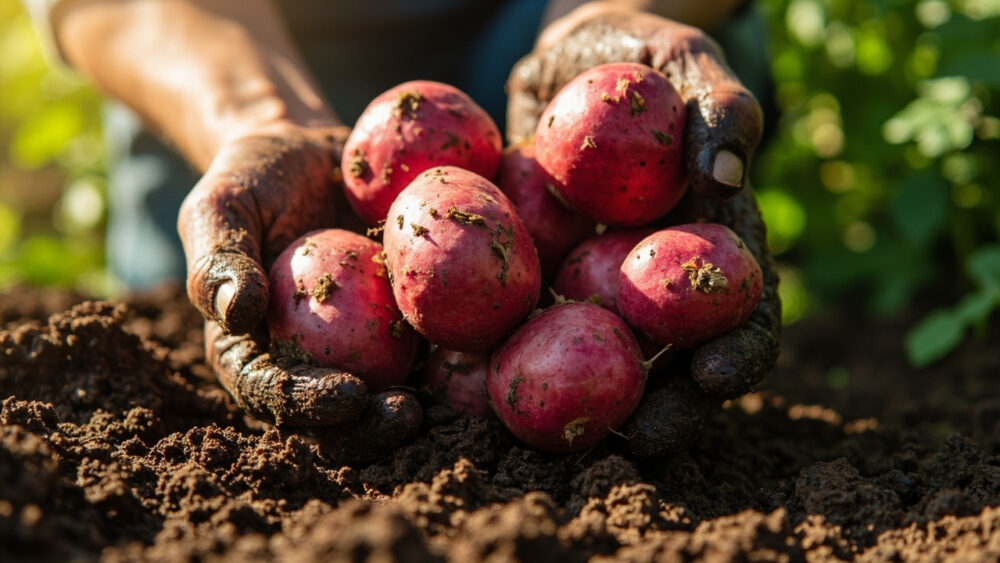
Red potatoes go in the ground from seed potato pieces, about 3 to 4 inches deep and 12 inches apart, two to three weeks before your last spring frost once soil hits 45 to 50 F. That is the whole opening move. From there it is about 70 to 90 days to full maturity depending on variety, with the payoff being that thin, tender red skin that never needs peeling.
Here is what nobody tells you upfront: the biggest failure isn’t planting too early, it’s planting whole grocery-store potatoes and wondering why half of them rot in the ground. There’s also a very specific leaf-yellowing pattern midseason that panics new growers into overwatering when the plant is actually just doing exactly what it’s supposed to do.
And the harvest question everyone asks too late: how do you know when to dig without stabbing half your crop with a fork? Stick with me, and save the Red Potatoes at a Glance card at the bottom for your phone before you head back out to the garden.
When to Plant Red Potatoes
Soil temperature matters more than the calendar. Red potatoes want soil at 45 to 50 F, measured a few inches down, before you plant. In most of zones 3 to 7, that lands two to three weeks before the last expected frost, often when the ground has just thawed and dried enough to work.
In zones 8 and warmer, skip spring heat entirely if you want a fall crop and plant in late summer instead, aiming for maturity before a hard freeze.
A light frost on emerged foliage won’t kill the plant, the growing point is underground, but a hard freeze on new sprouts will set you back weeks.
Soil that’s still cold and soggy invites rot before a single root forms.
Choosing the Spot and Prepping the Soil
Potatoes want full sun, at least 6 hours, and loose, well-drained soil with a slightly acidic pH, around 5.5 to 6.5. Heavy clay is the enemy here, it holds water against the seed piece and grows lumpy, misshapen tubers.
Work in 2 to 3 inches of compost or aged manure before planting, but go easy on fresh manure and high-nitrogen fertilizer. Too much nitrogen buys you tall, lush foliage and disappointing tubers.
Never plant potatoes where tomatoes, peppers, or other potatoes grew in the last two to three years. They share diseases that persist in soil.
Raised rows or mounded beds help drainage even more, which matters once you see how planting depth changes as the season goes on.
Planting Red Potatoes Step by Step
This is where the whole-potato mistake usually happens, so let’s fix it before you’re standing in the garden with a bag of grocery-store spuds.
1. Cut and cure your seed potatoes
Buy certified seed potatoes, not supermarket ones, which are often treated to resist sprouting and can carry disease. Cut larger tubers into pieces with at least one or two eyes each, roughly golf-ball sized. Let the cut pieces sit at room temperature for 1 to 2 days so the cut surface calluses over. Skipping this step is exactly what causes the rot everyone blames on “bad soil.”
2. Dig the trench
Dig a trench 3 to 4 inches deep. In heavier soil, go shallower, 3 inches, and mound soil up later. In sandy, fast-draining soil you can go a bit deeper.
3. Space and set the pieces
Set seed pieces cut-side down, eyes facing up, 10 to 12 inches apart. Space rows 24 to 36 inches apart to leave room for hilling later.
4. Cover and wait
Cover with 3 inches of soil and water lightly. Sprouts typically show in 2 to 3 weeks depending on soil temperature.
Getting them in the ground right is only half the job, what happens over the next several weeks decides how many tubers you actually get.
Watering, Feeding, and Hilling Through the Season
Potatoes need consistent moisture, about 1 to 2 inches of water a week, especially once flowering starts, which is when tubers are actively bulking up. Uneven watering, dry then drenched, causes hollow centers and knobby, cracked tubers.
Here’s the leaf-color loop I promised to resolve. Lower leaves often yellow and die back in mid to late season as the plant redirects energy into the tubers. If you assumed yellowing always means a watering problem, that guess sends a lot of gardeners straight to overwatering a perfectly healthy plant. Widespread yellowing paired with wilting or spotted, blackened leaves is different, and that’s disease, not maturity.
Hilling is the step people skip and regret. When plants reach 6 to 8 inches tall, mound soil up around the stems, burying the lower third. Repeat every 2 to 3 weeks until the hill is 8 to 10 inches tall. Tubers form above the seed piece, and any that get exposed to sunlight turn green and develop solanine, a compound that’s toxic if eaten in quantity, so covering them isn’t optional cosmetics.
Skip a light feeding of a balanced or low-nitrogen fertilizer at planting and again when plants are about 6 inches tall.
Keep the hills coming and the water steady, because the next section is about the two or three problems that actually end a potato season.
Problems That Actually Cost You a Crop
Most red potato failures trace back to one of these, and all are manageable if you catch them early.
- Colorado potato beetles: striped adults and orange-red larvae skeletonize leaves fast. Hand-pick early, check leaf undersides for the orange egg clusters, and use a labeled insecticide if the infestation is heavy, following the product label exactly.
- Late blight: dark, water-soaked leaf spots that spread in cool, wet weather, sometimes with a white fuzz on the underside. Space plants for airflow, avoid overhead watering late in the day, and remove infected foliage immediately. Severe cases mean pulling and destroying the plant.
- Scab: rough, corky patches on the skin, mostly cosmetic but ugly. Comes from alkaline soil or dry spells during tuber set. Keep pH below 6.5 and watering consistent.
- Green tubers: from sun exposure, fixed by proper hilling. Green potatoes should be discarded, not just peeled and eaten, since the toxin runs deeper than the skin.
None of these are hopeless, they’re just easier to prevent than to treat once they’ve taken hold.
Assuming you’ve dodged the worst of it, the last real question is knowing exactly when to pull the plants.
When and How to Harvest Red Potatoes
For new potatoes, small and thin-skinned, dig about 2 to 3 weeks after plants finish flowering. For full-size storage potatoes, wait until the foliage yellows and dies back on its own, usually 70 to 90 days after planting depending on variety.
Here’s the harvest mistake that stabs half the crop: digging straight down with a shovel right next to the stem. Instead, start 12 to 18 inches out from the plant with a garden fork and work inward, lifting gently rather than plunging down.
Stop watering about a week before you plan to dig, this toughens the skin for storage. Harvest on a dry day and let the potatoes sit on the soil surface for an hour or two, no longer, direct sun for extended periods will green them.
Cure them in a cool, dark, well-ventilated spot, around 45 to 60 F, for about a week before storing. Skip curing and they won’t keep nearly as long.
Once cured, that harvest card you’ve been waiting for is next, worth saving before you head back outside.
Red Potatoes at a Glance
- When to plant: two to three weeks before last frost, once soil hits 45 to 50 F, or late summer in zones 8 and up for a fall crop.
- Depth and spacing: plant seed pieces 3 to 4 inches deep, 10 to 12 inches apart, rows 24 to 36 inches apart.
- Soil and sun: full sun, loose well-drained soil, pH 5.5 to 6.5, enriched with compost, not fresh manure.
- Water needs: 1 to 2 inches per week, steady moisture, especially during flowering and tuber bulking.
- Hilling schedule: mound soil at 6 to 8 inches tall, then every 2 to 3 weeks until hills reach 8 to 10 inches.
- Days to maturity: 70 to 90 days for full-size potatoes, 2 to 3 weeks after flowering for new potatoes.
- Harvest signal: foliage yellows and dies back for storage potatoes, dig with a fork starting well away from the stem.
Get the seed pieces cured and the hilling schedule right, and red potatoes forgive almost everything else. Everything past that point is just patience and a garden fork.