How far apart to plant pumpkins depends on the variety, but the working range is 3 to 6 feet apart in rows spaced 8 to 12 feet apart for full-size pumpkins, or 2 to 3 feet apart with 4 to 6 feet between rows for compact bush types. Seeds go in about 1 inch deep in warm soil, or up to 1.5 inches in sandy soil that dries fast. Get the spacing wrong and you will not know it until August, when it is too late to fix without losing the crop.
Most first-time pumpkin growers make the same mistake, and it is not planting too far apart. It is planting too close because a pumpkin seedling looks harmless at three weeks old and nobody believes the vine is going to run 15 feet.
By the time you realize your mistake, the vines are tangled, the leaves are shading each other out, and you are wondering why your plants flowered like crazy but set almost no fruit. That question has a specific, unglamorous answer, and it is coming up. Stick around to the bottom for the Pumpkins at a Glance card, worth saving to your phone before you go outside and start digging.
The Real Spacing Numbers, and Why They’re Not One-Size-Fits-All
Pumpkin spacing is really about vine length, not the plant itself. A giant variety like Big Max or Atlantic Giant can send runners 15 to 20 feet in every direction, so those need 6 feet between plants and 10 to 12 feet between rows, sometimes more.
Standard carving types (Connecticut Field, Jack O’Lantern types, most 15 to 25 pound pumpkins) do fine at 4 to 5 feet between plants and 8 to 10 feet between rows.
Bush and semi-bush varieties bred for small gardens, like most mini pumpkins and some pie types, only need 2 to 3 feet between plants and 4 to 6 feet between rows.
Depth stays simple across all of them: 1 inch in average garden soil, closer to 1.5 inches in loose sandy soil that dries out fast, and never deeper than an inch in heavy clay, where a deep seed can rot before it ever pushes through.
Get the depth right and the spacing is what actually decides your yield, so that’s next.
Rows, Hills, or Beds: Picking a Layout That Fits Your Space
Traditional growers plant pumpkins in hills, mounds of soil about a foot across with 3 to 5 seeds sown per hill, thinned to the 2 strongest seedlings. Hills warm up faster in spring and improve drainage, which matters a lot for a seed that rots easily in cold, wet soil.
Space hills at the same distance you’d space individual plants for that variety: 4 to 6 feet apart for standard types, 8 feet or more for giants.
If you’re working a small raised bed, forget rows entirely and think in terms of one plant per 16 to 25 square feet for standard pumpkins, run vertically up a sturdy trellis if you’re really tight on ground space.
Vertical growing works better than most people expect, though heavy fruit needs a sling made from something like an old t-shirt or pantyhose to keep it from tearing off the vine.
Whichever layout you pick, the spacing numbers only protect you if you actually respect them once the vines start running.
What Happens When Pumpkins Are Planted Too Close
This is the part everyone gets wrong, and it’s not what most people assume. You’d guess overcrowded pumpkins just grow smaller fruit, and that’s true, but it’s not the main problem.
The bigger issue is pollination failure. Pumpkin flowers are only open for a single day, and female flowers need bees to move pollen from male flowers, sometimes from a different plant.
When vines are tangled together in a crowded planting, airflow drops, humidity goes up, and powdery mildew moves in early, coating leaves in white and shutting down photosynthesis right when the plant needs energy to size up fruit.
Crowded plants also compete hard for water and nutrients below ground, so you end up with vines that look lush on top and produce two or three undersized pumpkins instead of the four or five full-size ones the same space could have grown properly spaced.
Too close costs you fruit quality and disease resistance both at once, which is exactly why the opposite mistake feels so tempting.
What Happens When Pumpkins Are Planted Too Far Apart
Spacing too wide feels safe, but it wastes garden space and time without actually helping the plant much. A pumpkin vine given 20 feet when it only needed 8 doesn’t grow better fruit, it just spends more energy on vine length and leaf growth before it settles down to flower and set fruit.
In a short growing season, that delay matters. Pumpkins need 90 to 120 days depending on variety, and every week spent sprawling instead of fruiting is a week you might not have back before fall frost.
The honest fix isn’t wider spacing, it’s giving the plant exactly the room its variety needs and then managing the vines yourself.
Pinching the growing tip once a vine has set 2 to 3 fruit redirects energy into those pumpkins instead of more runners, which matters more than extra square footage ever will.
That single move, pinching tips, is one of the few things you can do mid-season to correct a spacing decision after the fact.
Growing Pumpkins in Containers or Very Small Spaces
Full-size pumpkins are not realistic in containers, but mini and bush varieties genuinely work in large pots. You need a container at least 15 to 20 gallons, roughly 24 inches across, with real drainage holes and a spot that gets 6 to 8 hours of direct sun.
One plant per container is the rule, no exceptions, since even bush types spread further than the pot’s rim once established.
Set up a trellis or let the vine trail over the container edge onto a patio or driveway, since even compact varieties will run further than the pot itself.
Container pumpkins need more frequent watering than in-ground plants, often daily in hot weather, since pots dry out fast and pumpkins are thirsty, shallow-rooted feeders.
If containers still feel tight, there’s one more fix worth knowing before you commit to a layout.
How to Fix an Already Overcrowded Planting
If your seedlings are already up and clearly too close, the earlier you act the better your odds. Thinning is the honest answer, and it feels brutal, but it works.
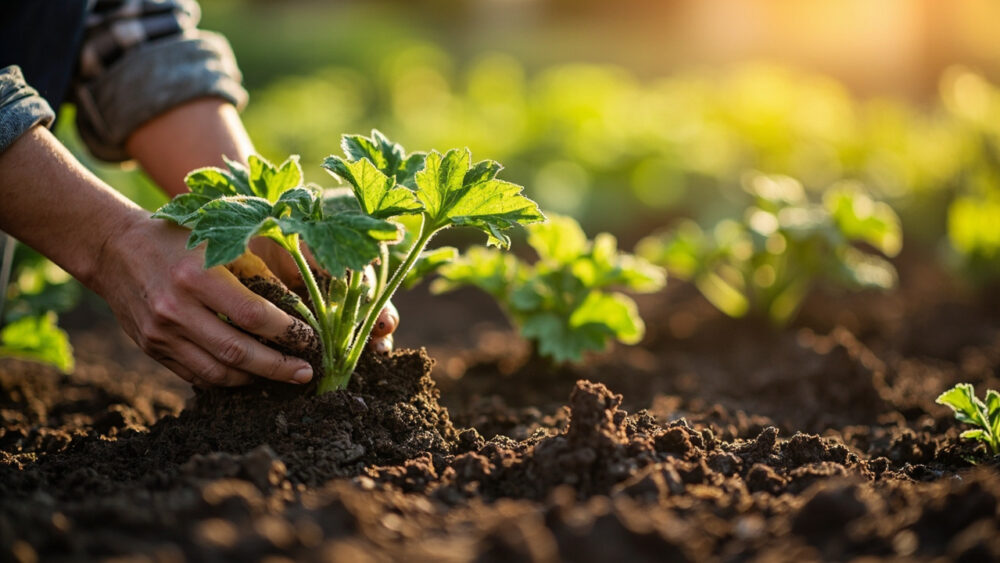
At the 2 to 3 true leaf stage, cut (don’t pull, to avoid disturbing neighboring roots) the weaker seedlings at soil level, leaving the strongest one per planned spacing interval.
If vines are already running and tangled, you can still gently redirect runners to open up airflow, training them to curve around rather than crossing over each other.
Removing a few of the smallest, latest-set fruit on an overcrowded vine also helps, since it lets the plant put its remaining energy into fewer, larger pumpkins instead of spreading it thin.
None of this fully undoes bad spacing, but it recovers a real portion of your harvest, which is usually enough.
Pumpkins at a Glance
- When to plant: after all frost danger has passed and soil has warmed to at least 65 to 70 F, usually late spring to early summer depending on region.
- Seed depth: about 1 inch deep, up to 1.5 inches in loose sandy soil.
- Spacing for standard varieties: 4 to 5 feet between plants, 8 to 10 feet between rows.
- Spacing for giant varieties: 6 feet between plants, 10 to 12 feet between rows.
- Spacing for bush or mini varieties: 2 to 3 feet between plants, 4 to 6 feet between rows.
- Days to maturity: 90 to 120 days depending on variety, so plan your last realistic planting date around your average first fall frost.
- Container option: mini or bush varieties only, one plant per 15 to 20 gallon container, full sun, daily watering in hot weather.
Spacing decides more of your pumpkin harvest than soil, fertilizer, or luck ever will.
Give each variety the room its vines actually need, then let the plant do the rest.