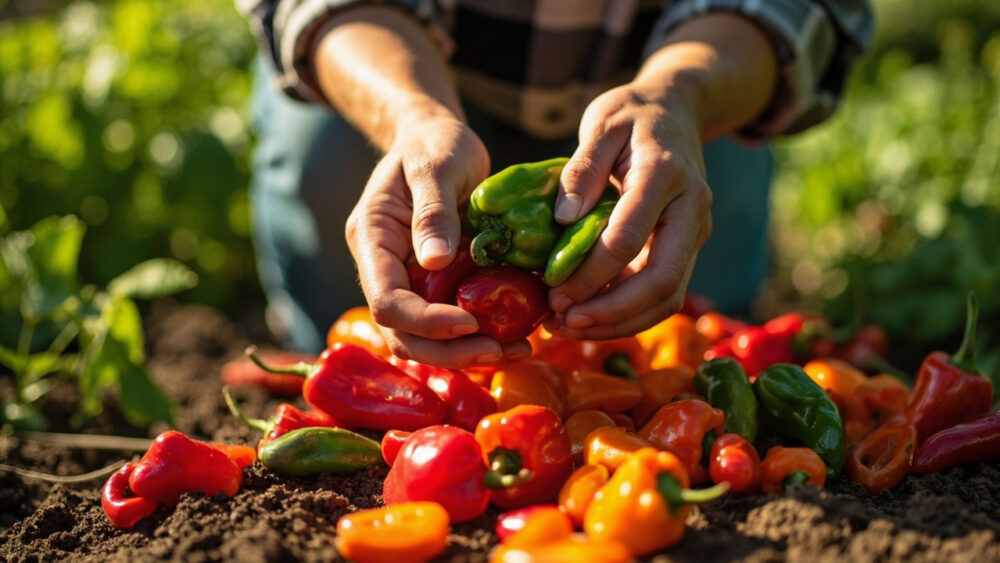
The best way to preserve peppers depends on what you’re starting with, but for most home harvests, freezing wins for ease and flavor while drying wins for long-term storage without any freezer space. Chop or slice raw peppers, spread them on a tray to freeze solid, then bag them, no blanching needed. If you want to know how to preserve peppers well enough that they still taste like something in February, the method matters less than the prep you do before any jar, bag, or dehydrator gets involved.
Here’s what trips people up. Most home preservers skip a curing or drying step that seems optional and isn’t, then wonder why their batch turns slimy or moldy three weeks later. There’s also a sign of spoilage on dried peppers that looks harmless and is actually the one to worry about, and a freezer mistake that turns crisp peppers into wet mush no matter how good they tasted going in.
I’ll walk through the real method, how long each storage type actually lasts, the prep that decides whether it works, and the mistakes that ruin a batch after all that chopping. Save-able facts are in the “Peppers at a Glance” card at the very bottom, worth scrolling to before you start.
Freezing: The Fastest Method That Actually Preserves Texture
Wash and dry peppers completely, then cut them however you’ll use them later: strips for stir-fry, dice for chili, rings for pizza. Skip blanching for bell peppers and most sweet varieties; it’s unnecessary and actually softens them further.
Spread the pieces on a parchment-lined tray in a single layer and freeze for two to three hours before bagging. This flash-freeze step is what keeps pieces separate instead of fusing into one frozen brick.
Hot peppers freeze the same way. Wear gloves when cutting anything past jalapeño heat, and don’t touch your face until you’ve washed up.
That tray step feels like an extra dish to wash, but it’s the difference between usable and unusable later.
Drying and Curing: The Method for Long-Term Storage
Drying works best for thin-walled peppers like cayenne, Thai chiles, and most hot varieties. Thick-walled bells hold too much moisture and tend to mold before they fully dry unless you’re using a dehydrator on a low setting for many hours.
String small hot peppers by the stem and hang them somewhere dry with good airflow, out of direct sun, for two to four weeks depending on humidity. A dehydrator at 125 to 135°F cuts that to eight to twelve hours for thin peppers, longer for fleshier ones.
Curing is different from drying and often skipped: it means letting freshly picked peppers sit at room temperature for a few days to a week before you dry, ferment, or can them, so surface moisture evens out and minor bruises show themselves. Skipping the cure is the mistake that seems optional and isn’t.
Once they’re bone dry, that’s when the real preservation math starts.
How Long Each Method Actually Keeps Peppers
On the counter, fresh peppers hold up for five to seven days, less for thin-skinned hot varieties, which soften faster.
In the fridge, unwashed peppers in a loosely closed bag last two to three weeks, sometimes longer for firm bells. Washing before storage speeds up rot, which surprises people who assume clean means safe.
Frozen peppers stay good for eight to twelve months at a steady 0°F. Quality drops slowly after that, not safety, so late-year freezer peppers just taste a little flatter.
Fully dried peppers, stored in an airtight jar out of light, keep their flavor for one to two years. Ground into powder, closer to six months to a year before the heat and aroma fade.
Notice none of these are indefinite, and that’s exactly why knowing the spoilage signs matters more than memorizing a shelf life number.
The Signs a Batch Has Turned
If you assumed dried peppers are safe as long as they look intact, that guess is what lets mold get established before anyone notices. The real warning sign on dried peppers isn’t fuzzy mold, it’s a faint white or gray bloom that can look like harmless dust. That bloom means moisture got trapped during drying and mold is starting. Toss anything showing it.
On frozen peppers, ice crystals inside the bag mean moisture escaped and got trapped, which usually means a slow leak in your freezer’s temperature or a bag that wasn’t sealed well. The peppers are still safe to eat but will be mushier than fresh-frozen batches.
Fresh peppers turning are more obvious: soft spots, a sour smell, or a slick film on the skin. Any of those means the pepper goes in the compost, not the pot.
Most of these problems trace back to one of a handful of avoidable mistakes.
The Mistakes That Ruin a Batch
- Freezing wet peppers: water left on the surface turns to ice crystals and makes mushy peppers when thawed. Dry thoroughly before cutting.
- Skipping the flash-freeze tray step: peppers bagged straight into the freezer clump into one solid mass you can’t portion later.
- Drying in humid air without airflow: peppers mold from the inside before the outside even looks dry. A fan or dehydrator solves this in damp climates.
- Storing dried peppers while still slightly pliable: they need to snap, not bend, or trapped moisture will cause mold within weeks.
- Washing peppers before fridge storage: extra moisture on the skin speeds up rot. Wash right before you use them, not before you store them.
Every one of these mistakes is fixable before it happens, which is the whole point of prepping right the first time.
Peppers at a Glance
- Best all-around method: freezing raw, cut peppers after a flash-freeze on a tray, no blanching needed for sweet or hot varieties.
- Best for long-term storage: drying thin-walled hot peppers, either air-dried two to four weeks or dehydrated at 125 to 135°F for eight to twelve hours.
- Fridge life: two to three weeks unwashed, stored loosely bagged.
- Freezer life: eight to twelve months at 0°F for best quality.
- Dried shelf life: one to two years whole, six months to a year ground into powder.
- Key prep step: cure fresh-picked peppers a few days to a week before drying or canning to even out moisture and reveal bruising.
- Spoilage sign to watch: a faint white or gray bloom on dried peppers means mold has started, even if the pepper still looks whole.
If you only remember one thing, remember this: dry peppers, then get bone dry before storing, and freeze peppers bone dry before bagging.
Moisture is the enemy in both directions, and every real mistake above traces back to it.