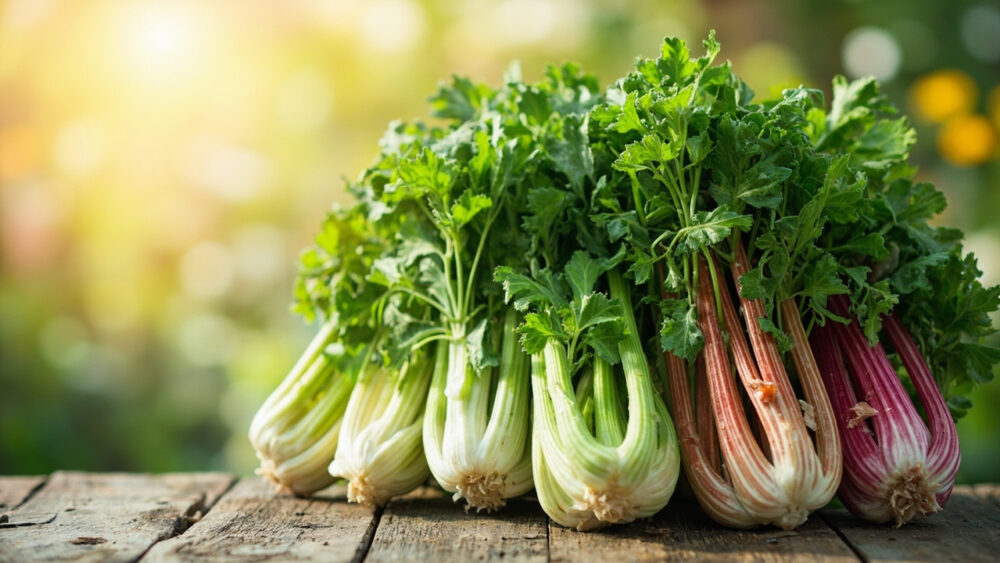
Here’s the fastest way to sort out the types of celery: they split into three groups, tall self-blanching stalk celery for the crunchy ribs you eat raw, celeriac grown for its knobby root instead of its stalks, and cutting celery grown just for its intensely flavored leaves and thin stems. Once you know which group you actually want, picking a variety inside it takes five minutes.
Most home gardeners default to Pascal-type green celery because it is the only kind they have ever seen in a grocery store, which is exactly the wrong reason to pick it. It is also, honestly, one of the fussier vegetables you can grow, wanting steady moisture and a long cool season it may not get in a hot backyard.
Stick around and I will point out the quietly better choice most experienced gardeners plant instead, plus number 13, an old cutting celery that almost nobody grows anymore for reasons that have nothing to do with flavor. The last few entries and the actual method for choosing between all fifteen are at the bottom, so keep scrolling.
Classic Stalk Celery: The Grocery Store Standard
These are the tall, upright, self-blanching types bred for thick crisp ribs, and they are the most demanding celery to grow well.
1. Pascal Celery (Green Stalk Type)
The generic “celery” you already know is usually a Pascal-type: tight upright bunches of pale to medium green ribs, 18 to 24 inches tall at maturity, needing 100 to 130 days of consistently cool weather and evenly moist soil to avoid stringy, hollow stalks.
2. Tall Utah
The improved Pascal strain most seed racks actually sell, bred for straighter, more uniform stalks and better resistance to the hollow-stem problem that plagues older Pascal lines. It is the safest first stalk celery for a gardener who wants something recognizable at harvest.
3. Conquistador
The heat-tolerant workhorse bred for gardeners south of the classic cool-summer celery belt, holding stalk quality better than Tall Utah when nights stay warm. It still wants consistent water, but it forgives heat spikes that would turn other stalk types bitter and pithy.
4. Ventura
A commercial grower’s favorite for good reason: thick, glossy, dark green ribs, strong disease resistance, and a growth habit that stays compact and self-supporting without much fuss. It is a solid pick if your last attempt at stalk celery bolted or collapsed before harvest.
5. Redventure
The one grown as much for looks as flavorwith rose-red stalks and the same crisp texture as green stalk types. It is genuinely ornamental in a vegetable bed, though the red color fades some when stalks are blanched under soil or paper.
If tall stalk celery sounds like more babysitting than you signed up for, the next group is more forgiving.
Celeriac: Grown for the Root, Not the Stalk
Celeriac is the quietly preferred choice among gardeners who have already fought with stalk celery and lost; you eat the swollen root, not the stems, and it tolerates far more neglect.
6. Diamant
The standard celeriac most catalogs default to: smooth, round, relatively easy to peel roots that store for months in a cool cellar or fridge, with a nutty, celery-forward flavor good raw in slaw or cooked into soup. It needs the same long cool season as stalk celery but shrugs off inconsistent watering far better.
7. Prinz
A slightly earlier, smaller-rooted celeriac bred for gardeners with a shorter cool window, maturing a couple weeks ahead of Diamant without giving up much size. It is a reasonable hedge in a climate where fall frost tends to arrive early.
8. Giant Prague
The old heirloom celeriacproducing genuinely large roots, sometimes topping a pound, with rougher, knobbier skin that takes more trimming at the cutting board. Flavor is excellent and the root stores well, but expect to lose more to peeling waste than with smoother modern types.
9. Monarch
A newer celeriac bred for smoother skin and fewer rootletswhich means less knife work and less waste at harvest. It is a good pick for anyone who tried celeriac once, loved the flavor, and hated the peeling.
The root types trade stalk crunch for patience and storage, but there is a third path entirely for cooks who just want flavor.
Cutting and Leaf Celery: Grown for the Leaves, Not the Stalk
These are thin-stemmed, leafy, intensely flavored types closer to a fresh herb than a vegetable, and they are by far the easiest celery to grow.
10. Chinese Celery (Kintsai)
A thin, hollow-stemmed leaf celery common in stir-fries and soups across East Asian cooking, with a sharper, more concentrated celery flavor than any stalk type. It grows fast from seed, tolerates more heat than Pascal-type celery, and gets harvested young and often rather than left to bulk up.
11. Amsterdam Celery (Soup Celery)
A European leaf celery grown specifically to be cut back repeatedly through the season for soups and stocks, never left to form thick ribs. It is forgiving of crowded rows and less-than-perfect soil, since you are harvesting leaves and thin stems rather than waiting for a single big stalk.
12. Par-Cel (Celery-Leaved Parsley)
A curly-leafed herb that tastes almost exactly like celerygrown and harvested more like parsley, cut regularly from the outside of the plant. It is the easiest entry on this whole list to grow in a small container or a crowded herb bed, and it survives mistakes that would kill true celery outright.
13. Zwolsche Krul
The one almost nobody grows anymoreand not because the flavor is lacking. This old Dutch cutting celery has finely curled, almost fern-like foliage and a strong, old-fashioned celery taste, but its ruffled leaves hold moisture and invite fungal spotting in humid climates, which is why it quietly dropped out of most seed catalogs even as flavor snobs kept saving its seed.
Two more varieties left, including the toughest celery on this entire list, and then the actual method for choosing between all fifteen.
The Toughest and Most Unusual Types
These last two do not fit neatly into stalk, root, or leaf, and both solve a specific problem the other thirteen do not.
14. Wild Celery (Apium graveolens, unimproved)
The ancestor of every celery on this lista tougher, smaller, more bitter plant than any cultivated type, sometimes grown by seed savers and breeders more than by cooks. It is genuinely hardy and low-maintenance compared to modern stalk types, but the flavor is sharp and the stalks are thin and fibrous, so it is a curiosity more than a kitchen staple.
15. Golden Self-Blanching
An old stalk type that blanches itself pale yellow-green just from close spacing and its own dense growth habit, without the soil-mounding or paper-wrapping other stalk celeries need to stay tender and mild. It matures faster than Pascal types and suits a gardener who wants real stalk celery without the extra blanching labor, though the stalks stay slightly thinner and less crisp than Ventura or Tall Utah.
How to Choose the Right One
Work through these in order and you will land on the right celery in a few minutes, not a few seasons of trial and error.
- Decide what you actually eat: crunchy raw stalks point to Tall Utah, Ventura, or Conquistador; soup and stock point to celeriac or Amsterdam soup celery. Garnish and flavoring point to Chinese celery, Par-Cel, or Zwolsche Krul.
- Check your climate: hot, humid summers favor Conquistador, Ventura, or any celeriac over classic Pascal, which sulks and turns stringy once nights stay warm.
- Match your season length: stalk celery and celeriac both want 100 days or more of cool growing weather. Cutting and leaf types mature in a fraction of that time and tolerate a shorter window.
- Be honest about water: stalk celery needs consistently moist soil or it turns hollow and bitter, while celeriac and the leaf types forgive far more inconsistency.
- Consider your space: cutting celeries and Par-Cel work fine in containers or tight herb beds. Full stalk celery and large celeriac like Giant Prague want real garden bed room.
- If you have failed at celery before, start with celeriac or a cutting type rather than trying the same stalk celery again with more effort.
Fifteen types, three real ways to grow celery, and now you know which one actually fits your kitchen and your climate.