Asparagus care comes down to four things: full sun, well-drained soil with a top-dressing of compost each spring, deep and infrequent watering, and the discipline to stop harvesting by early summer so the plant can grow its fern and rebuild the crown for next year. Get those right and a bed keeps producing for 15 to 20 years. Get them wrong and you spend years waiting for spears that never thicken up.
Here is the part almost nobody tells you straight: the first two years are not really about eating asparagus at all. They are about growing roots. Harvest too early or too hard, and you stunt the crown permanently, not just for a season.
There is also a sign of trouble that looks like success. Thin, spindly spears late in the season feel like the plant is “still producing,” but it is actually a plant running out of stored energy and asking you to back off. And the one question every new grower eventually asks, whether to cut down the ferny top growth in fall, has a more specific answer than “yes” or “no.” Stick with this, and the save-able Asparagus at a Glance card is waiting at the bottom with the numbers you’ll actually want to remember.
Sun, Site, and Temperature
Asparagus wants full sun, six to eight hours minimum. Shade thins the spears and weakens the fern, and a weak fern means a weak crown next spring.
Pick a permanent spot. This bed will sit undisturbed for well over a decade, so it cannot be the corner you rotate crops through.
Spears push up once soil temperature hits roughly 50°F, and growth really takes off between 60°F and 85°F. A late frost can nip emerging tips, but established crowns underground shrug it off without damage.
Good drainage matters as much as sun, and that is exactly where soil comes in next.
Soil, Planting Depth, and Feeding
Asparagus hates wet feet. It wants loose, well-drained soil with a pH between 6.5 and 7.0, and raised beds or ridged rows solve drainage problems fast in heavier clay.
Plant crowns in trenches 6 to 8 inches deep, spacing them 12 to 18 inches apart, with rows 3 feet apart. Spread the roots like a spider over a small mound of soil in the trench bottom, cover with 2 inches of soil, then backfill gradually as shoots emerge over the following weeks rather than burying them all at once.
Feed with a balanced fertilizer or an inch of compost worked into the soil surface each spring before spears emerge, and again lightly after you stop harvesting. Skip heavy nitrogen late in the season, it pushes soft fern growth that flops and invites disease.
Feeding builds the crown, but water is what keeps that crown alive underground.
Watering: How Much and How Often
Asparagus roots run deep, 4 to 6 feet in mature plants, which makes it fairly drought-tolerant once established. New crowns are a different story and need consistent moisture their first two seasons.
Water new plantings about 1 to 1.5 inches per week, whether from rain or irrigation, keeping the top 6 inches of soil evenly moist but never soggy. Check by pushing a finger a few inches down; if it’s dry at that depth, water deeply rather than sprinkling the surface.
Established beds need water mainly during the spring flush and again in dry summer stretches while the fern is building energy. A wilting, grayish fern in July is a drought signal, not a normal summer look.
If you assumed thin spears mean the plant needs more water, that guess is usually wrong. Thin spears late in the harvest window almost always mean the crown is depleted and asking you to stop cutting, not asking for the hose.
That depletion signal is exactly why timing your harvest matters more than any watering schedule.
The Routine Tasks: Harvest, Cutback, and Weeding
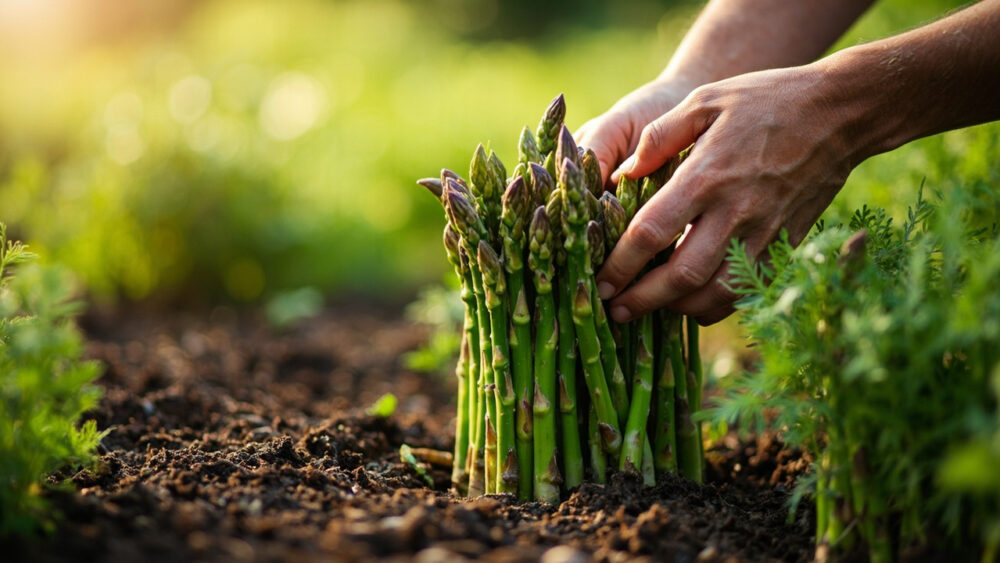
Do not harvest at all the first year after planting crowns. In year two, harvest lightly for just 2 to 3 weeks. From year three on, harvest for 6 to 8 weeks each spring, snapping or cutting spears at soil level once they reach 7 to 9 inches tall, before the tips loosen and start to fern out.
Stop harvesting once spears start coming in thin, generally by early to mid summer depending on climate, and let every spear after that grow into full fern. That fern is the plant’s solar panel, refilling the crown for next spring’s crop.
Leave the fern standing all season. Cut it back only in late fall after it has yellowed and died back on its own, or in early spring before new spears emerge. Cutting green fern early is the single most common way people accidentally shrink their own harvest the following year.
Weed by hand near crowns since asparagus roots sit shallow and resent tilling or hard hoeing once established.
Get the cutback timing right and most of your problems solve themselves, but a few pests and diseases still show up uninvited.
Problems That Actually Show Up
Asparagus beetles are the most common visitor, small blue-black or reddish beetles that chew spears and fern and leave black eggs stuck to the tips. Hand-pick in small beds, or treat with an appropriately labeled insecticide during active feeding, following the product label exactly.
Rust and fusarium wilt show up as orange-brown streaking on the fern or yellowing, dying stalks. There is no cure once fusarium is established in the crown; the fix is prevention, good airflow, resistant varieties, and not replanting asparagus in the same soil for several years if a bed fails.
Crown rot follows poor drainage almost every time. Soggy soil after planting is the top killer of first-year crowns, more than cold, more than pests.
Spindly, weak spears in year two or three usually mean the bed was harvested too hard too early, not a disease at all, which loops back to why patience in the first two years matters more than anything else you do.
Once the pests and drainage are sorted, the fun part is just watching for the signs that the bed has truly settled in.
Signs Your Asparagus Bed Is Actually Thriving
A thriving bed pushes thick, firm spears, close to finger-width or better, for the full length of the harvest window rather than tapering thin after two weeks. That thickness is the real scorecard, not spear count.
Dense, feathery, deep green fern standing 4 to 5 feet tall through summer means the crown is banking plenty of energy. A sparse, pale, floppy fern means next year’s harvest will disappoint no matter how you water it.
By year four or five, a healthy row should be sending up more spears per foot than it did in year two, a sign the crowns are multiplying underground, which is exactly what you want in a plant meant to outlast most of your other vegetables.
Here is that save-able card with every number in one place.
Asparagus at a Glance
- When to plant: in early spring once soil is workable and has warmed past roughly 50°F, using one-year-old crowns for the fastest start.
- Planting depth and spacing: trenches 6 to 8 inches deep, crowns 12 to 18 inches apart, rows 3 feet apart, backfilled gradually as shoots emerge.
- Sun and soil: full sun, six to eight hours minimum, well-drained soil with pH 6.5 to 7.0.
- Watering: about 1 to 1.5 inches per week for new crowns, deep and less frequent once established, more during spring flush and dry spells.
- Harvest timing: none in year one, light 2 to 3 week harvest in year two, 6 to 8 weeks each spring from year three onward, stopping once spears turn thin.
- Fern cutback: leave standing all season, cut back only after it yellows in late fall or before new growth in early spring.
- Watch for: asparagus beetles, crown rot from poor drainage, and thin spears as a sign to stop harvesting, not to water more.
Get the first two years right and this bed outlives most decisions you’ll make in the rest of the garden.
Patience with the crown now is the whole harvest later.