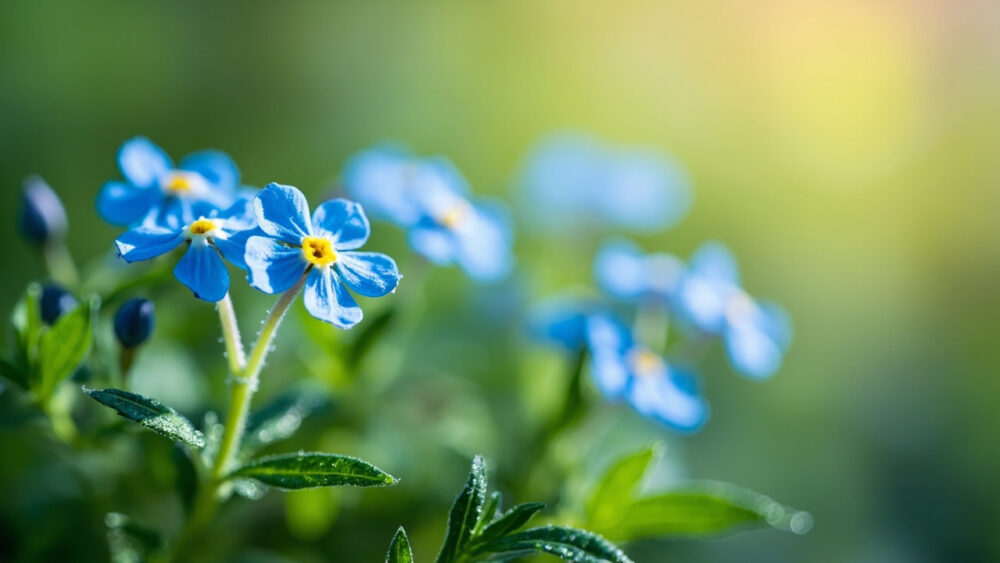
Forget me nots bloom in spring, typically from April through Junewith the peak show usually landing in May in most temperate climates. In warmer zones the flowers can start as early as March, and in cooler mountain or northern gardens they may hold off until early June. The bloom period itself runs four to eight weeks once it gets going.
That is the honest answer, but it is not the whole story. Some forget me nots reseed themselves so aggressively that you get a second, smaller flush later in the season without doing anything at all. Others sulk in one particular spot and never bloom well no matter what you do, and the reason is almost always something you can actually fix once you know where to look.
There is also a real trick to stretching a few weeks of flowers into a much longer show, and most people never bother with it because it looks like more work than it is. Stick with me and there is a save-able quick-reference card at the bottom with the bloom window, the conditions that shift it, and the exact aftercare that keeps the flowers coming.
The Real Bloom Window, and Why It Moves Around
Forget me nots (Myosotis) are short-lived perennials or biennials depending on the species, and almost all of the garden varieties treat themselves like biennials. That means a plant grown from seed one year typically waits until its second spring to flower heavily.
The four-to-eight-week window is the norm for a single planting, but a bed with plants of mixed ages, some self-sown last fall, some overwintered from the year before, can look like it blooms for three months straight. That is not one long bloom, it is overlapping generations.
If your plant has been in the ground less than a year, patience matters more than technique.
What Actually Controls the Timing
Three things move the bloom window more than anything else: temperature, day length, and how the plant overwintered. Forget me nots need a period of cold, several weeks of temperatures near or below 40°F, before they will flower. This is why fall-planted seedlings bloom reliably and spring-planted ones often stall or skip a year entirely.
Soil temperature is the trigger that actually starts the show. Once soil warms into the mid 40s to 50s°F consistently, usually a few weeks before your last frost, buds start forming. A late, cold spring pushes bloom back; an early warm-up pulls it forward by two to three weeks.
Shade also plays a role. Plants in dappled shade often bloom a bit later and hold their flowers longer than ones in full sun, where heat pushes them to finish fast.
Your own yard’s microclimate is doing more to set the date than the calendar is.
How to Get More Blooms, and Longer Ones
If you assumed more fertilizer means more flowers, that guess backfires here. Forget me nots are not heavy feeders, and rich soil pushes leafy growth at the expense of bloom. What actually extends the show is consistent moisture and cooler roots.
Mulch lightly around the base to keep soil temperatures down and moisture even; a plant that dries out and stresses in a warm snap will finish blooming early no matter what you do afterward.
Letting some flowers go to seed is the single best way to get more blooms next year, since self-sown seedlings from this year’s plants overwinter naturally and flower right on schedule.
Partial shade in hot climates, full sun in cool ones, is the other lever: match the exposure to your actual summer heat and you buy the plant extra weeks.
Extending this year’s bloom and building next year’s flowers are two different jobs, and the next section covers what stops either one from happening.
Why Yours Might Not Be Blooming at All
A first-year plant with no flowers yet is usually just too young. That is normal biennial behavior, not a failure. Beyond that, the most common culprits are heat stress, too much nitrogen, and root crowding.
- Too much heat too early: a warm spring can push the plant straight to seed-set without much of a floral display.
- Overly rich or high-nitrogen soil: lush green growth with few or no flowers.
- Crowded, overgrown clumps: older plantings that have not been thinned bloom sparser each year.
- Too much shade: full shade all day slows growth and bloom noticeably.
- Dry spells during bud formation: stressed plants abort buds to conserve energy.
None of these are fatal, and a non-blooming plant this year is rarely a dead plant, just a delayed one.
Once flowers do show up, what you do next decides how long they stick around.
Deadheading and Aftercare That Stretch the Show
Forget me nots do not strictly require deadheading, and that is the honest, slightly counterintuitive part: letting spent flowers go to seed is how you get next year’s plants. But if you want the longest possible bloom window this year specifically, light deadheading of the earliest spent stems does encourage a few more weeks of flowers before the plant shifts fully into seed production.
The practical compromise most gardeners use: deadhead the first flush lightly to extend bloom, then stop and let the later flowers go to seed so the bed refills itself for next spring.
After bloom finishes, the foliage often looks tired and can be cut back hard. Many forget me nots die back naturally after seeding anyway, especially in hot climates, and that is the plant finishing its life cycle on schedule, not dying from neglect.
That die-back after seed drop is normal, and here is everything worth saving in one place.
Forget Me Nots: Quick Reference
- Bloom season: spring, generally April through June, with peak bloom most often in May.
- Bloom duration: four to eight weeks per generation of plants, longer in a mixed-age bed.
- Plant age matters: most garden forget me nots are biennial and bloom heavily starting their second spring.
- Trigger for flowering: a stretch of cold weeks followed by soil warming into the mid 40s to 50s°F.
- Climate shifts the date: warm climates and early springs can start bloom in March, cold ones push it into June.
- To extend bloom: keep soil moist and cool with mulch, give afternoon shade in hot regions, deadhead the earliest flowers only.
- To get more flowers next year: let some blooms go to seed and avoid heavy nitrogen fertilizer.
- Natural die-back: plants often decline after seeding, which is normal end-of-cycle behavior, not disease.
Print this list or screenshot it before you head back out to the bed.
Your forget me nots are running on their own clock, and now you know how to read it.