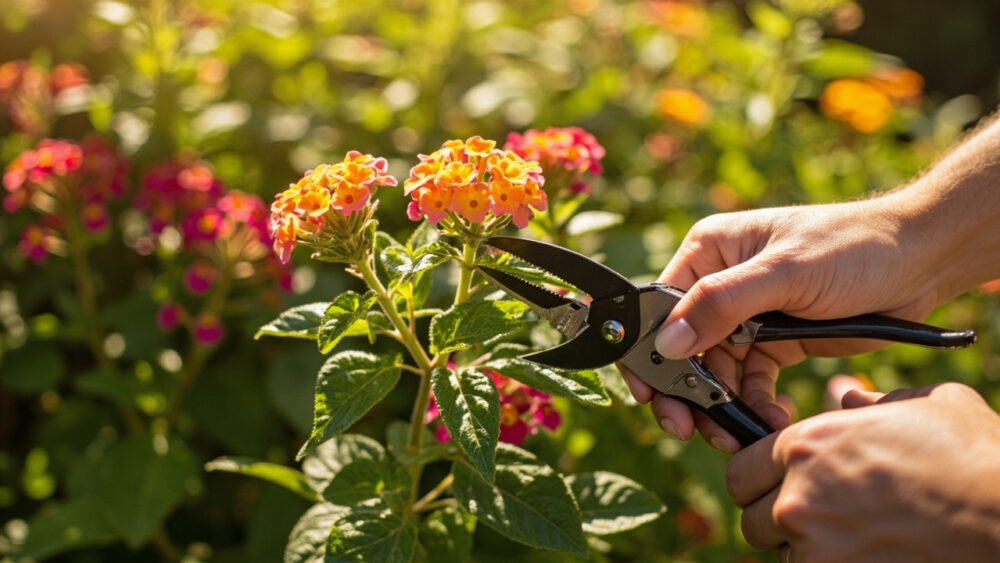
The core answer: cut lantana back hard in early spring, once you see new green growth low on the stems and frost danger has passed, taking the whole plant down to about 6 to 12 inches from the ground. In warm climates where it never fully dies back, you can also do a lighter shape-up in mid summer after the first big flush of bloom fades. If you learn how to prune lantana at these two points and skip the rest of the year, you will get a fuller, more floriferous plant than most people who fuss with it constantly.
Here is where most people go wrong, though. They either panic and cut lantana back in fall because it looks ratty, or they never cut it back at all and end up with a woody, hollow-centered shrub that blooms only at the tips. Both mistakes cost you flowers, and one of them can cost you the whole plant.
There is also a sign almost everyone misreads: bare, gray, brittle-looking stems in late winter. Most gardeners assume that means the plant died. Stick around, because whether that lantana is dead or just dormant changes everything about what you do next, and I will give you the real test for it below. Save-able specifics, including exact cut heights and a full at-a-glance card, are waiting at the bottom of this page.
When to Prune Lantana (and When to Leave It Alone)
The main cut happens in early spring, timed to new growth, not to the calendar. Wait until you see small green leaf buds breaking along the lower stems, which usually lines up with the last frost passing in your area. In mild winter climates, zones 9 through 11, lantana may stay evergreen and never give you an obvious signal, so you prune on a light schedule instead of waiting for growth cues.
Do not prune in fall. Cutting lantana back before winter removes the very growth that insulates the crown from cold, and it pushes tender new shoots right before a freeze can kill them. That single mistake takes out more established lantana than an actual hard freeze does.
A second, lighter round in mid-summer, once the first big bloom cycle slows down, cleans up the shape and triggers another flush.
Timing is half the job, but the tools you grab next decide whether the cuts heal clean or invite rot.
Tools and the One Prep Step That Actually Matters
For the big spring cutback, use bypass loppers or a pruning saw for stems thicker than a pencil, and hand pruners for anything thinner. Lantana stems get woody fast, and dull blades crush rather than cut, which slows healing and invites disease into the wound.
Wipe your blades with rubbing alcohol before you start, especially if you pruned anything else recently. Lantana is generally tough and disease resistance is one of its selling points, but a contaminated blade is still an unnecessary risk for zero benefit.
The prep step everyone skips: scratch a stem near the base with your thumbnail before you commit to a full cutback. Green underneath means the plant is alive and you cut with confidence. Gray, dry, and brittle all the way through means that particular stem is dead and should come out regardless of season.
Once you know which stems are alive, the actual cutting takes ten minutes.
How to Prune Lantana Step by Step
Step 1: Make the hard cutback
Cut the entire plant down to 6 to 12 inches above the soil line. This feels brutal the first time you do it. Lantana blooms on new growth, and a hard reset in spring gives you a denser, lower, more compact plant loaded with flowers instead of a lanky one with bare legs.
Step 2: Cut at an angle, just above a node
Angle each cut slightly so water runs off instead of sitting on the wound. Cut about a quarter inch above a node, the small bump where a leaf or side shoot has emerged or will emerge.
Step 3: Remove dead wood entirely
Any stem that scratched gray and dry gets cut all the way to the base, not just shortened. Leaving dead wood in place invites rot and does nothing for the plant.
Step 4: Shape lightly in summer
For the mid-summer round, take off just the top third of each stem and snip spent flower clusters. This is shaping, not a reset, and it should take a fraction of the time the spring cut did.
The plant looks stark right after step one, and that is exactly when people start second-guessing themselves.
What to Expect After the Cut
Right after a hard spring cutback, lantana looks like a pile of sticks. That is normal, and it is not a sign you cut it wrong or cut it too hard.
New growth typically appears within two to three weeks once soil temperatures climb into the 60s Fahrenheit. You will see small leaf clusters pushing from the nodes you cut above.
Bloom follows foliage by roughly four to six weeks. If you assumed a hard cutback delays flowering compared to leaving the plant alone, the opposite is usually true. Unpruned lantana wastes its energy pushing more woody stem, while a cut-back plant channels that same energy into branching and buds.
By the time nearby unpruned lantana is still gawky and thin at the base, yours should be dense, rounded, and covered in blooms.
That payoff is real, but only if you avoid the handful of mistakes that quietly undercut it.
The Mistakes That Cost You Flowers
Pruning too early is the most common one. Cutting back at the first warm day in late winter, before new growth confirms the plant is out of dormancy, exposes fresh cuts to a late frost that can kill stems back further than if you had left them alone.
Pruning too lightly is the quieter mistake. Just trimming the tips year after year, without ever taking the plant down hard in spring, leads to a hollow, woody center with all the growth and bloom pushed to the outer edges.
- Cutting in fall: removes cold insulation right before the plant needs it most.
- Leaving dead stems in place: invites rot and hides live growth trying to emerge nearby.
- Using dull or dirty blades: crushes stems instead of cutting them cleanly and slows recovery.
- Skipping the scratch test: leads to cutting live wood too short or leaving dead wood too long.
- Shearing into a tight ball: lantana blooms best with some natural, slightly loose form, not a hedge shape.
Fix these five and the plant does most of the work for you the rest of the season.
Lantana at a Glance
- When to do the main cut: early spring, once new green growth appears low on the stems and frost risk has passed.
- How much to remove: cut the whole plant down to 6 to 12 inches above soil level for the hard spring reset.
- Mid-season touch-up: in mid summer after the first bloom flush fades, remove just the top third of stems and spent flower heads.
- Where to cut: at a slight angle, about a quarter inch above a healthy node.
- Never do this: prune in fall, since it strips winter insulation right before cold weather arrives.
- Quick health check: scratch a stem near the base, green underneath means alive, gray and dry all the way through means dead and should be cut out.
- What to expect: new leaves in two to three weeks, bloom in four to six, from soil around 60 F and warmer.
Get the timing and the depth of the cut right, and lantana forgives almost everything else.
Skip the fall trim, do the hard spring reset, and you will spend the rest of the season admiring it instead of fixing it.