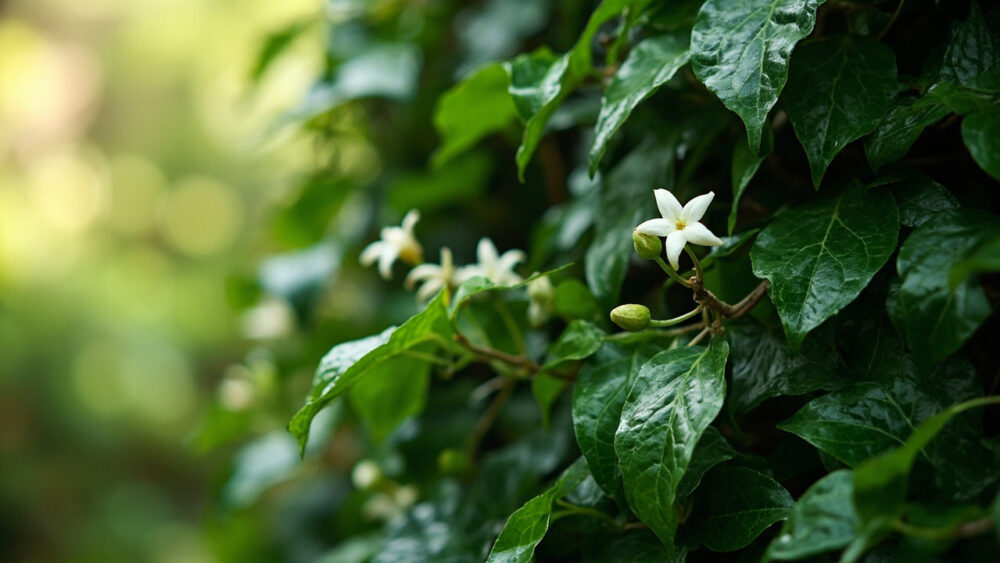
The most common reason star jasmine won’t bloom is simply not enough direct sun. This vine flowers hard for gardeners who give it six or more hours of direct light, and it sulks in green, leafy silence for everyone else. If yours sits in partial shade or under a patio roof, that is almost always the whole story, and the fix is either moving it or thinning what is blocking the light.
Most people blame the soil or think the plant needs more fertilizer, and that guess is wrong more often than it is right. Overfeeding is actually a bigger bloom-killer than underfeeding with this vine.
There is one detail on the plant itself that tells you which cause you are actually dealing with, and I will walk you through it cause by cause below. Stick around for the honest recovery timeline, because star jasmine has a patience-testing habit of skipping a whole bloom season even after you fix the problem, and for the two-minute diagnosis checklist waiting at the bottom of this page.
Causes, Most to Least Likely
1. Not enough direct sun
Confirm it: watch the planting spot for a full day. Star jasmine wants six or more hours of direct sun to flower well; four hours or less of dappled light produces lush vines and few or no blooms.
Check whether a fence, roof overhang, or neighboring shrub has grown up and started shading it since it was planted.
Fix it: if it is in a pot, move it to the sunniest spot you have. If it is in the ground and shaded by something prunable, cut that back.
A vine that is otherwise healthy and green but simply not flowering points straight at light first.
2. Too much nitrogen fertilizer
Confirm it: look at the growth habit. Excess nitrogen produces long, vigorous, deep green vines with soft new growth but almost no flower buds, even in decent sun.
Check what you have been feeding it. Lawn fertilizer runoff, a high-nitrogen all-purpose feed, or compost applied heavily every month are the usual culprits.
Fix it: stop nitrogen-heavy feeding entirely for the season. If you feed at all, use a formula lower in nitrogen and higher in phosphorus and potassium, applied lightly in early spring only.
This one surprises people because feeding feels like the responsible thing to do, and here it backfires.
3. Wrong pruning timing
Confirm it: think back on when you last sheared it. Star jasmine sets its flower buds on the previous season’s growth, so a hard prune in late winter or spring cuts off the wood that was about to bloom.
If you tidied it up right before bloom time and it went quiet that same season, this is your answer.
Fix it: prune only right after flowering finishes, never in late winter or early spring. Light shaping is fine; a hard cutback should wait until just after the bloom flush.
The vine forgives this mistake, but only on next year’s schedule, not this one.
4. Plant is still too young
Confirm it: check how long it has been in the ground or pot. Star jasmine commonly takes two to three years to mature enough to flower reliably, especially if it started as a small nursery cutting.
Young plants put their energy into roots and vine length first, flowers second.
Fix it: there is no shortcut here except good care and patience. Keep it in strong sun, water consistently, and skip heavy nitrogen feeding while it establishes.
If the plant is young and otherwise thriving, the calendar is doing more work than any product you could buy.
5. Underwatering or drought stress
Confirm it: feel the soil two to three inches down. If it is bone dry on a regular basis, especially through the weeks leading up to bloom time, the plant may skip flowering to conserve energy.
Look for slightly dulled or curling leaves as a supporting sign.
Fix it: water deeply once the top couple inches dry out, aiming for consistent moisture rather than a soaked-then-parched cycle. Mulch helps even this out.
Chronic drought stress and chronic overwatering can look similar from a distance, which is exactly why the next section matters.
6. Cold snap during bud formation
Confirm it: check your recent weather. A late frost or an unusually cold stretch while buds are forming can abort them outright, especially in the cooler end of star jasmine’s hardiness range, roughly USDA zone 8.
You will often see healthy foliage with buds that browned, dropped, or never opened.
Fix it: nothing to do for this season’s damage, but consider a frost cloth over the plant during any late cold spell next year if you are near the edge of its range.
This cause is weather’s fault, not yours, and it is worth ruling out before you start changing your routine.
How to Tell the Causes Apart
Sun and nitrogen problems show up as a whole-plant pattern: even, uniform green growth with no buds anywhere, old or new wood.
Pruning timing shows up as a plant that bloomed fine in past years and only went quiet after a specific late cutback you can point to.
Youth shows up as a smaller, still-filling-in plant, often under two to three years old, with vigorous new growth but no bloom history yet.
Drought stress shows dulling or slightly curled leaves alongside dry soil, while cold damage shows browned or dropped buds specifically, with the foliage around them still fine.
Once you match your plant to one of these patterns, the recovery odds get a lot clearer.
Will It Recover?
Sun and nitrogen issues have the best odds. Fix the light or stop the heavy feeding, and most star jasmine vines resume blooming the following season, sometimes even partway through the current one if the light fix happens early enough.
Pruning timing mistakes fully recover, but only on the plant’s own schedule. You are waiting for next year’s flowering wood to form, not this year’s.
Young plants recover on their own with time. There is nothing broken to fix, just growth left to catch up.
Drought and cold stress both have good recovery odds once the immediate cause passes, though a vine that has been chronically underwatered for a full season may take an extra year to rebuild the energy reserves it needs to flower well.
The honest cut-your-losses moment is rare with star jasmine. It is a tough, long-lived vine, so genuinely give it a full year under corrected conditions before assuming something else is wrong.
How to Keep It From Happening Again
Plant or relocate star jasmine somewhere it gets at least six hours of direct sun, and check that spot again every year or two as nearby trees and shrubs grow and start casting more shade than they used to.
Feed lightly and only in early spring, using something balanced or slightly higher in phosphorus and potassium rather than a nitrogen-heavy formula.
Prune only right after the bloom flush ends, never in late winter or early spring, and keep any hard cutback to that same window.
Water deeply and consistently rather than letting the root zone swing between soaked and bone dry, and mulch to buffer that swing through hot stretches.
Get these four habits right and star jasmine rewards you with a heavy, fragrant bloom flush almost every year without much fuss.
Diagnosis Checklist
- Stand where the plant is and count how many hours of direct sun actually hit it, then check if that number is six or more.
- Look at the vine’s growth: if it is long, lush, and deep green with almost no buds anywhere, suspect too much nitrogen or too little sun first.
- Recall your last feeding: if you used a lawn or all-purpose high-nitrogen fertilizer in the last few months, that is a likely cause.
- Recall your last pruning: if you cut it back hard in late winter or spring, that explains a quiet season on its own.
- Check the plant’s age: if it has been in place less than two to three years, patience may be the only real fix.
- Feel the soil two to three inches down: if it is consistently dry, correct the watering routine before blaming anything else.
- Check for browned or dropped buds specifically, with healthy leaves around them, which points to a recent cold snap rather than a chronic problem.
- Match what you found to the closest pattern above, apply that fix, and give the plant a full year before assuming it needs a different answer.
Star jasmine is forgiving once you get the light and feeding right. Fix the real cause, be patient with its schedule, and the fragrance comes back on its own.